


Xiaomi MIX Ultra: Lei Jun spotted with a mysterious burgundy foldable equipped with future Xring O3?
Xiaomi may be on the verge of making a significant return to the foldable smartphone market. A recent photo shows Lei Jun holding an unknown burgundy device that aligns well with rumors of a new large foldable.
Several leaks associate it with the upcoming Xring O3, but its commercial name is still far from confirmed.
Lei Jun Spotted with a New Foldable
The photo quickly attracted attention. It shows Lei Jun, founder and CEO of Xiaomi, holding a burgundy foldable smartphone that does not match any currently available models from the brand.
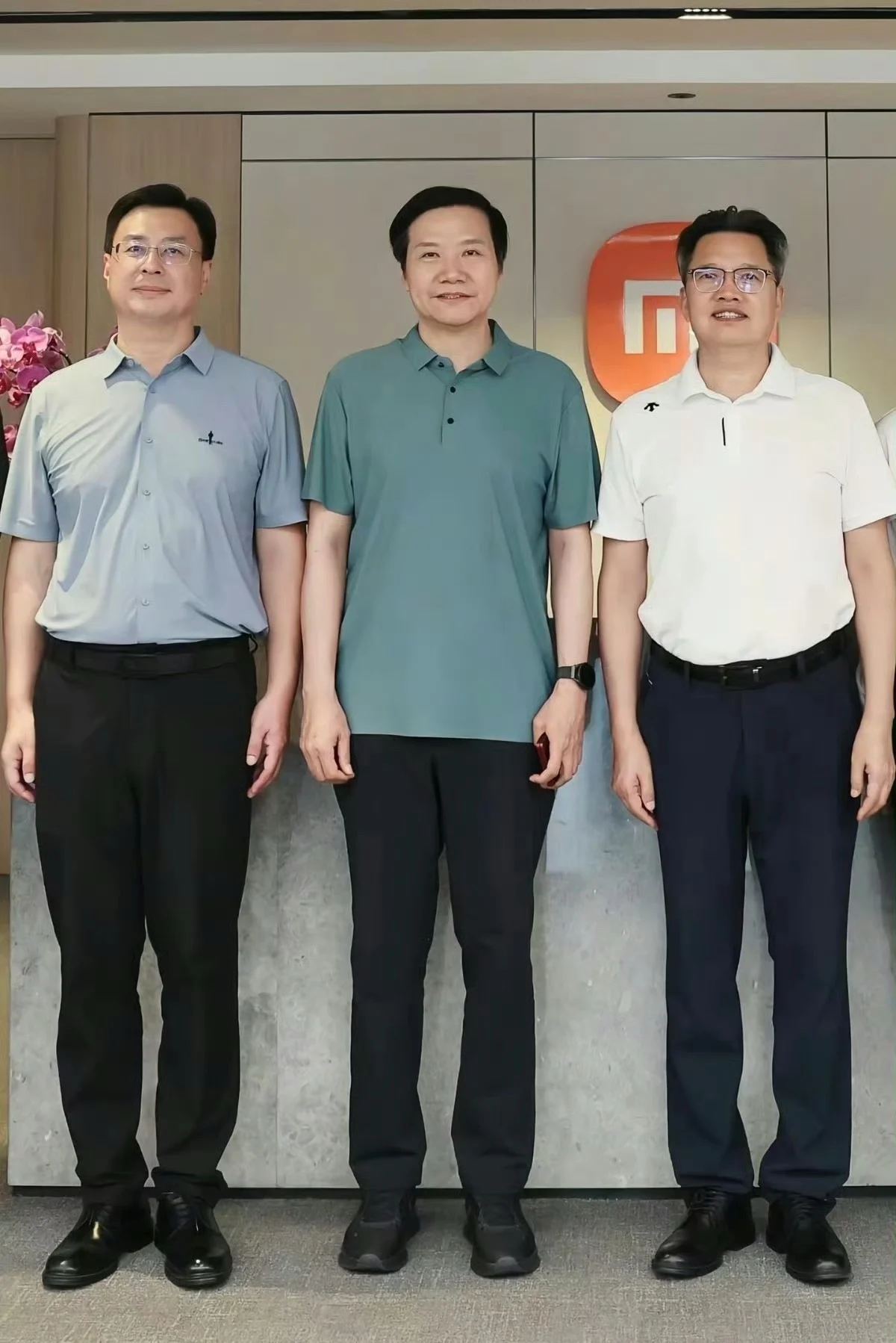
The color already provides an intriguing clue: Xiaomi has not launched any of its MIX Fold models in this hue. The device also appears relatively slim and adopts a wider format than previous generations. This supports the hypothesis that Xiaomi is preparing a new foldable with a different aspect ratio, more akin to the recent Samsung Galaxy Z Fold models.
However, Xiaomi has yet to make any official announcements.
MIX Ultra, MIX Fold 5, or Xiaomi 18 Fold?
The product name remains highly uncertain. Early leaks primarily referred to a Xiaomi MIX Fold 5. Other sources have since used names like Xiaomi 17 Fold or Xiaomi 18 Fold. Recently, the name Xiaomi MIX Ultra has been mentioned more frequently. This last name might indicate a shift in positioning: Xiaomi could aim to differentiate this new wide format from its previous MIX Fold models rather than continuing the numerical sequence.
Nevertheless, no official source has confirmed the abandonment of the MIX Fold name for now. Therefore, it’s best to consider “MIX Ultra” as a potential name rather than the definitive title.
A Much Wider Foldable Format
Previous images related to HyperOS 4 show a device with an internal screen in a more square format compared to the older MIX Folds. This change might bring Xiaomi closer to the new trend of “wide foldables.”

The goal is simple: to achieve a more natural external display when the phone is closed while maintaining a large surface area when open. Early narrow foldables often felt like using a remote control when closed.
New formats are instead seeking to offer an experience closer to that of a traditional smartphone. Samsung has already taken this direction with its latest Fold generations, and Xiaomi appears to want to follow a similar logic.
An Internal Screen of Approximately 7.5 or 7.6 Inches
Leaks suggest an internal display of around 7.5 to 7.6 inches. The diagonal measurement is rather standard for a large foldable. It is primarily the aspect ratio that could make a difference. A wider screen would enhance the display of videos, documents, and applications running side by side.
The multitasking capability is one of the main advantages of a book-type foldable. Therefore, Xiaomi might be looking to make better use of this surface with HyperOS 4 and its features designed for large screens.
The Xring O3 Could Be One of the Major Innovations
However, the most intriguing aspect remains the processor. The new foldable would be one of the first devices to use the future Xring O3, the next generation of chip designed in-house by Xiaomi. The company has already begun to communicate about the upcoming evolution of its Xring platform, albeit without officially confirming all the characteristics of the SoC.
Several leaks suggest a direct transition from the Xring O1 to the Xring O3, with Xiaomi potentially skipping the O2 designation for its smartphones. This nomenclature still awaits confirmation.
A Completely Revised CPU Architecture
The Xring O3, known in some leaks by the codename Lhasa, would adopt a CPU organization different from that of the Xring O1. Current information indicates a three-cluster architecture, potentially organized in 1+3+4 or 1+2+5. The main core could reach about 4.05 GHz. Intermediate performance cores might reach up to 3.42 GHz, while energy-efficient cores could approach 3.02 GHz.
These values are not official; however, they suggest that Xiaomi aims to significantly increase clock speeds while simplifying the internal organization of the processor.
The GPU Could Also Increase in Clock Speed
The graphical component would evolve as well. Leaks suggest a frequency approaching 1.5 GHz, compared to about 1.2 GHz in the previous generation. Memory would remain around 9,600 MT/s. In a foldable smartphone, the advantages of an in-house SoC do not solely lie in raw performance. Xiaomi can also fine-tune power consumption depending on whether the user is working on the external or internal display, running multiple applications, or putting significant load on the GPU.
This control over silicon could become particularly valuable for a device where battery life and temperature are ongoing constraints.
Xiaomi Aims to Gradually Reduce Its Dependence on Qualcomm
Ultimately, this remains the most significant issue behind these devices. Xiaomi is one of Qualcomm’s primary customers in the Android market. Developing its own SoCs does not mean an immediate abandonment of Snapdragon chips, but it does offer the company greater strategic flexibility. The manufacturer can optimize certain product categories without being entirely reliant on the schedule or pricing of an external supplier.
Moreover, it can also bring hardware, software, and AI closer together. This is precisely what Xiaomi seeks to achieve with Xring.
A Battery Around 6,000 mAh
The upcoming foldable is also expected to feature a battery of around 6,000 mAh. This would be a generous capacity for a foldable device, where thinness traditionally limits the available space for cells. Wireless charging is also on the agenda. The gradual introduction of silicon-carbon batteries has enabled Chinese manufacturers to significantly increase capacities without making their devices much thicker.
Xiaomi may leverage this technology to mitigate one of the primary historical compromises of foldables: a lower battery life compared to the best traditional smartphones.
A 200-Megapixel Main Sensor?
Photography might represent another significant change. Several reports indicate a main sensor of 200 megapixels. This would be an ambitious evolution for Xiaomi’s foldable range. Such smartphones often utilize photo modules that are somewhat less advanced than traditional flagships, primarily due to thickness constraints.
Integrating a large 200-megapixel sensor into a relatively slim foldable chassis would entail a particularly interesting compromise to observe. For now, the details on other sensors are much less documented.
HyperOS 4 and Android 17 Expected
The smartphone is anticipated to operate on HyperOS 4 based on Android 17. Xiaomi could utilize the launch to showcase a more profound integration between its chip, its system, and its AI models. This is one of the goals frequently highlighted within the Xring strategy. By developing more components in-house, Xiaomi gains better control over performance management, AI, and energy consumption.
Apple has long demonstrated the value of this approach. Samsung and Google are following a similar logic with Exynos and Tensor. Xiaomi now aims to join this circle.
Lei Jun’s Photo Remains a Clue, Not an Announcement
The presence of the mysterious foldable in the CEO’s hands is undoubtedly hard to ignore. However, it is insufficient to confirm all the current technical specifications circulating online. The burgundy smartphone is likely a future Xiaomi model.
However, its name “MIX Ultra,” its 200-megapixel camera, its 6,000 mAh battery, and even the use of the Xring O3 remain contingent on leaks. A genuine teaser campaign from Xiaomi will be necessary to start solidifying these details.
The mysterious device spotted in Lei Jun’s hands could thus be more significant for its hinge design than what it represents: Xiaomi’s first foldable genuinely built around its own silicon.



