

Xiaomi 18 Fold: New Photos Reveal Its Design Ahead of Launch in September
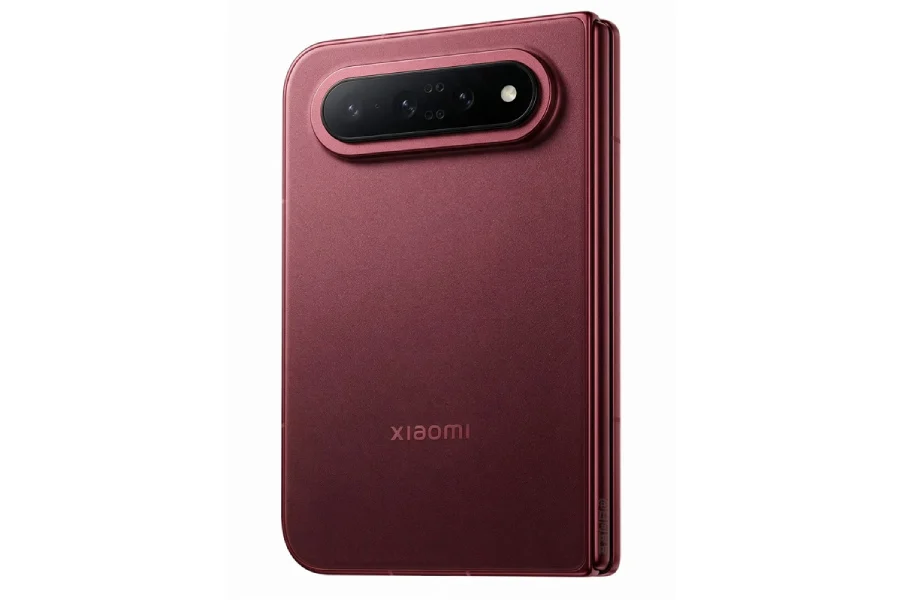
The upcoming Xiaomi 18 Fold continues to emerge ahead of its official launch scheduled for September. New photos circulating online showcase a device that closely resembles the one recently seen in the hands of Xiaomi’s CEO, Lei Jun, featuring a bold horizontal camera module and striking red finish.
However, the real intrigue of Xiaomi’s latest foldable likely lies within. The Xiaomi 18 Fold is set to be the first smartphone equipped with the XRING O3, the new in-house chip from the manufacturer that aims to compete with the best mobile platforms on the market.
A Wide Horizontal Camera Module
The leaked images of the Xiaomi 18 Fold reveal a design that markedly differs from previous generations of the brand’s foldables. The back features a wide horizontal camera plateau that occupies the entire upper portion of the device, integrating three lenses and an LED flash.
The prominent red finish visible in the photos echoes that of the recently released Redmi K100 Pro Max.
This choice gives the upcoming foldable a much more distinctive visual identity at a time when manufacturers are increasingly adopting large camera modules to differentiate their flagship models.
The images also provide a better view of the smartphone’s thickness when folded. Although no official measurements are available yet, Xiaomi seems to be continuing its efforts on one of the key challenges of foldable smartphones: reducing thickness without compromising battery life, durability, or camera quality.
A Confirmed Launch for September
Xiaomi has already confirmed that the Xiaomi 18 Fold will be unveiled in September. Lei Jun also mentioned a particularly busy launch schedule for the brand, with several distinct events focusing on its new high-end smartphones.
The Xiaomi 18 Fold is expected to have its own media spotlight, separate from the other models in the Xiaomi 18 family. This strategy would allow the manufacturer to better highlight the unique nature of the product, as well as the technology behind it.
Indeed, the 18 Fold will also serve as a showcase for the new XRING O3.
XRING O3: Xiaomi Aims to Compete with Qualcomm and Apple
The new in-house chip is likely to be the main attraction of the smartphone. The XRING O3 succeeds the XRING O1 and represents a significant step in Xiaomi’s ambitions in the semiconductor space.
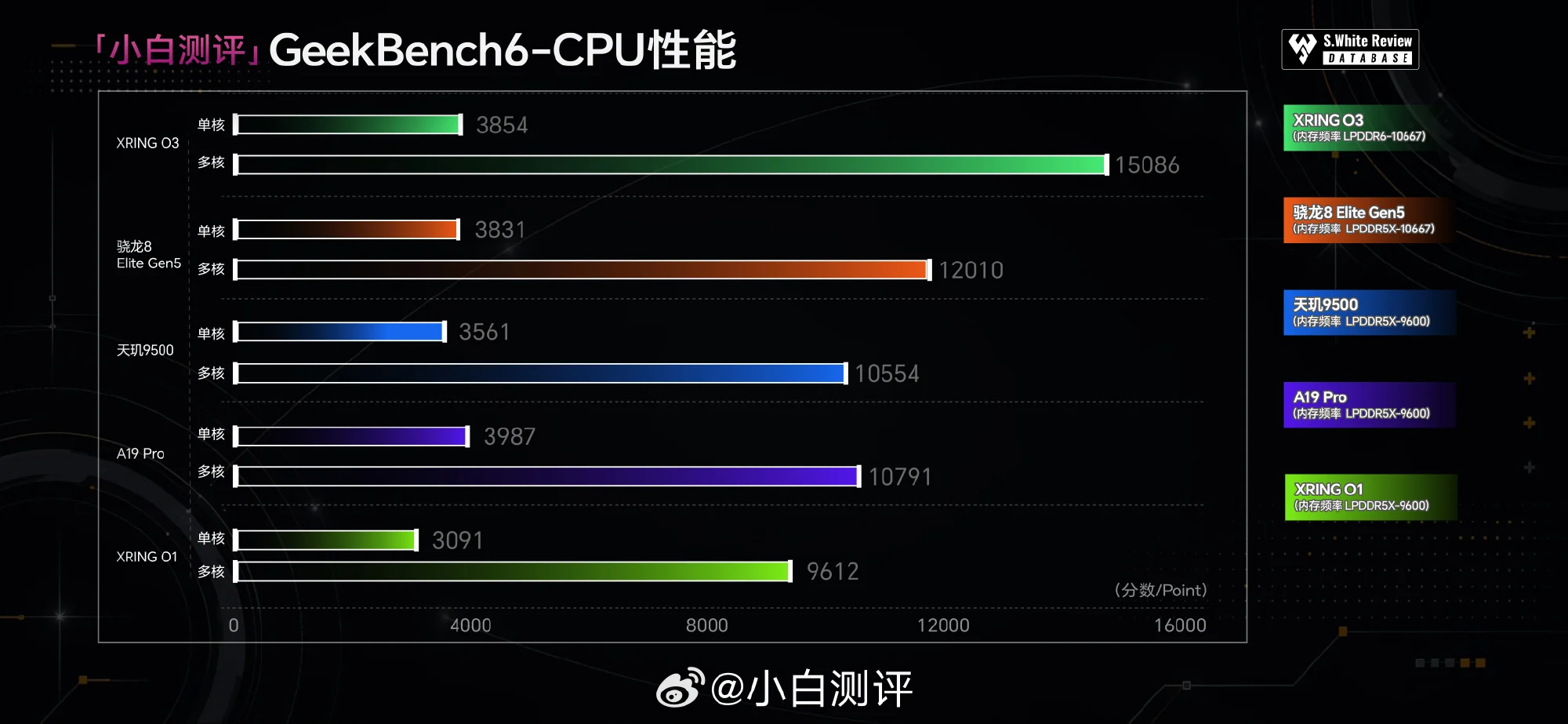
According to figures released regarding the chip, it has surpassed 5.22 million points on AnTuTu, symbolically crossing the five-million mark. However, it is essential to approach such benchmarks with caution. A synthetic score alone does not accurately reflect a smartphone’s real-world performance, especially in terms of longevity, energy consumption, and thermal management.
Nevertheless, the result clearly illustrates the performance level that Xiaomi aims to achieve.
A CPU with Ten High-Performance Cores
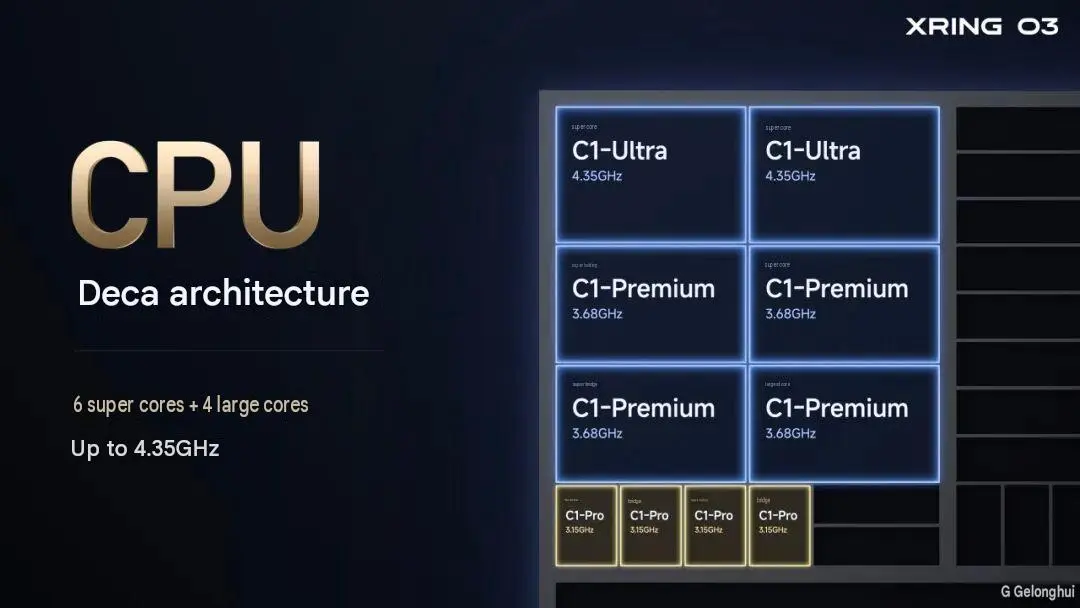
The XRING O3 features a particularly unusual CPU architecture. The chip reportedly uses 10 cores, all classified as high-performance cores. Xiaomi is thus departing from the traditional separation between high-performance cores and smaller cores dedicated to energy efficiency.
The brand also announces more than 15,000 points in multicore performance, which is roughly a 60% improvement compared to its predecessor.
However, such an architecture raises a critical question: consumption. In a relatively thin foldable smartphone, maintaining high performance over extended periods can be much more challenging than on a device with generous cooling systems. Therefore, the true test of the XRING O3 will be less about its peak performance and more about its ability to sustain that performance without excessive heating.
A New G2-Ultra NX Graphics Chip
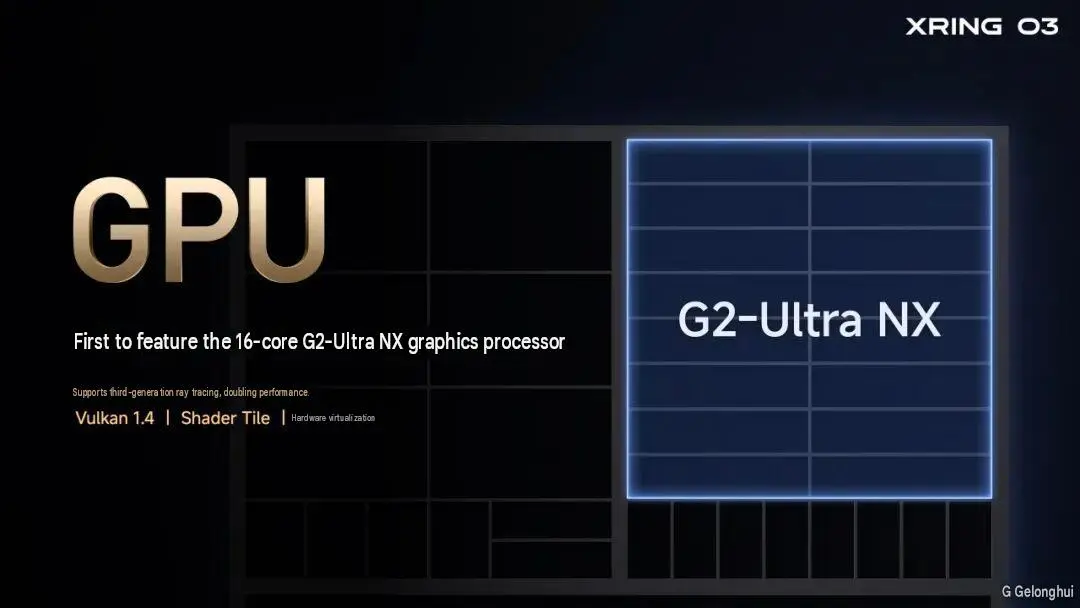
Xiaomi is also introducing a new graphics architecture called G2-Ultra NX. According to the manufacturer, the GPU would offer up to 85% better performance compared to the previous generation.
Even more impressively, Xiaomi claims a 64% reduction in energy consumption.
If these figures hold true in real-world usage, the benefits would be substantial. Enhanced graphic performance is particularly critical on a foldable device, where the large internal display may be utilized for gaming, multitasking, or various professional applications.
Improved GPU efficiency could also help mitigate the impact of these tasks on battery life.
The First Smartphone Compatible with LPDDR6
Another significant development: the XRING O3 is said to be the first mobile SoC compatible with LPDDR6 memory. This advancement would increase memory bandwidth to 113.8 GB/s, which is about 48% better than the XRING O1.
Memory bandwidth is becoming increasingly strategic in modern smartphones. CPU, GPU, and AI dedicated units often need to quickly move large amounts of data. This is especially crucial with AI models running locally, which can heavily tax memory resources.
Thus, LPDDR6 support could provide the Xiaomi 18 Fold with a notable advantage in handling the most demanding workloads.
Xiaomi Also Reduces Memory Latency
The manufacturer mentions a new unified bus architecture and optimized metallic interconnect design for the SoC with the goal of reducing latency between various computational units and memory. Xiaomi states a static latency of 82 ns. As is often the case with figures from technical presentations, the real-world impact will largely depend on specific usage scenarios.
However, the concept is crucial: Xiaomi is no longer solely focused on increasing clock speeds or core counts. The brand is also working on improving data flow within the chip.
This type of optimization is what slowly distinguishes a mature SoC from merely powerful architecture on paper.
A Foldable Serving as a Technological Demonstrator
Choosing the Xiaomi 18 Fold as the launch platform for the XRING O3 is likely no coincidence. Foldable smartphones have become technological showcases, allowing manufacturers to highlight their expertise in areas such as displays, hinges, batteries, photography, and now silicon. By integrating its new in-house chip into the Fold model, Xiaomi can present the entire device as one centered around its own technologies.
The parallel with Apple becomes increasingly hard to ignore.
Controlling the processor enables better adaptation of the system, consumption, and AI functions to the exact needs of the product. Xiaomi obviously doesn’t yet have the same level of integration as Apple, but XRING clearly shows the direction they are heading.
The Real Challenge Will Be Battery Life
However, all these performances must come within a foldable device. This is where the Xiaomi 18 Fold will be particularly interesting to observe. A powerful SoC, a large flexible display, and a thin chassis pose a challenging balance. If the XRING O3 truly consumes significantly less energy while delivering substantially better performance, Xiaomi could gain a significant edge.
Conversely, impressive benchmark scores could lead to overheating or reduced battery life. The previous generation already demonstrated that thinness alone is no longer sufficient to differentiate a high-end foldable.
Efficiency is becoming increasingly critical.
Xiaomi Transforms the Fold into a Showcase of Its Technological Independence
The Xiaomi 18 Fold seems to have a broader mission than merely updating the foldable lineup. It aims to demonstrate that Xiaomi is capable of designing a high-end product centered around its own silicon. Smartphones, AI chips, automotive technology, and now memory architectures: the brand is progressively building a more vertically integrated hardware ecosystem.
The Xiaomi 18 Fold will be one of the first products that allows for an assessment of whether this strategy can work beyond technical presentations.
For Xiaomi, succeeding with the XRING O3 is not just about surpassing a Snapdragon in AnTuTu. It’s about demonstrating that an in-house chip can deliver the power, battery life, stability, and software control needed for one of the most complex smartphones in its collection.
And it is likely here that the true significance of the Xiaomi 18 Fold will be decided.



