

Vertiv Unveils Next Predict: A Managed Service for Predictive Data Center Maintenance
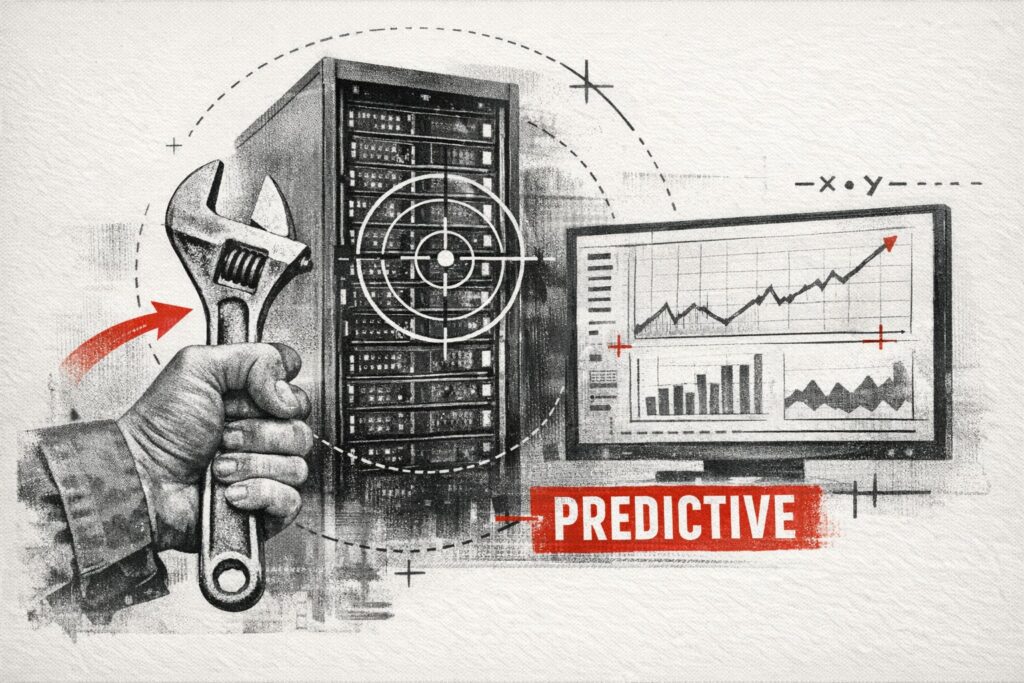
Vertiv, a leader in data center solutions, has launched Vertiv Next Predict, a managed service that harnesses data analytics and machine learning to enhance operational efficiency in data centers. This announcement marks a significant shift towards predictive data center management, addressing the growing complexities driven by artificial intelligence (AI), increased power densities, and intricate IT architectures.
As AI workloads revolutionize data centers into high-performance computing facilities, the need for effective maintenance strategies becomes critical. Rising rack densities, the widespread adoption of liquid cooling, reliance on energy storage batteries, and the proliferation of distributed sites are all putting pressure on traditional operational models that rely on fixed schedules and reactive interventions.
In this evolving landscape, Vertiv Next Predict emerges as a solution, providing continuous monitoring of critical infrastructures. The core aim of this service is to shift from scheduled maintenance to a model driven by the actual performance of assets, enabling operators to anticipate failures before they compromise availability.
AI-Driven Predictions, But Human Execution
Vertiv Next Predict focuses on the collection of telemetry data from power, cooling, and energy storage systems. By leveraging this data, the service aims to detect operational anomalies early, assess their potential impact, and guide corrective actions before issues arise.
From a technical standpoint, Next Predict comprises multiple layers. The initial layer detects anomalies based on operational parameters. Subsequently, a predictive engine evaluates the operational consequences to prioritize risks. A root cause analysis layer identifies contributing factors, while a prescriptive layer suggests targeted interventions.
Importantly, Vertiv emphasizes that execution duties remain firmly in the hands of human teams. AI plays a crucial role in observation, prioritization, and recommendations, but physical interventions are still carried out by people. Consequently, this model represents augmented predictive maintenance rather than complete automation of decision-making processes. For operators, the challenge is to minimize the response time between detecting an issue and executing a field response, rather than achieving operational autonomy.
Comprehensive Service Across the Vertiv Ecosystem
Next Predict supports an extensive range of Vertiv platforms, including battery energy storage systems (BESS) and liquid cooling components. The company highlights a unified service architecture that spans the entire energy chain, linking electrical networks with IT loads to correlate energy, thermal management, and IT data within a single analytical framework.
This capability for correlation is crucial in high-density settings, where localized thermal imbalances or electrical instabilities can quickly disrupt GPU server clusters. The operational value lies in rapidly identifying failing components and prioritizing interventions, rather than relying on passive monitoring alone.
Moving Towards Data-Driven Service Strategies
This announcement reinforces Vertiv’s evolution towards a model more focused on managed services and the software-driven operation of its installed base. The equipment transforms into continuous telemetry sources, generating actionable operational intelligence. This trajectory aligns Vertiv with peers such as Schneider Electric, Siemens, and ABB, all investing in platforms that combine sensors, analytic models, and field expertise.
Under the increasing demands from AI workloads, the data center is evolving into a constantly monitored system, where performance depends as much on the quality of predictive models as on electrical capacity and thermal design.
Transitioning from Reactive to Predictive Data Centers
In the short term, the implications are tangible. In environments where racks consistently reach 30 to 60 kW and liquid cooling becomes standard for AI clusters, predictive maintenance is a direct lever for ensuring business continuity. Vertiv formalizes the transition from reactive to predictive data centers, an incremental yet foundational shift for operators.
For enterprises adopting this service, the benefits include reduced unplanned downtime, improved prioritization of maintenance actions, and more efficient utilization of energy and thermal resources. The anticipated business advantages revolve around increased availability, better control over operational costs, and enhanced security in high-density environments, as opposed to a speculative concept of self-repairing data centers.



