
Sideloading on Android: Google imposes a 24-hour delay and a forced reboot
Google finally clarifies the most controversial aspect of its upcoming Android policy regarding sideloading. Following the backlash triggered by its developer identity verification program announced last year, the company now presents a compromise: experienced users will still be able to install applications from unverified developers, but they will face a deliberately longer, more regulated, and significantly less spontaneous process.
Google’s message is twofold. On one hand, Android continues to officially advocate for the openness of its ecosystem. On the other hand, this openness will now be coupled with enough friction to deter scams, remote manipulations, and coercive installations.
And this is precisely where the debate begins.
A New Trajectory Designed to Slow Down the User
In a post published on the Android Developers blog, Google outlines what it refers to as the advanced flow. The first step requires users to activate developer mode to disable the protection that blocks the installation of apps from unverified developers. Next, Android will explicitly ask whether someone prompted the user to disable this security measure, a safeguard designed to disrupt fraudulent scenarios where a scammer is guiding their victim in real-time.
The process then necessitates a complete phone reboot, which Google presents as a means to interrupt any potential scam call or ongoing remote takeover. Following this reboot is the most radical innovation: a mandatory waiting period of 24 hours. Only after this period will users be able to finalize the operation, confirming their identity via biometrics or a PIN code.
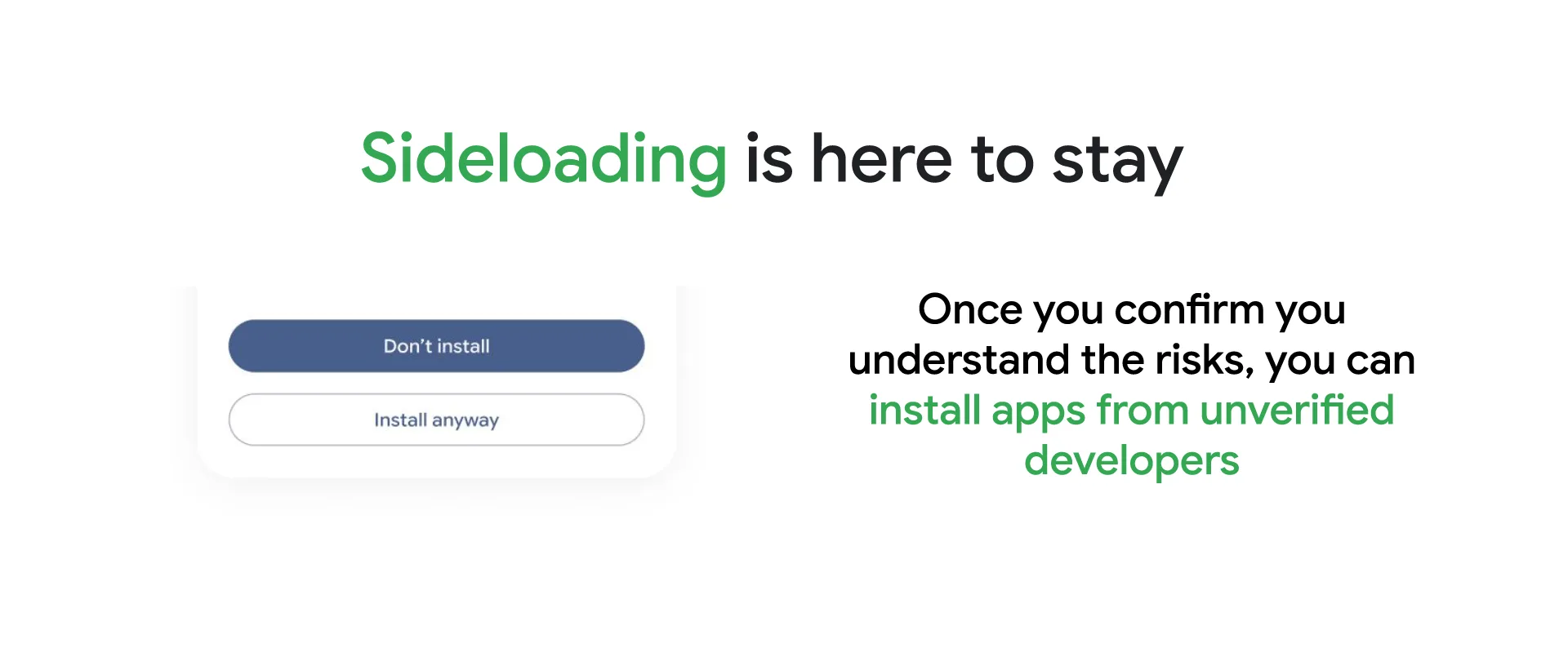
Once this process is completed, Android will allow the installation of applications from unverified developers either temporarily for 7 days or permanently.
The system will continue to display a warning indicating that the app comes from an unverified source, but users will have the option to override it. Google states that this new flow will start being rolled out in August 2026 through Google Play Services, rather than through a complete system update.
Google Tries to Reassure Without Renouncing Its Security Shift
This partial retreat is not the result of a sudden change in philosophy. It directly follows the sharp criticisms provoked by the announcement of the developer identity verification program, which will require developers distributing apps outside of the Play Store to prove their identity and register their packages. Google maintains this reform but now tries to demonstrate that it does not equate to the elimination of sideloading.
Sameer Samat, head of Android, reiterated recently that sideloading “is not going away.”
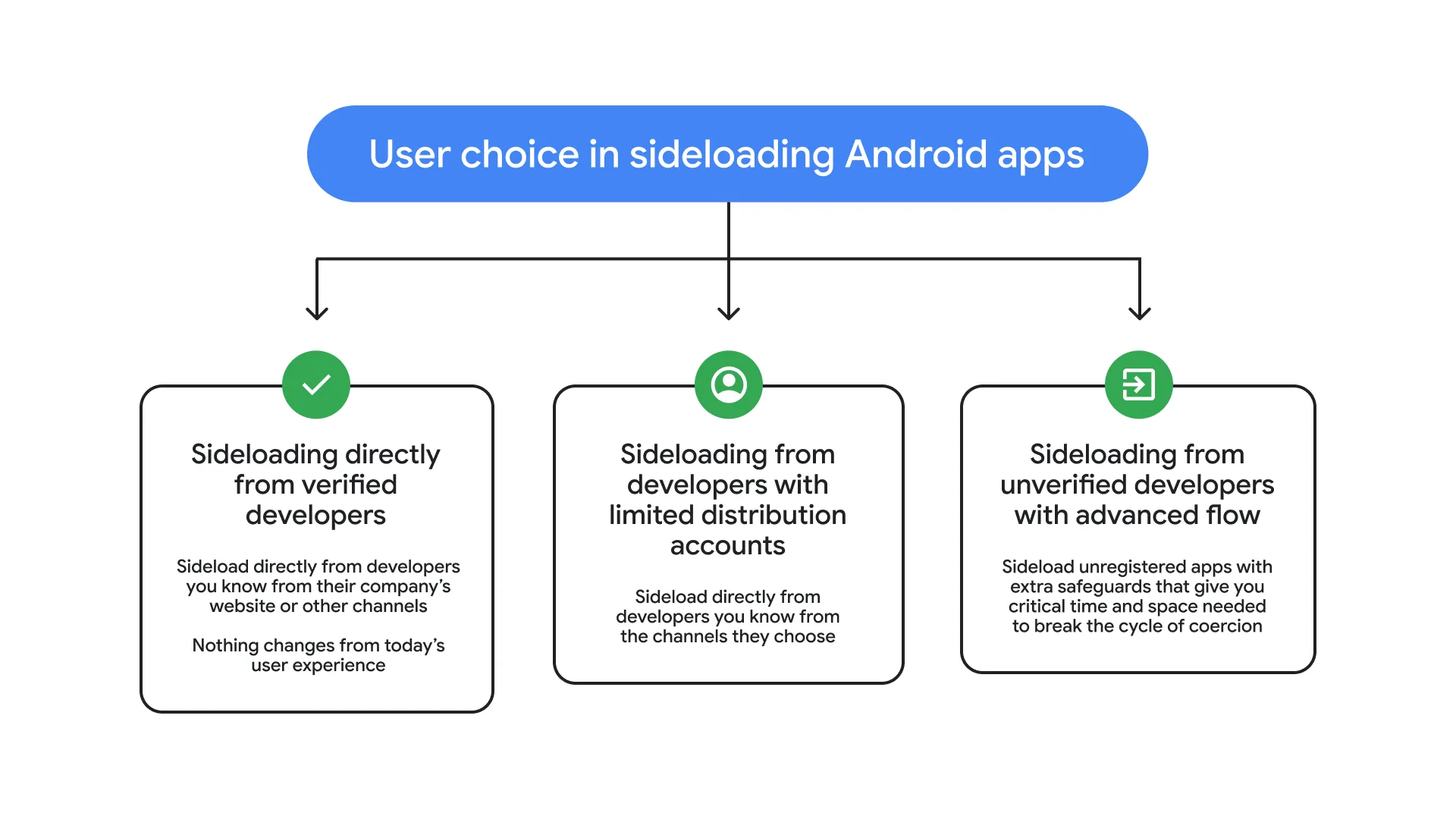
For developers, Google also plans a simplified path for students and hobbyists. These limited accounts will become available upon the deployment of the new advanced flow and will not require the standard $25 registration fee or full identity verification; however, they will only allow sharing applications with a maximum of 20 devices. In contrast, full distribution accounts will require identity verification and app registration.
Openness Preserved… But Much Less Smooth
On paper, Google can thus assert that Android remains open. In reality, sideloading will become a much heavier operation for anything that escapes the verified ecosystem. This is precisely what fuels the anger of part of the Android community and the open-source ecosystem. Entities like F-Droid believe that this new layer of verification and friction directly threatens the alternative distribution of applications, even though Google presents it as a balanced compromise between freedom and security.
Google’s logic is, however, easy to understand. The company emphasizes that sideloaded applications historically carry a much higher risk than those sourced from the Play Store, with significantly higher levels of malware according to the data it cites. The 24-hour delay is not intended to discourage power users; it aims to break the urgent dynamics that many scams rely on. It is a psychological measure as much as a technical one.
The Real Change is the Philosophy of Android
Ultimately, this reform conveys something broader about Android in 2026. For a long time, the platform’s openness was primarily measured by the ease with which users could install whatever they wanted, from wherever they wanted. Now, Google seeks to maintain this freedom while redefining it as an “expert” act—rarer, more conscious, and almost more solemn. Sideloading isn’t disappearing; it’s changing status.
For knowledgeable users, the main consequence will be a loss of fluidity. For independent developers, the issue runs deeper: it touches on how Android is gradually redefining the boundary between historical openness and security governance. And this is likely where the real debate will unfold in the coming months.