Qualcomm: The Snapdragon 8 Elite Gen 6 Doubles Down on 2 nm
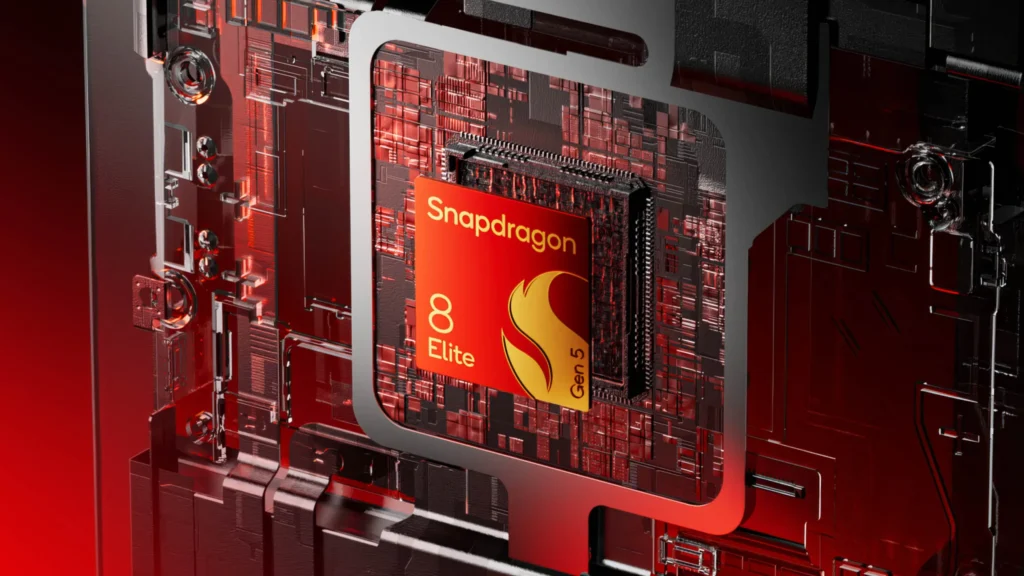
Qualcomm is set to make a significant move in the premium mobile segment. According to a recent leak this week, the chipmaker is not just working on a single flagship Snapdragon 8 Elite Gen 6 SoC, but on two distinct variants, identified by the references SM8950 and SM8975.
In current rumors, these are typically referred to as the future Snapdragon 8 Elite Gen 6 and Snapdragon 8 Elite Gen 6 Pro — a strategy for Qualcomm to more aggressively segment its top-tier market offering.
Snapdragon 8 Elite Gen 6 & 6 Pro: Two Premium Chips Debuting Distinct Versions of the Flagship Android
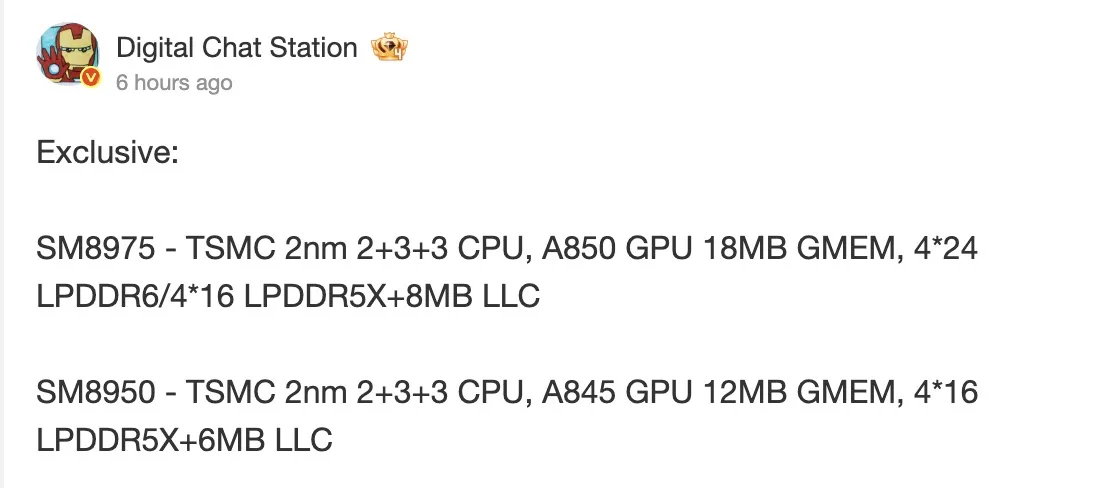
According to this information, both platforms share an ambitious common foundation: 2 nm TSMC fabrication and a 2+3+3 CPU architecture, indicating a sought-after balance between performance and efficiency cores. However, the key differences will lie mainly in other aspects of the platform.
The SM8975, expected to be the Pro version, is rumored to feature an Adreno 850 GPU, 18 MB of GMEM, LPDDR6 support in a 4×24 configuration, in addition to LPDDR5X, as well as an 8 MB LLC cache. In contrast, the SM8950 will be a bit less powerful, equipped with an Adreno 845, 12 MB of GMEM, LPDDR5X in a 4×16 setup, and 6 MB of LLC.
This segmentation is intriguing, as it suggests that Qualcomm aims to not only sell “the best Android chip,” but also to establish multiple levels of prestige within its premium offerings. The Pro model could target the most impressive devices — gaming phones, ultra-premium photographic models, or cutting-edge tech showcases — while the standard version serves as a broader base for mainstream premium flagships.
The Real Issue May Be A Shift in Pricing as Much as Performance
The same leaks suggest that the Snapdragon 8 Elite Gen 6 Pro could be significantly more expensive to produce. If confirmed, its adoption would likely be limited to a select few very premium models, while the SM8950 would seem to be the more realistic option for wider distribution.
In essence, Qualcomm may be replicating in mobile chips what we already observe in other tech sectors: a very expensive tech elite, alongside a more rational “main” flagship that can be industrialized.
This hypothesis gains further weight, as multiple sources already point to a launch timeline around September 2026, in line with Qualcomm’s usual schedule surrounding the Snapdragon Summit.
MediaTek Lurking, With A More Fluid Hierarchy Than Before
Another telling element within these rumors is that MediaTek’s upcoming Dimensity 9600 is expected to position itself somewhere between these two Qualcomm chips in terms of performance. Again, caution is warranted, but the mere idea is significant. It illustrates how the premium mobile SoC market is tightening, with competition no longer confined to a simple duel between a single Snapdragon and a single Dimensity.
Additionally, various reports also mention a distinct Snapdragon 8 Gen 6, though presented as less impressive on paper. If this coexistence materializes, Qualcomm could organize its 2026 lineup into multiple tiers: a more accessible Snapdragon 8 Gen 6, a primary Snapdragon 8 Elite Gen 6, and an ultra-premium Snapdragon 8 Elite Gen 6 Pro.
At this point, such claims remain speculative, but this is indeed the trajectory hinted at by the most recent leaks.
Qualcomm May Abandon The Idea of A Single Flagship
What appears to be unfolding here goes beyond a mere technical specification. Qualcomm seems to acknowledge that by 2026, the ultra-premium Android landscape is no longer homogeneous. Between ultra-slim phones, photo-centric models, gaming smartphones, and foldable showcases, a single “ultimate” SoC may no longer meet all expectations without compromises.
Creating a more expensive Pro version, equipped with enhanced features and potentially more exclusive, could be a way to adhere more closely to the needs of the most ambitious manufacturers.
In summary, Qualcomm may not only be preparing a new generation of chips; it might also redefine the very hierarchy of premium mobile offerings. And if this scenario comes to fruition in September, the real change may not be in sheer power but in the emergence of a multi-tiered Android flagship experience.