

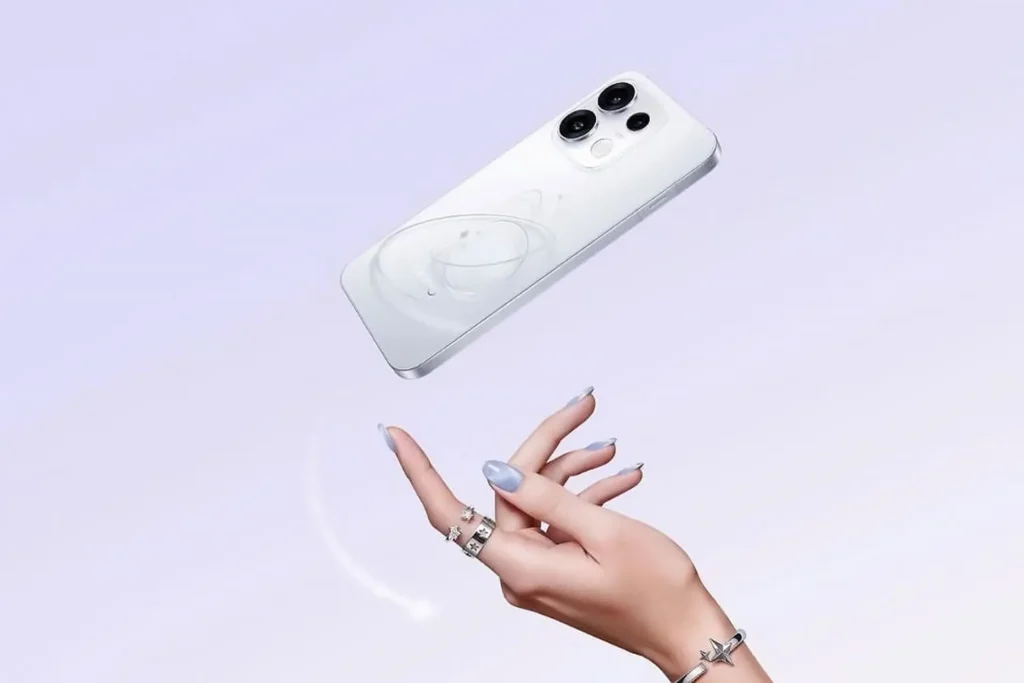
OPPO Reno 18: A Square 68 Megapixel Selfie Camera Is Reportedly in Development
OPPO may become one of the first Android manufacturers to adopt a square front sensor widely. Following rumors about a Find X10 Ultra with a 100-megapixel 1:1 selfie camera, a new leak now suggests a slimmer, photo-centric model featuring a square 68-megapixel sensor, potentially aimed at the upcoming Reno 18 series.
OPPO Reportedly Testing a New 1:1 Front Camera
Digital Chat Station reports that a new OPPO smartphone in development will utilize a 68-megapixel 1:1 front camera. The leaker does not specify the device’s name but describes it as a relatively thin photography-oriented smartphone expected in 2027.
This profile closely aligns with the Reno lineup, which has traditionally aimed to combine lightweight design, portrait capabilities, and mobile photography. Hence, the Reno 18 emerges as one of the most credible candidates, although this is not yet confirmed.
A Square Sensor Primarily Changes Framing
The advantage of a 1:1 sensor extends beyond its unusual shape. With a conventional 4:3 front sensor, the physical orientation of the device heavily influences the portion of the image available. A square sensor captures a much more symmetrical area, allowing the software to extract vertical, horizontal, or square framing without depending on the device’s orientation.
This means users can take a landscape selfie while holding their smartphone upright.
Apple Has Already Demonstrated the Benefits of This Approach
Apple currently employs this design in its iPhone 17 generation with its 18-megapixel front camera featuring Center Stage. The square sensor facilitates switching from portrait to landscape framing without needing to rotate the iPhone. Additionally, the system can automatically widen the field when another person enters the frame.
OPPO seems to be working on a similar idea but with a much more aggressive resolution approach.
68 Megapixels, But Resolution Alone Isn’t Everything
A 68-megapixel front sensor would be particularly unusual, as most premium smartphones still fall short of this resolution for their selfie cameras. However, pixel count alone will not determine quality.
The physical sensor size, pixel dimensions, optical quality, autofocus, and software processing will significantly impact the final result.
High resolution primarily provides more flexibility for cropping the image.
Cropping Is One Key Advantage
With a highly defined square sensor, OPPO could extract various frames from a single capture. Portrait for TikTok or Instagram Stories, landscape for a YouTube video, or square for certain social networks. The phone wouldn’t require physical sensor repositioning or force the user to rotate the device.
This can also aid electronic stabilization, which necessitates maintaining margins around the final image.
An Interesting Technology for Video Calls
The benefits extend beyond selfies. Video calls directly benefit from a more flexible sensor. A smartphone can keep the user’s face well-framed as the user shifts position slightly.
The software can also perform more natural automatic tracking without losing as much resolution. This is exactly the type of feature that is becoming increasingly important with video calls, live streams, and mobile content creation.
OPPO Had Previously Been Linked to a 100 Megapixel Square Sensor
This new rumor is not alone. In May, Digital Chat Station had previously mentioned a prototype OPPO utilizing a 100-megapixel square front sensor. Speculations have since associated this camera with the future Find X10 Ultra. However, this smartphone is not yet official, and OPPO has not confirmed either the resolution or format of its front camera.
Thus, it is essential to distinguish between the technology being tested and the commercial product that will ultimately use it.
The Find X10 Ultra Could Serve as a Showcase
If the rumor is validated, OPPO may be following a fairly typical strategy. The Find X10 Ultra would first introduce the technology in a high-end flagship. A more affordable version, featuring around 68 megapixels, could follow in the Reno series a few months later.
This is often how photographic innovations spread. High-end models act as test beds, and then the components become easier to produce and gradually make their way to less expensive devices.
The Reno 18 Aligns Well with This Positioning
The Reno series is precisely a logical candidate. OPPO has utilized it for several generations to highlight portraits, design, slimness, and social features. A square selfie camera presents a readily understandable benefit for this audience. While it may not enhance long-distance photography as much as a periscope telephoto lens, it directly impacts video calls, selfies, and social media use.
For a Reno device, the marketing coherence would be apparent. A prototype may still alter its sensor or never reach the market.
OPPO May Aim to Surpass Apple in Hardware
The comparison to Apple is nevertheless intriguing. Apple introduced the square sensor with a relatively modest 18-megapixel resolution, focusing mainly on software and automated framing. OPPO might adopt a different philosophy: more resolution, greater cropping flexibility, and potentially more aggressive stabilization or video modes.
This would be a distinctly Android approach, taking an existing concept and pushing the specs further.
The Battle for Front Cameras May Finally Heat Up
For several years, manufacturers have primarily focused their efforts on rear cameras. With 1-inch sensors, periscope telephoto lenses, 200-megapixel zooms, and variable optics, front cameras have evolved much less. However, the advent of square sensors could change this dynamic.
They address increasingly central uses: content creation, video conferencing, streaming, and social media.
Nevertheless, hardware alone is insufficient. For a 1:1 sensor to have genuine value, OPPO must create an interface that effectively utilizes this geometry. Automatic portrait-landscape switching, intelligent cropping, face tracking, stabilization, group management, and integration into third-party applications are crucial. Apple has already shown that a square sensor becomes much more interesting when paired with visible software functions.
Thus, Oppo must do more than simply announce 68 megapixels.
A Subtle Yet Potentially Very Practical Innovation
A square selfie camera may lack the spectacular aspect of a 10x zoom or a massive main sensor, yet it can significantly enhance an action performed dozens of times a week. No longer needing to turn the phone to frame a group, being able to record instantly in multiple formats, or retaining more margin to stabilize a video are subtle improvements, yet they directly impact usage.
If Oppo genuinely rolls out 1:1 front sensors from the Find X10 Ultra to the upcoming Reno series, the company could transform a curiosity introduced by Apple into a new trend in mobile photography.



