

Huawei Mate XT 2: The new tri-fold adopts a U-fold and finally protects its flexible screen
Huawei is preparing a major transformation of its most spectacular smartphone. The Mate XT 2, successor to the first tri-fold launched by the brand, now features a U-folding mechanism instead of the previous Z architecture.
This change is not purely aesthetic. It primarily allows the main flexible screen to be folded inside the chassis when the phone is closed, an evolution that could significantly enhance its protection in daily use. Huawei has officially announced the full presentation of the Mate XT 2 for September 7, 2026, alongside HarmonyOS 7.
Huawei completely changes the folding logic
The original Mate XT made waves with its screen capable of bending in two different directions. One hinge folded part of the screen inward, while the other folded it outward. This Z architecture gradually transformed the smartphone into a 10.2-inch tablet, but it had an obvious consequence: part of the flexible screen remained exposed when the device was closed.
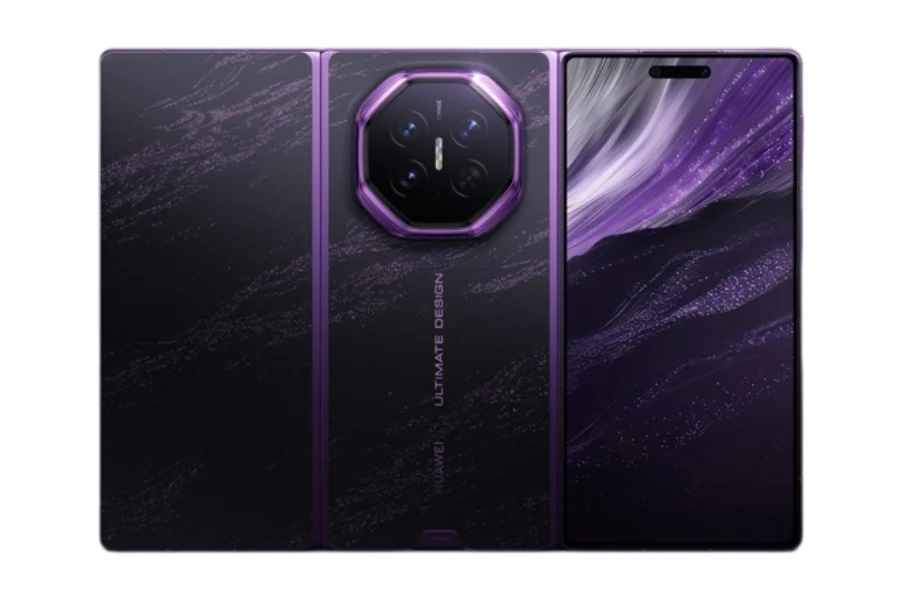
The Mate XT 2 abandons this approach. New visuals show a U-system, where the panels fold to enclose the main flexible screen within the phone. This is arguably the most significant advantage of this new architecture. A foldable screen remains much more fragile than a traditional display protected by rigid glass.
On the first generation, part of this flexible surface served as the external display. This meant it was exposed to scratches, impacts, and objects in a pocket or bag.
With the Mate XT 2, Huawei adds a genuine separate external display. Once the phone is fully folded, the large flexible panel is locked away between the different parts of the chassis. For such an expensive device, this change seems almost more critical than any processor upgrade.
Huawei has prioritized symmetry in the design, aiming for a more balanced weight distribution when the device is open. The company states that the Mate XT 2 measures only 3.5 mm in thickness at its thinnest point when unfolded, while incorporating both internal and external screens. The hinge system and screens have also been reinforced to enhance durability against everyday shocks.
The cost of a screen replacement explains this caution
Fragility is especially pronounced in a triple-fold. Replacing the screen for the first Mate XT could cost several thousand yuan in China, with repair prices around 4,999 yuan in some cases. The flexible surface is enormous, and the mechanism is much more complex than that of a standard foldable. Therefore, minimizing its direct exposure becomes a compelling economic argument.
Huawei seems to have accepted an architectural compromise to make the second generation less anxiety-inducing for everyday users.
The Mate XT 2 resembles Samsung’s triple-fold concept
The new geometry naturally echoes that used by Samsung in its own triple-fold concepts and devices. The three panels fold inwards to protect the main panel. Nevertheless, Huawei maintains a distinction in the folding order. The Mate XT 2 would open to the right, while Samsung’s approach relies on a slightly different sequence.
Nonetheless, the end goal remains the same: to create a compact smartphone when closed, without leaving a substantial flexible OLED surface directly exposed.
The true external display also changes daily usage
The addition of a dedicated external display could profoundly change how users interact with the Mate XT 2. On a triple-fold smartphone, it may not always be convenient to unfold multiple panels to respond to a message, check a notification, or conduct a quick search. A traditional external display allows the device to be used like a classic smartphone when closed.
Then, when more space is needed, the user can open the first panel and then the second. This transforms the Mate XT 2 into a potentially more versatile device than its predecessor.
A pill-shaped cutout appears on the front
Images also reveal an elongated pill-shaped cutout on the external screen. This layout reminds us of some other premium Huawei smartphones. It suggests that the brand might integrate a more advanced biometric system than a simple selfie camera.
A 3D facial recognition system is specifically mentioned. However, Huawei has yet to confirm this feature on the Mate XT 2. Therefore, the shape of the cutout serves as an indication, not definitive proof.
Nonetheless, this assumption remains credible given the manufacturer’s current strategy. Huawei continues to develop advanced facial recognition systems for its highest-end models. A tri-fold positioned at the pinnacle of its lineup is a logical candidate for such technology. Secure facial authentication would also make sense for a device likely to be used as a professional tool, thanks to its vast display area.
However, we will have to wait for the official presentation to know the exact nature of the sensors integrated into this cutout.
The camera retains its octagonal signature
The back of the Mate XT 2 appears much more familiar. Huawei keeps a large octagonal camera module, reminiscent of that on the first model. This decision allows the smartphone to remain instantly recognizable despite the complete overhaul of its folding mechanism.
Photography continues to be a crucial aspect of the Mate lineup. However, Huawei has not yet officially detailed the sensors or potential enhancements made to this generation.
The design is now visible; the full specifications remain largely to be uncovered.
The processor remains shrouded in uncertainty
Initial rumors mention the Kirin 9030 family for the Mate XT 2. Some information points to a Kirin 9030S, while others suggest a newer iteration, the Kirin 9030 Pro. Huawei has yet to publicly announce a decision.
Therefore, it’s advisable not to regard the precise choice of chip as confirmed. What seems more likely, however, is that the Mate XT 2 will use one of the high-end Kirin platforms already deployed or derived from the latest Pura series.
Raw power isn’t necessarily the priority for the tri-fold
In a device like this, the processor is not the sole concern. The Mate XT 2 must manage a giant flexible panel, multiple screen configurations, transitions between open and closed modes, and applications that utilize different display proportions.
Energy consumption and thermal management are, therefore, particularly crucial. A very powerful tri-fold that can’t maintain its performance due to heat would be of little interest. Huawei must strive for a balance between power, battery life, and slimness.
The Huawei Mate XT 2 is available in four configurations: 16 GB + 512 GB, 16 GB + 1 TB, 16 GB + 1 TB with enhanced privacy screen, and a premium version of 16 GB + 2 TB that includes both an enhanced privacy screen and a stylus. The first three options come in obsidian black, white, and purple, while the 16 GB + 2 TB model is exclusive to the purple finish.
HarmonyOS 7 will officially accompany the Mate XT 2
One element is now confirmed: the Mate XT 2 will be unveiled alongside HarmonyOS 7. Huawei has scheduled its event for September 7 at 2:30 PM in China. The company officially describes this conference as the launch of HarmonyOS 7, the Mate XT 2, and several new products.
The smartphone will thus become one of the key hardware showcases for the new system. This pairing is, of course, intentional. A tri-fold precisely requires an operating system capable of quickly adapting interfaces to multiple screen sizes.
HarmonyOS must exploit three very different formats
The software challenge is considerable. When closed, the Mate XT 2 functions like a classic smartphone. Partially open, it becomes a sort of large foldable. Fully deployed, it resembles a small tablet. HarmonyOS must manage three experiences without making the user feel like they are switching from one device to another.
The applications need to reposition, the windows must resize, and the content should take advantage of the additional space without just being artificially enlarged. This is precisely where Huawei can differentiate its tri-fold from a mere technological demonstration.
The Ark Engine is expected to play a bigger role
HarmonyOS 7 also introduces an updated Ark Engine. Huawei highlights more embedded intelligence within the system and a deeper optimization of performance. Some sources mention the integration of a large model directly into the system engine to better anticipate various usage scenarios.
Huawei claims additional performance gains, but these figures will need to be evaluated independently when the final version is available. On the Mate XT 2, the primary interest could be the system’s ability to optimize resources based on the display mode in use.
AI also becomes a system optimization tool
The integration of a model directly within the system engine marks a significant evolution. AI is no longer solely used for writing text, editing photos, or summarizing documents. It can also anticipate how a device will be used and distribute its resources more intelligently.
On a tri-fold, these optimizations can be particularly beneficial. The graphical load of an external screen is obviously different from that of a fully deployed display of over 10 inches. Therefore, the system must continuously adapt performance and consumption.
Huawei leverages its lead in the tri-fold market
The original Mate XT gave Huawei considerable media attention. While Samsung long dominated the market for classic foldables, Huawei was the first to commercially introduce a smartphone capable of genuinely transforming into a tablet due to its two hinges.
However, the second generation is now shifting priorities. It’s no longer enough to be first; the product must become more robust, more practical, and more reliable for everyday use. The transition to U-folding perfectly illustrates this evolution.
The first Mate XT was primarily a technological showcase. Its thinness, massive screen, and spectacular mechanism were enough to create a “wow” effect. The Mate XT 2 seems to address a more mature issue: how to make this concept sustainably usable? Protecting the flexible screen, adding a genuine external display, optimizing the interface, and potentially improving biometrics. These are much less flashy developments for an advertisement, but they are likely much more important for the user.
Nevertheless, U-folding is not automatically superior in every aspect. Adding a distinct external display increases the complexity of the product, and it may also impact thickness, weight, or consumption. Two hinges and multiple panels remain extremely challenging to miniaturize.
Therefore, Huawei must demonstrate that the new system retains one of the technical feats of the original Mate XT: providing a vast display area without becoming an absurdly bulky device when closed.
Huawei will completely unveil the Mate XT 2 on September 7, 2026, alongside HarmonyOS 7. This time, the most impressive aspect may not be to see three displays deploy into one. It will be to see Huawei transform a technological feat into a device robust enough for its owner to dare to use it every day.



