

Red Hat and Google Cloud Unveil Ambitious Integration to Simplify Operations
Red Hat and Google Cloud are joining forces with a shared vision for operational simplicity. The recent integration of OpenShift into the Google Cloud console, alongside the general availability of OpenShift Virtualization on Google’s bare metal infrastructure, marks a significant step toward merging containers and virtual machines. This development presents a path for progressive modernization, albeit with the caveat of relying on U.S. law for the underlying infrastructure.
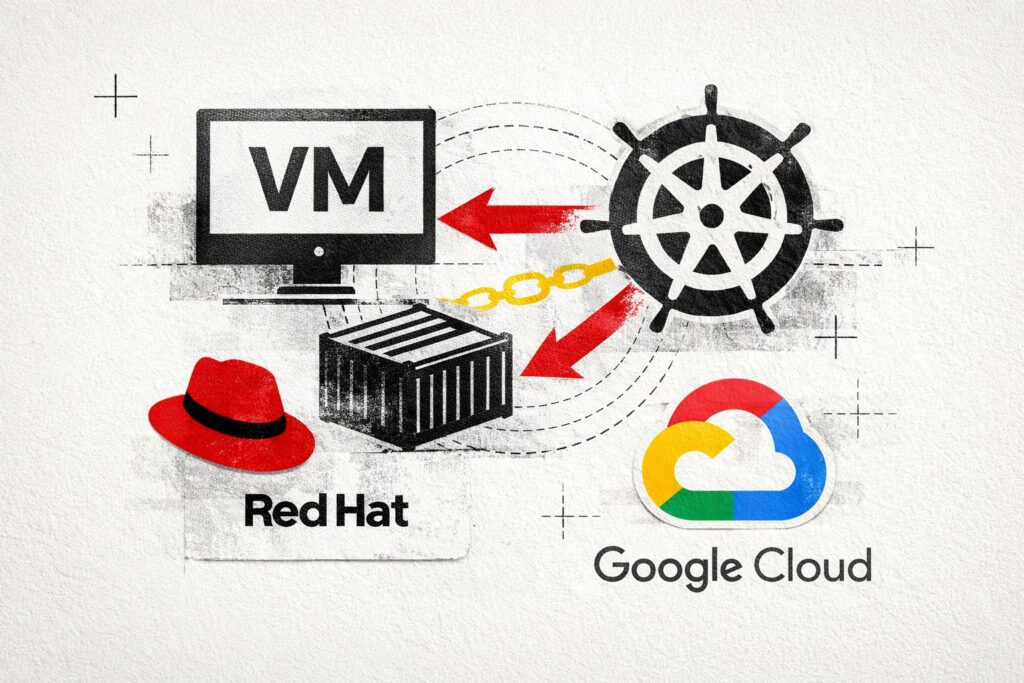
The announcement was made during KubeCon + CloudNativeCon Europe, where Red Hat, an IBM subsidiary, and Google Cloud detailed the expansion of their existing partnership along two key axes. First, OpenShift’s direct integration into the Google Cloud console streamlines the access and provisioning process for IT teams. Secondly, the general availability of OpenShift Virtualization within Red Hat OpenShift Dedicated on Google Cloud allows organizations to run virtual machines alongside containers on a unified Kubernetes platform.
This strategy aims to minimize operational disruptions. Organizations managing legacy virtualized applications alongside containerized workloads often find themselves juggling separate tools, teams, and governance models. OpenShift Virtualization seeks to eliminate this fragmentation by integrating virtual machines, containers, and serverless workloads onto a common Kubernetes foundation, offering shared interfaces, tools, and operational practices.
OpenShift Now Accessible via Google Cloud Console
The integration of OpenShift into the Google Cloud console fundamentally alters the adoption journey for teams already working within the Google ecosystem. Users of OpenShift Dedicated can now validate Google Cloud prerequisites before entering a guided process for provisioning clusters directly from the Red Hat Hybrid Cloud Console. Billing is unified through the Google Cloud Marketplace, featuring a pay-as-you-go model that includes Red Hat OpenShift subscription costs as part of the expenses incurred for Google Cloud. Native integrations with Google Cloud Secret Manager, Certificate Authority Service, and Workload Identity Federation are also now available.
Mike Barrett, Vice President and General Manager of Hybrid Cloud Platforms at Red Hat, outlines the philosophy behind this partnership: “Red Hat’s hybrid cloud vision is centered around consistency—the ability to run any workload anywhere, using the same operational model.” He emphasizes the goal of aiding organizations in managing both traditional virtual machines and containerized applications from a centralized platform.
An Architecture for Performance-Sensitive Workloads
The general availability of OpenShift Virtualization within OpenShift Dedicated on Google Cloud leverages Google’s bare metal C3 instances, a significant architectural choice. By bypassing intermediary hypervisor layers and directly accessing computing and memory resources, organizations can execute performance-sensitive workloads or those under licensing constraints with greater predictability than traditional virtualized environments. Red Hat promotes the Migration Toolkit for Virtualization and Red Hat Ansible Automation Platform as supporting tools for migrating from traditional virtualization platforms.
Nirav Mehta, Vice President of Product Management for Google Cloud Compute Platform at Google Cloud, notes that customers are looking for ways to simplify their infrastructure without compromising performance. This partnership aims to deliver a seamless experience for running both virtualized and containerized workloads on Google Cloud infrastructure.
Sovereignty Concerns for European Organizations
For French CIOs and CISOs, this offering calls for careful consideration. Red Hat, as an IBM subsidiary, and Google Cloud are both subject to U.S. law, including the Cloud Act. This means the entire value chain—from the software provider to the infrastructure—is governed by U.S. regulations, potentially exposing organizations to extraterritorial subpoenas without prior notification. For organizations handling sensitive data or governed by regulations like NIS2, DORA, or the GDPR in its strictest interpretations, this is a critical factor to evaluate before making deployment decisions.
The offering primarily targets organizations already committed to Google Cloud, looking to streamline the coexistence of their virtualized and containerized environments. However, for those yet to finalize their hosting strategy, questions about data location and the applicable legal framework remain unresolved. OpenShift Dedicated on Google Cloud provides a fully managed model with global SRE engineers and built-in automation. While the operational promise is real, it does not exempt users from ensuring compliance with European regulatory contexts.



