

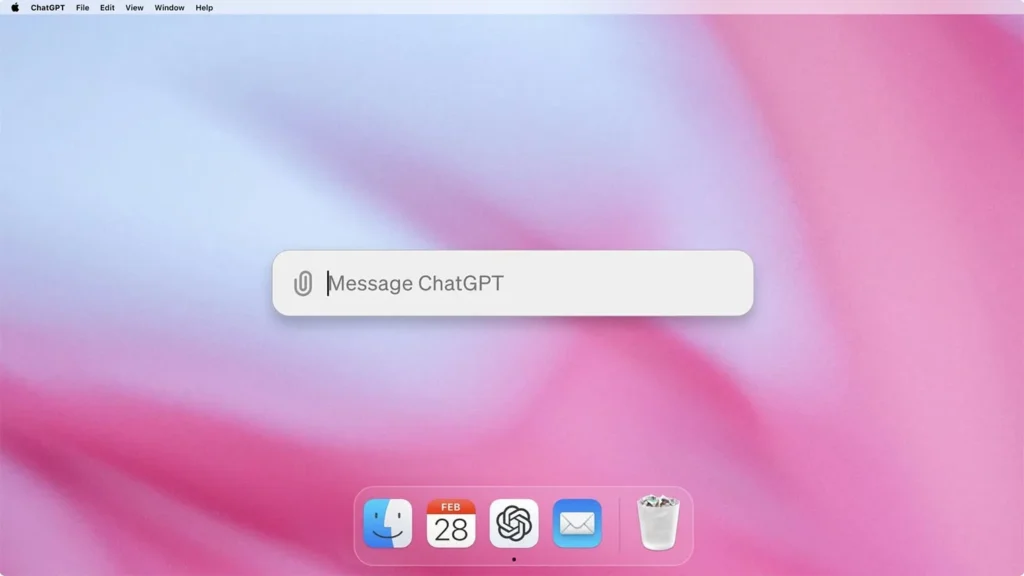
OpenAI wants to transform ChatGPT into an OS: an ambition that could reshape the digital landscape.
OpenAI is no longer content with just making incremental improvements to ChatGPT. According to recent statements from its leaders and several clear strategic signals, the company harbors a much bolder ambition: to evolve ChatGPT from a mere application into a full-fledged AI-driven operating system.
This profound transformation could ultimately change the way we interact with software, services, and even hardware.
ChatGPT: From Chatbot to Central Platform
For a long time, ChatGPT has been regarded as a powerful conversational tool, but limited to sporadic use. That perception is shifting.
During its Dev Day in the fall of 2025, OpenAI unveiled a major strategic evolution: the introduction of third-party applications that operate directly within ChatGPT. This means that services can now function without leaving the conversational interface, effectively transforming ChatGPT into a true software platform.
This approach is reminiscent of the early days of smartphones: initially simple devices that evolved into comprehensive ecosystems focused on applications.
A Clearly Defined Direction
This trajectory is not coincidental; it is now publicly embraced by OpenAI. Nick Turley, head of ChatGPT, summarized it plainly in an interview: “The evolution we are aiming for is a ChatGPT that functions like an operating system, with applications for writing, coding, and interacting with services and products.”
In this vision, ChatGPT becomes the central software layer where users can naturally carry out all their tasks without juggling numerous distinct applications.
A Strategic Appointment: Glen Coates at the Helm of the App Platform
The hiring of Glen Coates as Head of App Platform confirms this direction. A former executive at Docker and Stripe, Coates has extensive experience in creating infrastructures capable of supporting complex application ecosystems.
Joined @OpenAI to head up App Platform and help turn ChatGPT into an OS. Last successful attempt was iOS ~20 years ago, so .. should be a cakewalk
Thanks to @tobi for the opportunity of a lifetime, and 💚 to everyone at @Shopify
Can’t wait to coding-demo-fail on a new stage
— Glen Coates (@glencoates) December 15, 2025
His mission is clear: to structure ChatGPT as a platform capable of sustainably hosting applications, AI agents, and eventually hardware interactions.
This decision marks an organizational and technological turning point.
An Ecosystem Already in Development
The building blocks of the future “ChatGPT OS” are already visible:
- Integrated applications: Peloton, Spotify, Canva, Tripadvisor, Adobe…
- Persistent memory, allowing the AI to better understand user habits and context.
- Automated actions: search, writing, planning, technical assistance.
- Advanced multimodal capabilities, including image, text, code, and soon real-time voice.
ChatGPT increasingly acts as a conductor, linking services, data, and user intentions within a single flow.
What About Hardware?
No operating system exists without hardware. Here again, OpenAI is making strides. The company is collaborating with Jony Ive, former iconic designer at Apple, on an AI-driven hardware device expected around 2027. The goal is to design a device conceived from the outset around artificial intelligence, rather than as a mere adaptation of an existing smartphone or computer.
If this project comes to fruition, ChatGPT could become the software core of a new connected device, further solidifying its status as a central platform.
A Colossal Ambition… and Challenges to Match
- Direct competition with Apple, Microsoft, and Google
- Privacy concerns, particularly with persistent memory and connections to external services
- Reliability and security, which are essential for such a central role
- Regulation, as OpenAI operates under the watchful eye of authorities
Nonetheless, OpenAI emphasizes its commitment to developing useful, controllable AI that aligns with the common good — a message consistent with its mission-driven status.
Aiming for a New Computing Paradigm?
If this vision materializes, it could signify a paradigm shift akin to that of the smartphone or cloud computing. Instead of navigating between fragmented interfaces, users could interact with a single intelligent layer capable of anticipating their needs, coordinating services, and executing complex tasks at a simple request.
ChatGPT would then no longer be just another application but the primary interface for digital life.
OpenAI has not provided a specific timeline, and there is no guarantee that ChatGPT will ever become a full-fledged operating system. However, numerous signals are accumulating: hiring, public discourse, product architecture, and hardware partnerships.
One thing is certain: ChatGPT is no longer just a chatbot. And if OpenAI succeeds in its ambitions, computing as we know it could well enter a new era — conversational, contextual, and deeply driven by AI.



