

Nubia promises the first ‘AI Agent’ smartphone: an AI capable of using your phone on your behalf
Artificial intelligence on smartphones may soon reach a new milestone. Nubia has confirmed that it will unveil a new smartphone at the end of the month featuring an integrated AI agent that can autonomously perform complex tasks. More than just a conversational assistant, the brand promises an AI capable of directly interacting with apps and completing actions without user intervention.
The company will officially unveil this device during the World Artificial Intelligence Conference (WAIC) 2026, which will be held in Shanghai.
A Smartphone Designed Around A Real AI Agent
The announcement was made by Ni Fei, vice president of ZTE and president of the Mobile Devices division. According to the executive, the upcoming Nubia model will be the world’s first smartphone designed around a genuine artificial intelligence agent.
Unlike the generative AI functions already present on most premium smartphones, which respond to questions or generate text and images, Nubia asserts that its system will be directly integrated into the operating system.
The goal is to allow the AI to comprehend a request made in natural language and then automatically execute all necessary steps to fulfill it.
An AI Capable Of Acting Across Multiple Applications
To illustrate this approach, Nubia provides a concrete example. A user could simply ask their phone to book the cheapest flight to Beijing. The AI agent would then be able to open the relevant apps, compare the available offers, automatically input the necessary information, and finalize the booking, including payment, without any further action required by the user.
This philosophy brings the smartphone closer to the emerging autonomous AI agents in the industry, which can not only respond to requests but also act directly on software interfaces.
An Architecture That Directly Controls The Interface
To achieve this, Nubia states that it relies on GUI Agent-type architecture. Instead of communicating solely through the APIs of applications, the AI model can visually analyze the smartphone screen, identify interface elements, and interact with them just like a user would.
The company also specifies that this technology is based on a large language model running directly on the device, paired with its proprietary solution, CoClaw, which coordinates actions across multiple apps and services.
This approach aims to make automations smoother, without relying exclusively on specific integrations between applications.
A Smartphone Developed With ByteDance?
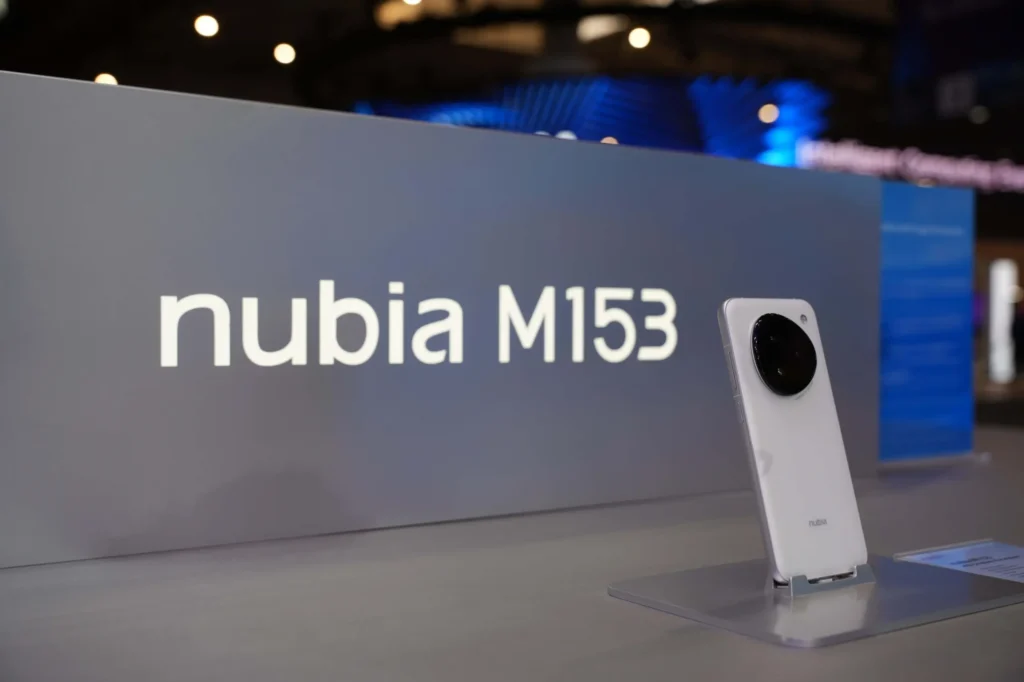
While Nubia has yet to reveal the commercial name of its upcoming device, several industry sources speculate that it could be the commercial version of the second-generation Doubao smartphone, developed in partnership with ByteDance, the parent company of TikTok. Its predecessor, known as Nubia M153, was introduced as a technology demonstrator before being limited for commercial release.
According to various Chinese media reports, the first batch of 30,000 units sold out on its first day of availability.
At this point, Nubia has neither confirmed this link nor disclosed the technical specifications of its next smartphone.
The WAIC 2026 As A Showcase For The Next Generation Of Mobile AI
The company will take advantage of the World Artificial Intelligence Conference 2026, taking place in Shanghai from July 17 to 20, to unveil this device. This event has become one of the main international gatherings dedicated to artificial intelligence, showcasing major announcements from Chinese companies in the sector each year.
With this upcoming smartphone, Nubia exemplifies a fundamental trend that goes beyond mere generative AI. Following assistants that can respond to questions, manufacturers are now seeking to develop intelligent agents capable of directly using applications on behalf of the user. If this approach lives up to its promises, it could profoundly transform the way we interact with smartphones in the coming years.



