

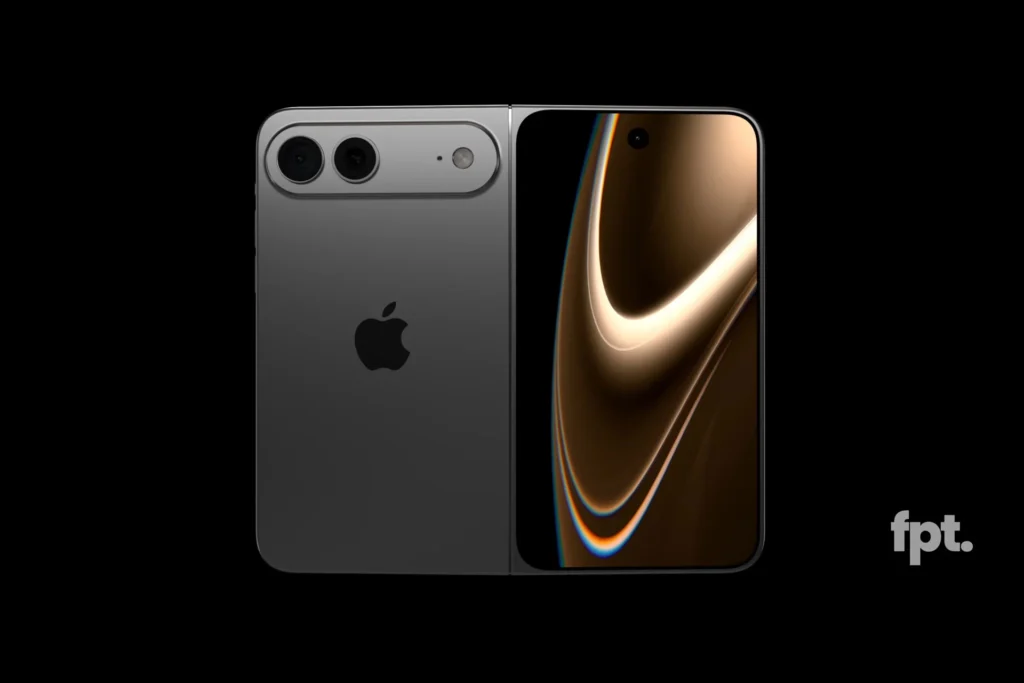
iPhone Ultra: Apple to Start Mass Production in July Ahead of September Presentation
After years of rumors and delays, Apple’s first foldable iPhone, dubbed the iPhone Ultra, appears ready to reach a significant milestone. According to recent information from the Asian supply chain, mass production is set to begin at the end of July, paving the way for an official announcement in September.
Beyond the timeline, the resolution of the hinge issue marks a pivotal moment for Apple.
Long criticized for being late to the foldable smartphone market, the Cupertino company opted to wait rather than release a product that did not meet its rigorous quality standards.
iPhone Ultra: Production Finally on Track
According to a report from The Elec, Apple has finalized the main features of its first foldable smartphone, including its screen, chassis, and mechanical components.
The manufacturer is currently in the phase of preparing for mass production. Foxconn will handle the assembly of the initial units following an initial round of industrial testing conducted in April.
As for the display, Samsung Display will supply the foldable OLED panels. The South Korean supplier has reportedly received the green light from Apple to commence manufacturing the first modules at its Vietnamese factory, where the flexible panel, display circuit, and various protective layers are assembled.
According to several Korean media sources, Samsung has secured a three-year exclusive agreement with Apple for this technology, with an initial order estimated at approximately three million panels. This relatively limited volume underscores Apple’s cautious strategy for this first generation.
The Hinge: A Critical Component
However, the main challenge is not the screen. For several months, the hinge has been the primary barrier to launching the project. Unlike a traditional smartphone, a foldable phone must endure hundreds of thousands, if not millions, of openings and closings without compromising the screen’s integrity or increasing the visibility of the central crease.
This component is crucial as it determines key aspects such as:
- The device’s durability
- The visibility of the crease in the center of the screen
- The smartphone’s ability to close perfectly flat
- The distribution of mechanical stresses on the OLED panel
According to sources cited by The Elec, Apple faced several challenges during the validation phases, including mechanical noises after numerous opening cycles and assembly tolerances exceeding target metrics, resulting in a higher defect rate.
These issues are now “largely resolved,” enabling Apple to finally validate the transition to industrial production.
September Launch Still Preferred
A few days prior, several rumors suggested a potential delay of two to four weeks due to these technical challenges. However, the situation seems to have improved significantly.
Although Apple’s particularly stringent quality controls may still slightly slow down the ramp-up at factories and limit inventory during the launch, there is currently no indication of a delay for the official presentation.
The anticipated timeline remains a launch during the September keynote.
An iPhone Ultra to Redefine the Lineup
The arrival of the first foldable iPhone could also disrupt Apple’s usual strategy. According to several consistent leaks, the September conference will primarily showcase the iPhone 18 Pro, iPhone 18 Pro Max, and the first foldable iPhone, which many analysts believe will be marketed under the name iPhone Ultra.
The standard model of the iPhone 18 may be postponed until spring 2027 to give more visibility to the new flagship product.
This reassignment reflects the strategic importance placed on this new category.
A Price That Matches Its Ambitions
The first foldable iPhone is also expected to become the most expensive smartphone ever sold by Apple. Analysts estimate the starting price to be around $1,999, with high-end configurations likely exceeding that threshold. This pricing strategy aligns with the complexity of its design and the low production volumes anticipated for this first generation.
Apple appears to favor a premium approach, focusing more on quality of manufacturing rather than large volumes in the first year.
Apple Prefers to Arrive Late… But With a Mature Product
Samsung, Honor, OPPO, and Vivo have dominated the foldable smartphone market for several years. Apple, on the other hand, has chosen a radically different strategy.
Rather than being first to market, the California-based company aims to deliver a device that addresses the criticisms faced by earlier generations of foldable phones: visible creases, limited durability, fragile hinges, and noisy mechanisms.
If the supply chain information proves accurate, resolving the hinge issue is likely the most crucial step in the entire project. More than just a component, it represents the technical barrier that has thus far prevented Apple from entering this market.
It remains to be seen if this lengthy wait will allow Cupertino to deliver the most refined foldable in the industry… or merely the most ambitious.



