

iPhone 18 Pro: Why new Chinese memory chips shouldn’t prevent a price increase
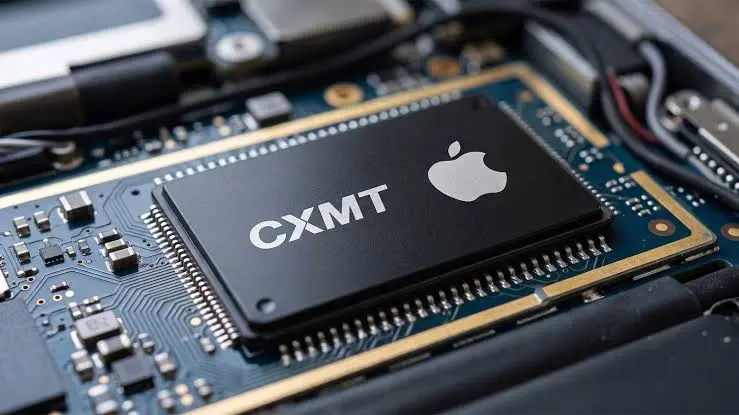
Apple is actively seeking new memory suppliers, but this doesn’t mean future iPhones will be cheaper. As the global memory shortage continues to impact the industry, the California-based company is exploring new sourcing options, including those from Chinese company ChangXin Memory Technologies (CXMT). However, it seems that the iPhone 18 Pro will not benefit from this strategy.
For consumers, a price increase is more likely than ever.
Apple Aims to Diversify Its Memory Suppliers
Faced with soaring production costs, Apple has already begun raising prices on several of its products. While iPhones have so far avoided this trend, that situation may soon change.
According to various reports, Apple is currently testing DRAM chips from ChangXin Memory Technologies (CXMT) while continuing discussions to expand its supply chain. The company is also considering collaboration with Yangtze Memory Technologies Co. (YMTC), alongside its long-time partners Samsung, SK Hynix, and Micron.
The goal is not just to reduce costs. Apple is primarily focused on securing its supply in an environment where global demand is surging due to data centers dedicated to artificial intelligence.
A Technical Shift Complicates CXMT’s Entry
Even if Apple approves CXMT chips, they are unlikely to be used in the iPhone 18 Pro. The reason is primarily technical. Rumors suggest that Apple is abandoning the traditional Package-on-Package (PoP) assembly for this generation in favor of a Wafer-Level Multi-Chip Module (WMCM) architecture.
This new design places the memory next to the main chip rather than above it, enhancing thermal performance, memory throughput, and energy efficiency.
Such a transition requires extremely close collaboration between the memory engineers and those developing the upcoming A20 Pro processor. In this area, Samsung and SK Hynix have a considerable advantage after several years of co-development with Apple. Integrating a new supplier while the architecture is shifting poses a significant industrial risk.
iPhone 18 Models May Benefit… But Not the Pro Versions
The Pro models are expected to be the first to adopt this new hardware platform. The standard iPhone 18 versions, set to launch later, may have a more flexible development timeline, allowing Apple more time to qualify components from CXMT.
Even in this scenario, their use would likely remain quite limited.
Several analysts believe that the Chinese memory chips will be reserved for devices intended for the Chinese market, where Apple aims to strengthen its local supply chain while complying with government expectations.
The Competition Is Now About Volume, Not Just Price
Contrary to popular belief, Apple is not merely looking to purchase cheaper memory. The real challenge is availability. Analysts estimate that 15-20% of the global production capacity for memory intended for consumer electronics could be absorbed by AI-dedicated data centers by 2027.
This competition between smartphones and AI infrastructure is putting unprecedented pressure on DRAM and NAND manufacturers.
By diversifying its suppliers, Apple hopes to secure enough components to maintain its production volumes, even if this does not prevent cost increases.
A Strategic Decision More Than Good News for Consumers
The potential entry of CXMT and YMTC into the Apple ecosystem is primarily a strategic move. It allows the company to reduce its dependence on a few historical suppliers and secure its production capabilities in a highly competitive market.
However, there is no indication that this diversification will result in cheaper iPhones.
On the contrary, with the ongoing rise in memory prices, the introduction of the A20 Pro chip fabricated on a 2nm process, and the evolution of the internal architecture, the iPhone 18 Pro appears to be headed towards a price increase.
In other words, these new partners may primarily help Apple produce enough iPhones… rather than save customers’ wallets.



