

ChatGPT Invades Chrome: OpenAI Transforms Browser Into Contextual AI Assistant
After conquering the web, smartphones, and desktop applications, ChatGPT takes a new step by integrating directly into Google Chrome. With its new official extension, OpenAI aims to make artificial intelligence a permanent browsing companion, capable of understanding the content of a web page, responding in real-time, and even performing complex tasks without leaving the browser.
This evolution now places OpenAI in direct competition with Google Gemini, which is already integrated into Chrome. More than just a battle between chatbots, the very future of web browsing is at stake.
ChatGPT Now Understands What You Are Viewing
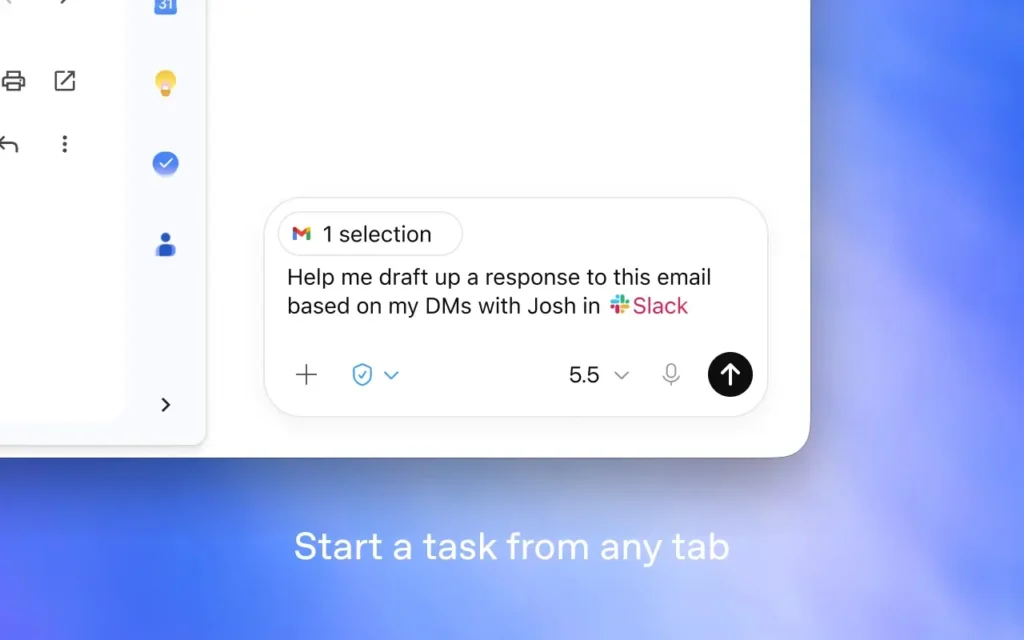
The new Chrome extension allows ChatGPT to access the content of the active tab to provide directly contextualized responses. Specifically, users can summarize an article in seconds, explain a technical or scientific concept, instantly translate text, answer questions precisely about the displayed page, or continue a conversation without needing to copy and paste any excerpts.
The goal is to make the AI assistance completely seamless in the browsing experience. The consulted content automatically becomes the context of the discussion, significantly speeding up research and enhancing the relevance of responses.
An AI Capable of Going Further with Agents
Beyond simple summaries, OpenAI also highlights the agentic capabilities of ChatGPT. Through the extension, the assistant can initiate more complex tasks that go beyond mere text generation. Users can delegate certain actions directly from their browser without interrupting their browsing experience.
This strategy aligns with OpenAI’s vision of transforming ChatGPT into a true digital assistant capable of not just understanding information but also acting based on user needs.
Facing Gemini: Two Visions of Intelligent Browsing
The arrival of ChatGPT in Chrome comes just months after the launch of Gemini in Google’s browser. Both solutions share a similar goal: to integrate AI directly into the web experience rather than using a standalone chat window.
However, Gemini benefits from a significant structural advantage.
Its native integration with Chrome allows it to analyze multiple tabs simultaneously, summarize information from various pages, interact with Gmail, Google Drive, Google Calendar, or Google Docs, and utilize Auto Browse, a feature capable of automatically performing tasks such as filling out forms or making reservations after user approval.
On the other hand, OpenAI responds with the conversational power of ChatGPT and the gradual development of its autonomous agents, which are expected to play an increasingly central role in its ecosystem.
The Browser Becomes the New AI Platform
This evolution illustrates a significant shift in the strategy of major players in artificial intelligence. For several years, AI assistants were primarily seen as text generation tools. Now, they seek to understand the context in which users operate to intervene at the right moment.
Reading a technical document, analyzing a contract, summarizing a financial report, explaining development documentation, or preparing an email from a web page are now actions integrated directly into the browser.
The experience becomes more fluid while reducing the need to switch between different applications.
A New Battle for Control of the Web Experience
With this extension, OpenAI is not merely adding an extra feature to ChatGPT. The company is directly challenging Google’s historical playground: the web browser.
Chrome is currently the main gateway to the Internet for billions of users. Integrating an artificial intelligence capable of understanding displayed content paves the way for a new generation of interfaces where traditional searching gradually gives way to a permanent conversational assistance.
While Google retains an advantage thanks to its native integration with Chrome and Workspace, OpenAI once again demonstrates its commitment to being present wherever users work and browse.
The next big competition in AI may not revolve around the quality of models but rather on their ability to become invisible, omnipresent, and smart enough to understand what we are doing even before we need to ask for help.



