

iOS 27 Officialized: Siri AI, Apple Intelligence 2.0 and a Discreet Yet Strategic Redesign of the iPhone
Two years after promising a revolution in artificial intelligence, Apple finally unveils its response. With iOS 27, unveiled at WWDC 2026, the Cupertino company is not merely improving the iPhone; it aims to redefine how users interact with their devices on a daily basis.
Highlights include a completely reimagined Siri, a new architecture for Apple Intelligence, enhanced visual customization, and deeper integration of AI throughout the system.
Apple Finally Addresses Liquid Glass Flaws
One of the first announcements concerns the evolution of the Liquid Glass design introduced with iOS 26. While this new visual identity was praised for its futuristic aesthetic, it also drew considerable criticism regarding the readability of certain interface elements.
Apple now offers a straightforward yet anticipated solution: a global slider to adjust the intensity of transparency effects.

Users will now have the ability to customize the appearance of the navigation bar, system menus, floating panels, and translucent interface elements. This decision demonstrates Apple’s commitment to finding a balance between spectacular design and user comfort.
Siri AI: The True Face of iOS 27
The star of WWDC 2026 is undeniably Siri AI. After multiple delays and a prolonged period of uncertainty, Apple has finally introduced the new generation of its voice assistant.
This iteration adopts a much more conversational approach, akin to modern assistants like ChatGPT, Gemini, or Claude.
Key new features include:
- more natural conversations
- synchronized memory via iCloud
- comprehensive chat history
- customizable tone and pace of voice
- enhanced contextual understanding

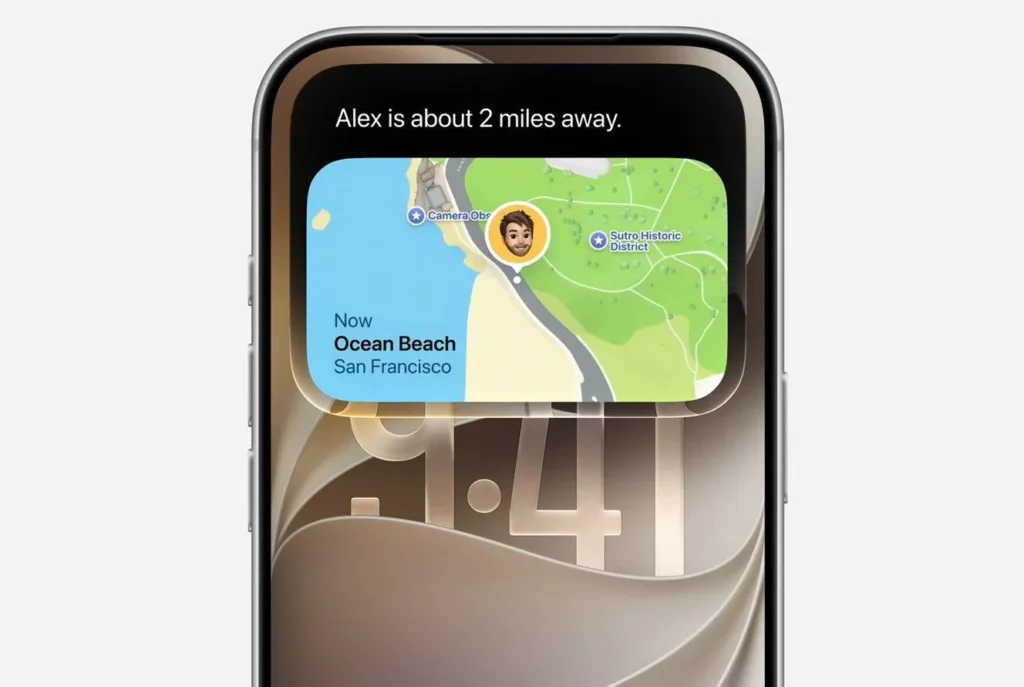
Visually, Siri has also abandoned its old interface. Responses now appear directly from the Dynamic Island, creating a smoother and less intrusive experience.
However, Apple is launching Siri AI initially as a beta version.
Its initial availability will be limited to English, while the European Union will have to wait longer before it arrives on iPhone and iPad.
An AI Capable of Understanding What’s Displayed on the Screen
One of the most significant advancements pertains to contextual understanding. With the new Apple Intelligence architecture, the iPhone can now analyze what is displayed on the screen and use this information to respond to user requests.
This capability finally brings Siri closer to the most advanced AI assistants on the market.
While Apple has yet to provide specific technical details, this feature paves the way for more relevant recommendations, automated actions, and contextual assistance within applications.
A development that could transform Siri into a genuine digital assistant rather than just a voice command system.
A Dedicated Siri Application Debuts
Another major innovation: Siri is now a standalone application. This approach mirrors the interfaces popularized by ChatGPT, Claude, or Gemini.
Users can review their previous conversations, resume a chat at any time, retrieve generated information, and synchronize their entire chat history across Apple devices.
Thus, Apple implicitly acknowledges that modern AI assistants are no longer limited to one-off interactions but are becoming permanent workspaces.
Artificial Intelligence Invades Every Aspect of iOS
Beyond Siri, Apple Intelligence now extends throughout the system. Safari has new features that can automatically group related tabs, monitor certain web pages, and send notifications for significant changes.
The Passwords app has also gained automation capabilities. Apple claims it can now update compatible credentials with a single action.
In the Phone app, a new feature called “Call Context” will automatically display relevant information during a call, such as a reservation number or contextual data related to the conversation.
Photography Enters a New Generative Era
Apple is also bolstering its creative toolkit. The Clean Up tool has received a major update and is gradually incorporating features already offered by Google Photos and Samsung Galaxy AI.
New features include:
- AI-assisted intelligent cropping
- generative image extension
- contextual enhancement of photos
- new capabilities for Image Playground
The goal is clear: to make Apple’s creative tools more competitive against solutions already provided by Google, Adobe, or OpenAI.
A Crucial Update for Apple’s Future
Beyond the features, iOS 27 mainly represents a strategic moment for Apple. The company has spent almost two years striving to catch up in artificial intelligence.
In the meantime, OpenAI, Google, Anthropic, and Microsoft have profoundly transformed digital usage through their generative models. With Siri AI and Apple Intelligence 2.0, Apple finally seems to be offering a coherent vision of its software future.
However, caution is still warranted: Siri AI will initially roll out in beta form, and several advanced features will be gradually deployed. Yet, one thing has become evident: for the first time in a long time, Apple is no longer presenting AI as just a feature.
It is becoming the very heart of the iPhone experience.



