
Google Play Revolutionizes Android Payments: What Changes for Users and Developers
After years of criticism and legal battles, Google is finally opening up its Android ecosystem further. Starting at the end of this month, developers will be able to offer their own payment systems directly within apps, a shift that could gradually transform the economy of the Play Store.
Google Loosens Its Grip on In-App Payments
For a long time, purchases made within Android apps were almost exclusively processed through Google Play Billing. This system allowed Google to manage transactions while taking a commission from each sale.
This era is now coming to an end.
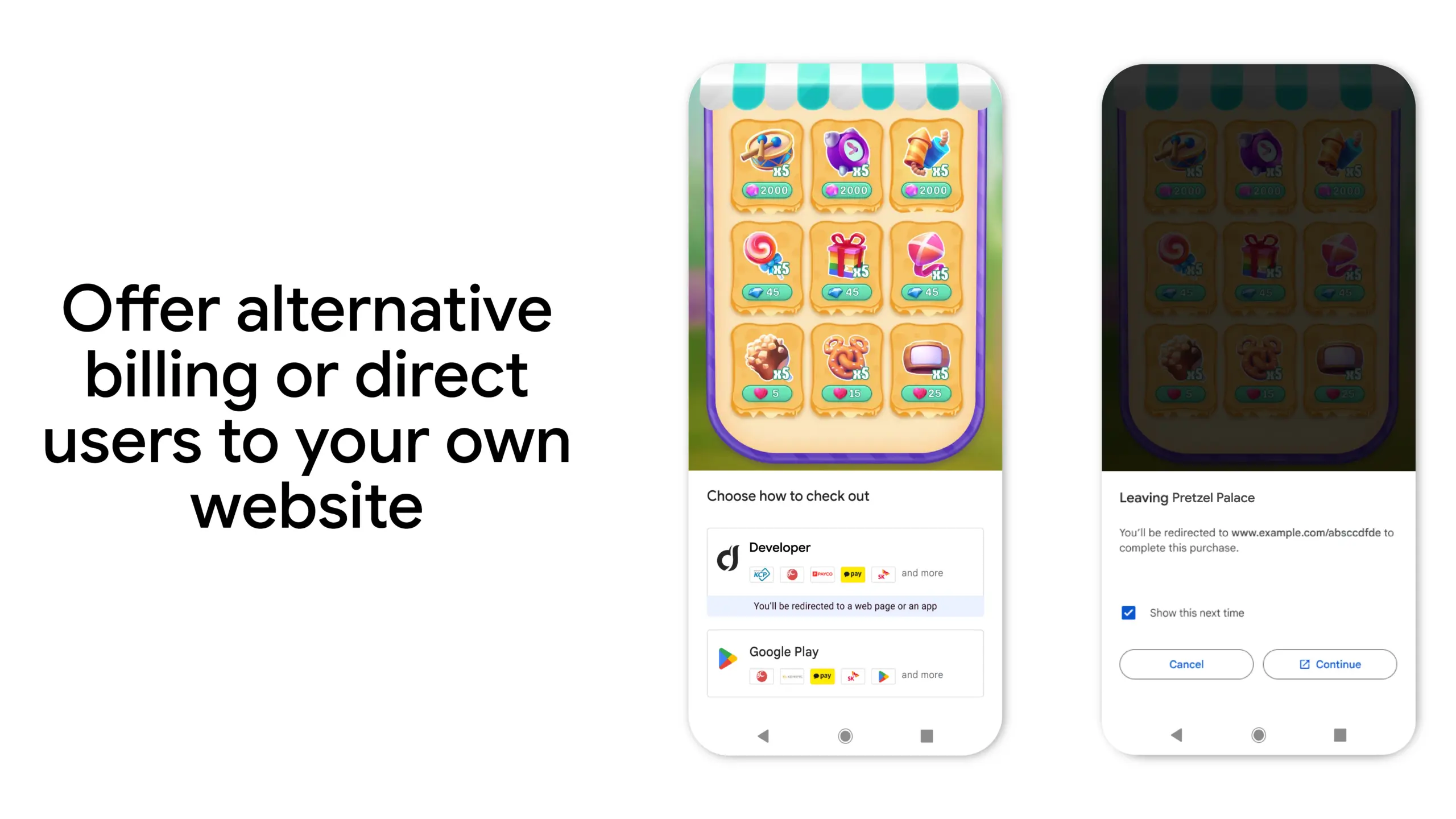
In a announcement on its developer blog, Google confirmed a major overhaul of its economic model. Users will soon see options when making a purchase:
- Pay via Google Play Billing
- Pay directly through the developer’s system
- Be redirected to the developer’s website to complete the purchase
The stated goal is to provide more flexibility to app creators, but this change is also the result of years of regulatory and legal pressure.
A New Pricing Structure for Developers
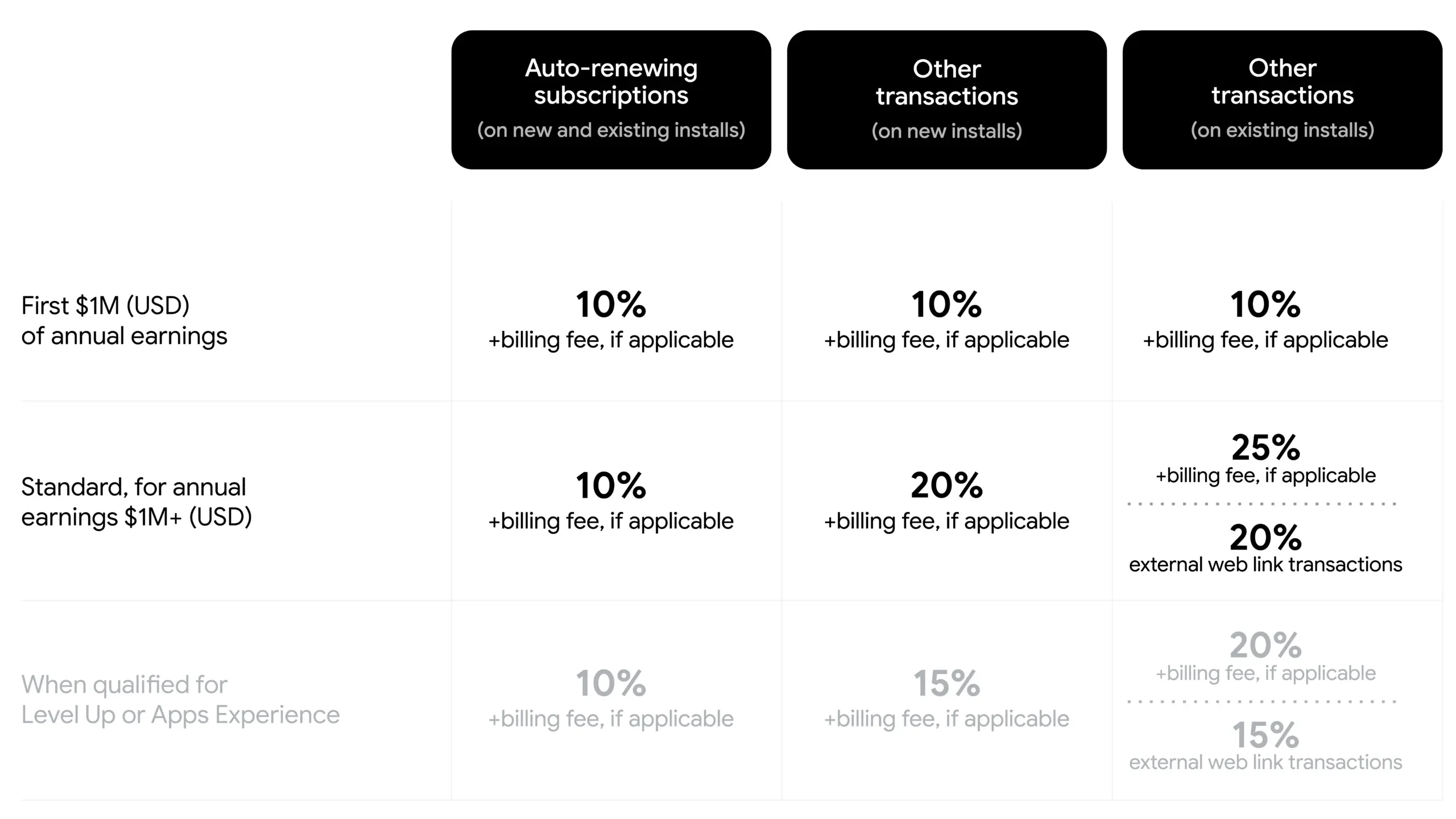
The most significant change occurs behind the scenes. Google is abandoning its flat commission model in favor of a two-part pricing structure:
1. Service Fees
Developers will now pay a service fee starting at 10% on their first million dollars of annual revenue.
2. Billing Fees
An additional 5% will apply only when the transaction goes through Google Play Billing.
The direct consequence: a developer utilizing their own payment system completely avoids this second commission.
This new structure will officially take effect in the United States on June 30, 2026, before being gradually extended to other affected markets such as the United Kingdom and the European Economic Area.
The Real Catalyst: The Epic Games Case
Google presents this reform as a natural evolution of its ecosystem, but the legal context plays a crucial role. For several years, Epic Games has challenged the practices of major digital platforms concerning in-app payments.
Recent judicial decisions have progressively forced Google to allow developers to propose alternative solutions and to reduce some restrictions imposed within the Play Store.
This new step undoubtedly marks one of the most significant changes ever made to Android’s economic model.
Will Users Really Pay Less?
This is the central question. On paper, lower fees for developers could lead to more attractive prices for consumers.
In practice, there’s no guarantee that the savings will be passed on to users. The experience of recent years shows that when developers gained more pricing freedom, price reductions did not always follow.
The most likely scenario is a coexistence of several strategies:
- Some services will offer discounts when purchased through their website.
- Others will maintain the same prices and simply increase their margins.
- Major subscription platforms might use these savings to fund new features.
A Compromise Between Price and Security
If users choose to pay directly to the developer, they may benefit from better pricing. However, this freedom also entails certain compromises.
Purchases made outside of the Google Play ecosystem will not automatically benefit from:
- The Google Play refund system
- Some protections built into the Play Store
- The same level of transaction oversight
For consumers, the choice won’t just be financial. It will also be about finding the right balance between savings and simplicity.
Android Takes the Lead over Apple
This announcement also highlights the growing difference between Android and iOS on this topic. Apple remains much more restrictive regarding alternative payment systems within the App Store. Even as regulatory pressure increases on Cupertino’s side, Google is currently gaining an edge in terms of openness.
The mobile industry is thus entering a new phase where app stores will need to persuade developers to remain within their ecosystem rather than forcing them to stay.
A Transformation That Goes Beyond Payments
Beyond the issue of commissions, this evolution reflects a deeper market shift.
Large mobile platforms can no longer operate as entirely closed ecosystems. Regulators, developers, and users are demanding more competition, transparency, and choice.
Google seems to have understood that the future of the Play Store will rely less on absolute control and more on the ability to provide enough value so that developers and consumers will continue to choose its services.
It remains to be seen whether this opening will actually lead to savings for users or if the primary beneficiaries will once again be the largest applications on the market.