

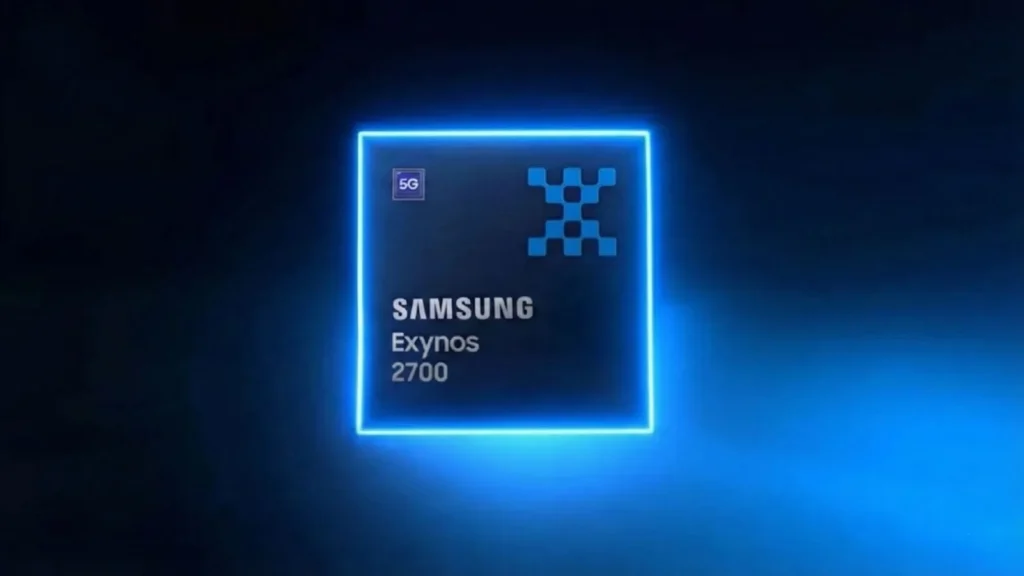
Galaxy S27: How Samsung Aims to Break Free from Qualcomm with Exynos 2700
Samsung is preparing a more assertive return of its in-house chips in the upcoming Galaxy S27 series. This shift is driven more by industrial logic than ideology: as Snapdragon premium processors become increasingly expensive, the economic equation for high-end devices is becoming more strained.
The premise is straightforward: relying heavily on Qualcomm ensures performance but significantly impacts profit margins. Several reports highlight that Samsung has substantially increased its dependence on Snapdragon in recent generations, reviving internal discussions about the role of Exynos in its flagship devices.
Korean industry sources had already indicated in 2024 that Qualcomm could become the exclusive supplier for the Galaxy S25 due to insufficient yields from Exynos.
By 2027, the reasoning could be even more severe. Rumors surrounding the future Snapdragon 8 Elite Gen 6 Pro suggest a shift to 2nm fabrication at TSMC, a manufacturing node known to be more costly. If this scenario plays out, Samsung would face a classic but uncomfortable decision: absorb the increased costs, raise prices, or reintegrate more Exynos chips into the Galaxy S27 lineup to regain control over expenses.
Towards a More Balanced Distribution in the Galaxy S27 Lineup
Recent leaks suggest that Samsung aims for a broader incorporation of the Exynos 2700 in the Galaxy S27 series. The company is actively developing this chip, and its mobile division has reaffirmed its commitment to expanding Exynos usage across more Galaxy devices. Preliminary benchmarks indicate that the Exynos 2700 is progressing, signaling that development is underway for the 2027 generation.
This shift appears to be a strategic long-term adjustment. Samsung understands that control over silicon is not merely a technical bragging right; it also serves as a bargaining chip, an avenue for margins, and a product timeline advantage. In a premium market where every component increasingly contributes to the final price, regaining control over the processor has become a central issue.
The Real Challenge for Exynos is Practical Use
The real challenge is not just announcing Exynos but convincing with Exynos. However, recent signals have been mixed. TrendForce reported that the Exynos 2600 still lags behind its Snapdragon counterpart in terms of energy efficiency, with battery performance discrepancies reaching up to 28% in some tests.
In other words, Samsung is making progress but has not entirely erased the market’s collective memory. Exynos still carries a complicated reputation, shaped more by daily user experiences—such as overheating, battery life, and stability under load—than by raw benchmarks.
This is precisely where the Exynos 2700 must excel. Although initial reports suggest a performance boost of about 12% along with improved power consumption via a refined 2nm process, these figures stem from leaks and early prototypes.
Samsung Seeks Balance, Not Just Performance
Viewed from this perspective, the Galaxy S27 may become less of a technological showcase and more of a balancing act. Samsung does not necessarily need Exynos to outperform Snapdragon across the board. It primarily needs a credible chip capable of reducing reliance on Qualcomm without compromising user experience. This is a vital nuance and likely the most realistic scenario.
If the Exynos 2700 performs well in fluidity, battery life, and heat management, Samsung may finally be able to achieve the scenario it has aimed for years: a more rational distribution between its chips and Qualcomm’s. Conversely, failing to meet these criteria could lead the brand into an old trap: cost-cutting on paper while undermining its models’ perception across different regions.
More of an Industrial Battle Than a Simple Specs Comparison
Ultimately, this narrative extends far beyond the Exynos versus Snapdragon debate. It reflects the structural tension that now permeates the entire premium Android market. High-end smartphones are no longer merely innovation showcases; they are also products under immense industrial pressure, grappling with fabrication costs, margins, logistics, and competition from Chinese manufacturers. In this context, Samsung is not just trying to revive Exynos; it is seeking to regain its maneuverability.
The Galaxy S27 will determine whether this strategy can transition from rhetoric to reality. One thing is clear: by 2027, Samsung will not want to remain dependent on Qualcomm as if no credible alternative exists.



