

Centreon Unveils Centreon Log Management: A Sovereign Solution for Log Management in France
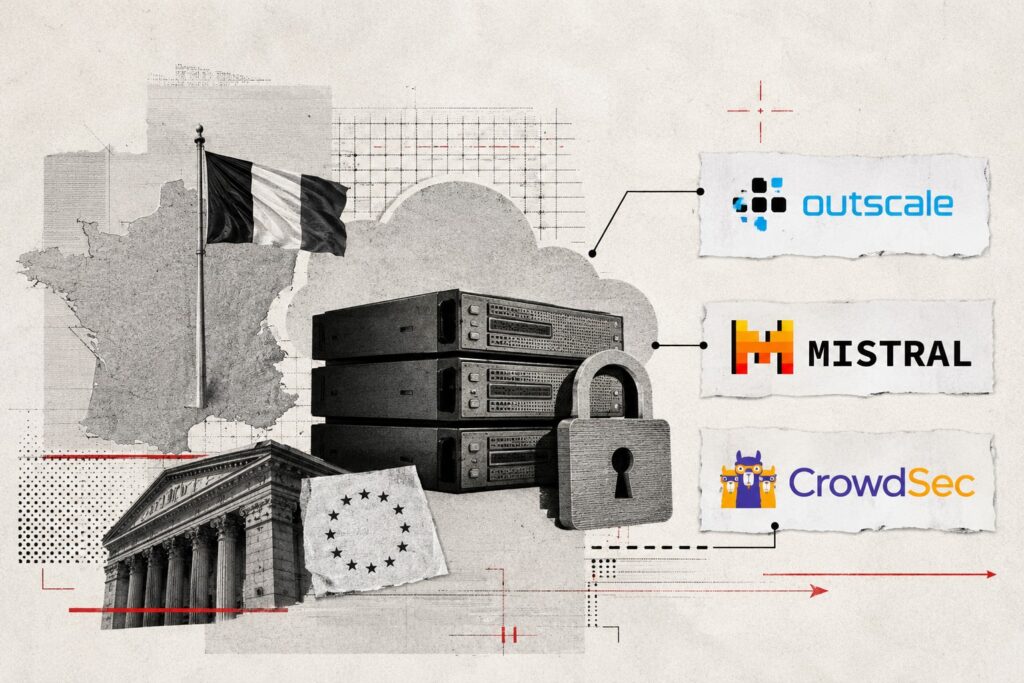
Centreon has launched Centreon Log Management, a log management solution built on a fully French technological stack. The software provider utilizes OUTSCALE for data hosting, Mistral’s artificial intelligence, and CrowdSec for application security, all within an open OpenTelemetry architecture. This initiative addresses the traceability requirements of the NIS2 and DORA directives, establishing the sovereignty of activity logs as a key compliance criterion, especially as log retention becomes a regulatory necessity for French organizations.
Log management plays a critical role in the security and compliance of information systems. Activity logs are essential for tracking events, facilitating incident detection, and fulfilling notification obligations. As such, their hosting and processing raise jurisdictional issues, particularly in light of European regulations mandating long retention periods and notification capabilities within hours.
The French observability specialist, Centreon, enhances its platform with this dedicated log solution, offering it alongside its existing infrastructure and experience monitoring modules. The company claims to address three major concerns of its clients: data sovereignty, interoperability of tools, and cost predictability.
A Comprehensive French Technology Stack
The sovereignty argument hinges on the composition of the technology stack. Centreon combines a French software provider with data hosting in France provided by OUTSCALE, a brand under Dassault Systèmes. The solution also incorporates onboard artificial intelligence from Mistral and application security from CrowdSec. Centreon promotes this framework as structural rather than contractual, emphasizing that sovereignty is inherently embedded in the architecture, rather than guaranteed solely by a contractual clause.
This framework sets itself apart from offerings that claim French data localization without fully addressing the technical ramifications. Centreon explicitly positions its solution against providers that fall under the U.S. Cloud Act or Section 702 of the FISA, which allow U.S. authorities to request data held by American firms. The real effectiveness of this guarantee depends on the qualifications of each component, including the SecNumCloud certification of the hosting provider, which must be confirmed to accurately assess the integrity of the stack. This offering fits within an increasingly transparent European digital sovereignty ecosystem for buyers.
Julien Mathis, Managing Director of Centreon, underscores the regulatory and competitive stakes: “Digital sovereignty is no longer an optional subject; it’s a regulatory necessity and a competitiveness criterion,” he states, advocating for a complete chain from the software provider to the host.
An Open Architecture to Limit Dependency
The solution is designed using the open standard OpenTelemetry, an architectural choice aimed at protecting customers from vendor lock-in. It collects logs from diverse sources—on-premises, cloud, hybrid environments, containers, and industrial systems—without imposing a proprietary agent, and standardizes data at ingestion, regardless of its original format.
This approach addresses a common challenge for IT teams: the difficulty of integrating multiple observability tools. By eliminating proprietary formats and obligatory collectors, the solution facilitates integration into existing toolsets and accelerates incident diagnosis through correlation with other observability pillars.
This openness holds strategic significance beyond mere technical integration. By preventing vendor lock-in, Centreon enables organizations to retain control over their log data and swap components without overhauling the entire stack. This reversibility aligns with the requirements outlined in the pillars of European cyber resilience, where traceability and log retention become verifiable obligations.
Additionally, the solution integrates AI functionalities designed to alleviate the burden on teams. These include natural language querying of logs, automatic generation of collection configurations, anomaly detection without manual rules, and summarization of key events over a period. These features aim to reduce operational noise rather than replace human analysis.
A Storage-Based Billing Model
Centreon adopts a billing model based on storage rather than ingestion, breaking from common market practices. Clients are charged based on the volume of data retained, calculated on a compressed basis rather than the raw volume traversing the system. Included analytics dashboards enable real-time cost tracking.
This decision addresses the third concern of clients, budget predictability. Ingestion-based billing models expose organizations to unpredictable costs arising from activity spikes that are hard to foresee. Charging based on retained volume simplifies expenditures, a compelling argument for IT departments operating within tight budgets.
The solution is available in a hosted commercial version. For French organizations subject to NIS2 and DORA, the offering combines three rarely unified aspects: a sovereign technology stack reinforced by its components, an open architecture that mitigates dependency, and a predictable cost model. IT decision-makers will need to assess the qualifications of each component, beyond the overarching claim of sovereignty.



