


Brave adds email aliases to limit tracking across websites
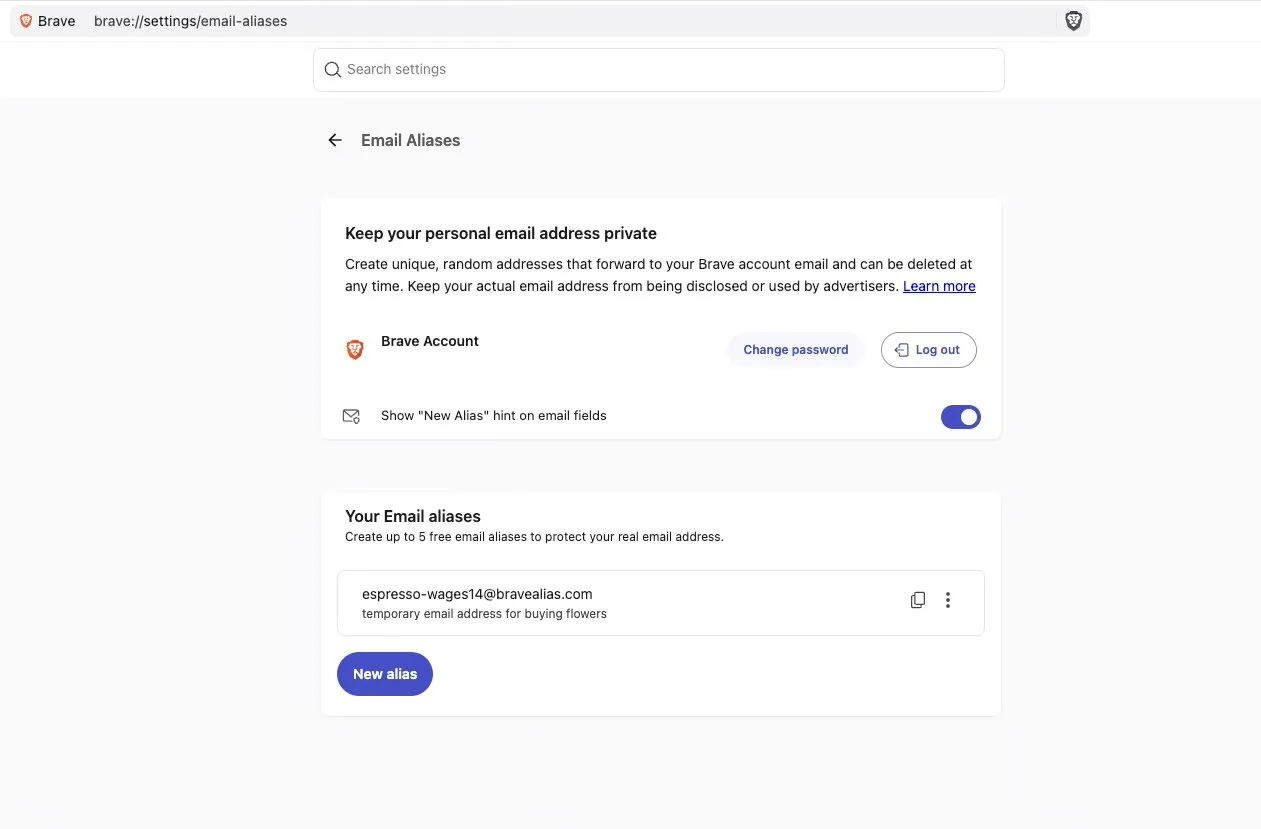
Brave enhances its privacy strategy by introducing a new feature. Starting from desktop version 1.94, the browser now allows users to generate email aliases directly within online forms, thus avoiding the need to share their primary email address with every site they visit.
The concept is straightforward, yet the implications are significant. An email address reused across multiple services can serve as a point of connection between different ad profiles, even when traditional trackers are blocked within the browser. By implementing these email aliases, Brave aims to further compartmentalize the user’s digital identity.
A Different Address for Every Site
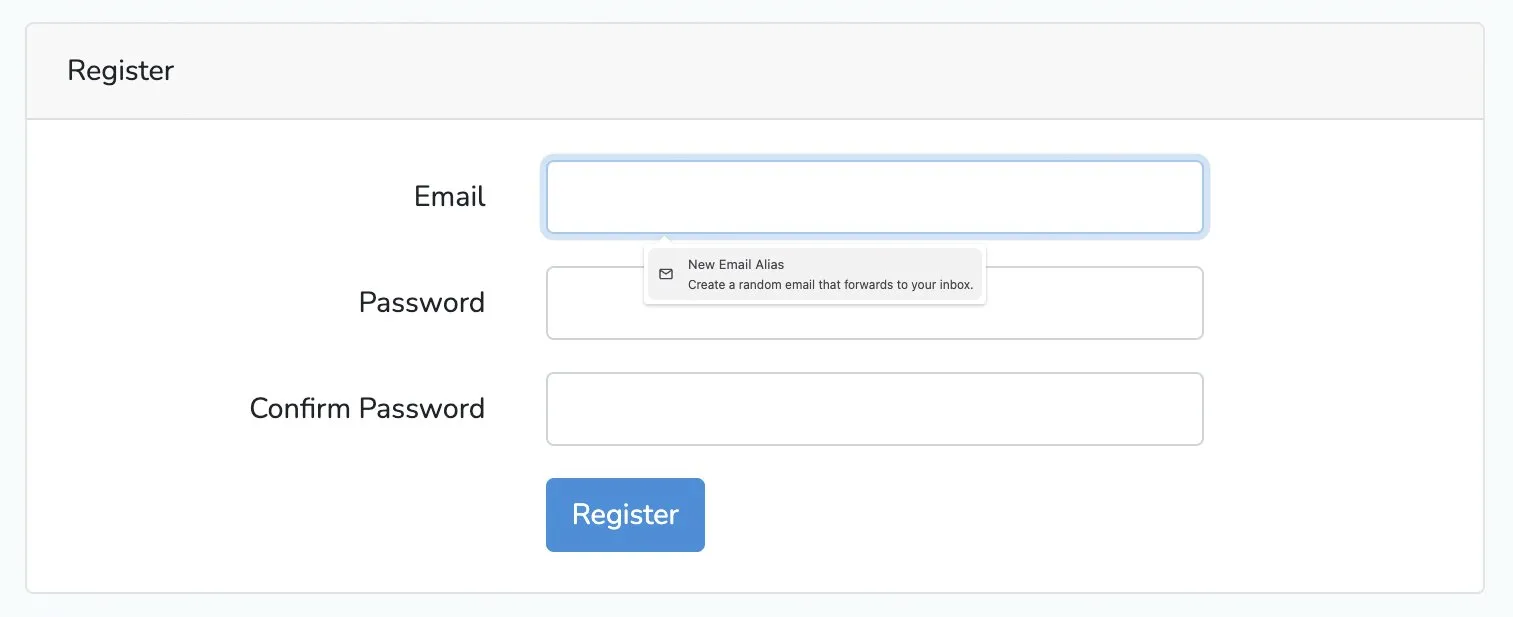
This new feature is linked to the Brave account. Once logged in, users can create an alias directly from an email field on a website. This alternative address can then replace the main email address. Messages sent to the alias are automatically forwarded to the actual inbox associated with the Brave account.
The site, in turn, never sees the primary address.
This system isn’t just about avoiding spam. An email address is a particularly effective identifier for targeted advertising. When users provide the same address to multiple companies, those entities may potentially share it with advertising platforms like Google, Meta, or LinkedIn in order to identify a corresponding profile.
The issue here is that such matching may take place server-side, meaning that a standard tracker blocker in the browser may not necessarily detect the exchange.
Aliases Reduce Profile Correlation
By providing a different email address for each site, Brave partially disrupts this continuity. A retailer may possess one address, a forum another, and a reservation app a third. Even if these services seek to compare their databases, they have fewer direct commonalities to work with.
This doesn’t equate to absolute anonymity, but it does represent a tangible reduction in the correlation surface.
Email Remains One of the Most Persistent Identifiers on the Web
Cookies can be deleted, IP addresses may change, and browsers can block certain tracking techniques; however, an email address often remains stable for years. It is also directly linked to a user’s identity, which is precisely what makes it so valuable to advertising platforms and data-centric companies.
Brave is therefore addressing a layer of tracking that is more challenging to block than traditional scripts.
An Alias Also Protects in Case of a Data Breach
The system provides another benefit. When a site experiences a breach, the compromised address doesn’t have to be the user’s primary email. This helps limit the exposure of the main address in databases that may be sold or published online.
The alias can then be deactivated.
This is much simpler than abandoning a primary address that has been used for several years.
Messages Are Still Forwarded Normally
Brave does not automatically block emails sent to the alias. A newsletter received at that address will still be forwarded to the main inbox. The same goes for promotions or notifications from services. The alias primarily acts as an intermediary layer and does not replace a spam filter.
However, Brave allows users to deactivate an address once it begins receiving too many unwanted messages. From that point, new emails sent to that alias will no longer be forwarded. This is likely one of the most interesting use cases.
Instead of having to unsubscribe from multiple lists or report spam, users can simply close the channel themselves.
Five Aliases Will Be Offered for Free
Upon launch, Brave plans to offer five free email aliases. This may be somewhat limited for someone who genuinely wants to use a different address across many sites.
A Premium plan is already in the works. Brave has not yet detailed all its conditions, but the goal is clearly to offer a broader selection for users who wish to multiply their intermediary identities.
A mobile support option is also expected to arrive later.
Direct Integration into the Browser is the Main Advantage
Brave isn’t inventing the concept. Its strength lies mainly in the native integration. Users do not need to open an external service, copy an address, and then return to the form. The generation can occur directly within the email field. This reduction in friction is essential.
A privacy feature is only truly useful if it is simple enough to be used daily.
DuckDuckGo Already Offers a Similar Approach
DuckDuckGo Email Protection has been operating for several years on a similar principle. The service provides @duck.com addresses that redirect messages to an existing inbox. DuckDuckGo also adds an interesting feature: it can remove certain trackers present in emails before forwarding them.
Brave appears to focus more on the separation of identities. Both approaches address the same problem but with slightly different priorities.
Firefox Relay is Even More Generous with the Number of Aliases
Mozilla also offers Firefox Relay. The service can generate address masks directly from Firefox. Its free offer supports up to several dozen masks, giving it a quantitative advantage over the five free aliases announced by Brave. Mozilla also provides paid options with more features.
The alias market is therefore already relatively mature.
Apple Has Also Popularized the Concept
Even outside of privacy-focused browsers, the idea has gained significant traction. Apple has been utilizing Hide My Email within iCloud+ for several years. Users can generate random addresses that redirect to their personal inbox.
This type of functionality is gradually becoming a standard in ecosystems that prioritize privacy. Thus, Brave joins an already well-established trend.
The Difference Lies in Brave’s Overall Integration
The new feature becomes especially meaningful when combined with other tools in the browser. Brave already blocks numerous trackers and ads by default while also attempting to limit certain forms of fingerprinting. Recently, the browser added Containers to separate multiple sessions, accounts, and cookie sets.
Email aliases add a new layer to this compartmentalization strategy.
Containers Separate the Browser, Aliases Separate Identity
The two functions are complementary. A Container can prevent two accounts or sessions from sharing the same cookies. However, if the user provides the same email address in both environments, the site still has a potential link.
Thus, the alias adds separation at the declared identity level. Separate cookies, separate sessions, separate addresses. Brave is gradually attempting to minimize the interconnections between different uses.
Modern Privacy Requires Multiple Layers
This is likely one of the most important lessons. No ad blocker alone suffices. Tracking can occur through cookies, hardware fingerprints, IP addresses, account identifiers, emails, phone numbers, and payment data. Effective protection therefore consists of building multiple barriers.
Brave is precisely following this philosophy.
Aliases Do Not Ensure Anonymity
However, it is essential to avoid overestimating this feature. A site can still associate a user through other information. IP addresses, browser fingerprints, payment methods, names, phone numbers, Google or Apple accounts. An email alias does not mask an entire identity. It simply removes a particularly easy-to-reuse identifier across different services.
That is already significant, but it doesn’t offer complete invisibility.
Online Retailers Can Still Recognize You Through Other Means
Consider a straightforward example. A user creates an alias for a shopping site. They then use their real mailing address and the same credit card as on multiple other services. The compartmentalization remains imperfect. Online privacy is often about reducing the available signals rather than total elimination.
Email aliases should be understood within this framework.
Their Effectiveness Also Depends on How Brave Manages Data
A forwarding function necessarily implies that Brave employs an infrastructure capable of receiving and subsequently relaying messages. Trust in the provider becomes paramount. Users particularly concerned about privacy may want to know what metadata is retained, for how long, and under what conditions.
Brave undoubtedly promotes the feature as a protective tool. However, like any intermediary service, the technical architecture remains crucial.
This Service Transforms Brave into a Messaging Intermediary
This development is also a noteworthy strategic evolution. Historically, Brave mainly controlled what happened inside the browser. With Email Aliases, the company now plays a role in part of the email flow. It involves a different level of infrastructure.
Brave is gradually broadening its role beyond mere web browsing.
The Challenge Will Be Managing Multiple Aliases
However, at scale, this strategy may become complicated. If a user has fifty different addresses, they need a way to quickly identify which corresponds to which service.
The browser must then ensure management behind the scenes: site name, creation date, alias status, any history, and deactivation options. Without a clear interface, the protection may quickly become a source of confusion.
Five Free Aliases Primarily Serve as a Gateway
The initial limit suggests that Brave also sees a commercial opportunity. Five addresses suffice for testing the functionality but are far less suitable for someone who genuinely wishes to mask their primary address on each new service.
The Premium plan will likely become essential for the most engaged users. This is a rather logical model for Brave, which seeks to fund its tools without solely relying on traditional advertising.
Brave Continues to Build Its Identity
Chrome dominates the market, Safari benefits from Apple integration, Edge comes pre-installed with Windows, and Firefox maintains its open-source legacy. Hence, Brave must present a very clear reason for users to switch browsers.
Privacy is that reason. Email Aliases strengthen this identity without radically altering the browsing experience. It’s a small feature that fits seamlessly into the overall positioning of the product.
After years of combating third-party cookies, advertising platforms have developed other identification methods. “First-party” data is becoming increasingly significant, and email addresses fall into this category. Companies can collect it directly from the client and then utilize it to consolidate different databases.
Thus, the aliases tackle a vector that traditional browser blocking cannot easily neutralize. That’s what makes this new feature more important than it may seem.
As cookies gradually disappear, yet advertising profiles continue to exist, this separation could become one of the simplest—and most effective—protections that browsers can offer.



