

Android 17 Aims to Attract Gamers: Google Finally Optimizes Foldable Smartphones for Gaming
With Android 17, Google is not just focused on enhancing security or multitasking. The latest version of the system places a strong emphasis on mobile gaming, particularly on foldable smartphones, a market where large screens have not always been optimally utilized.
From a new gaming mode designed for foldable devices to advanced controller customization and performance optimizations, Android 17 aims to bolster Android’s position as a gaming platform.
A Gaming Mode Designed Specifically for Foldable Smartphones
One of the most intriguing additions in Android 17 focuses on flexible screen devices. Until now, most games displayed simply across the surface of the large screen, with a recurring issue: touch controls often obscured part of the action.
Google is now introducing a gaming mode specifically designed for foldables.
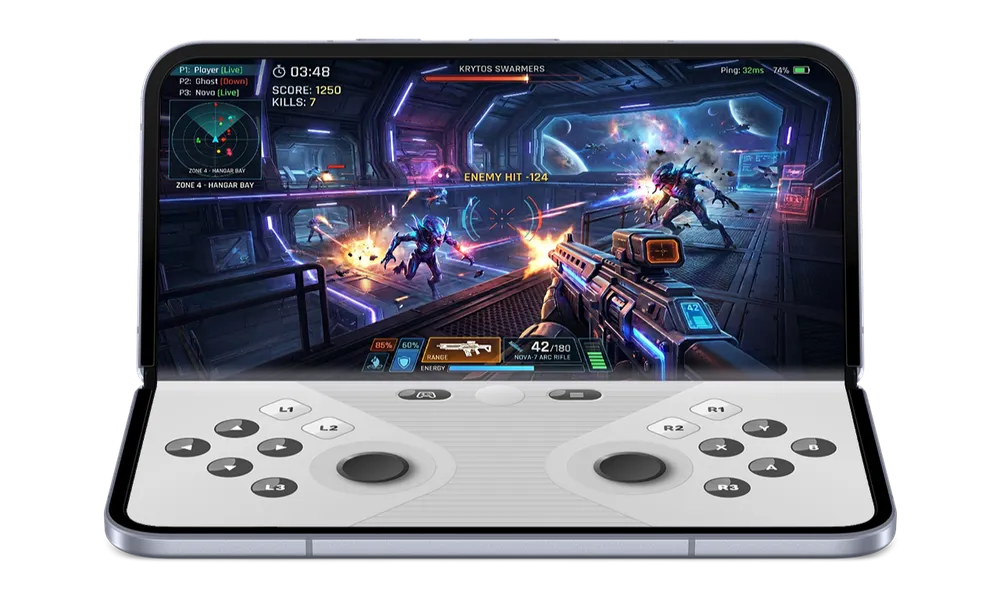
The system adopts a 50/50 layout: the upper part displays the game while the lower section dynamically transforms into a virtual controller. This approach allows for better utilization of the extra space offered by foldable screens while improving visibility.
A Console-like Experience
This new layout resembles modern handheld consoles that separate content display from controls. On a device like Samsung’s Galaxy Z Fold 7, this organization offers several advantages: an unobstructed view of the action, fewer elements covering the game, more comfortable controls, and enhanced immersion.
Google aims to transform the large screen of foldables into a genuine gaming asset rather than just an enlarged surface. In a market where foldable smartphones are still relatively niche, such functionality could help justify their format.
Native Controller Remapping
Android 17 also introduces a highly anticipated improvement for gamers using external controllers. The system now supports native button remapping. Users will be able to change button assignments, customize controls to their preferences, and tailor their experience without relying on third-party applications.
This feature brings Android closer to the standards observed on consoles and PC platforms.
For fans of cloud gaming or competitive play, this evolution represents a significant comfort gain.
More Stable Performance in Demanding Games
Beyond visible innovations, Google is also working on internal system performance. Android 17 enhances memory management to reduce framerate drops, micro-stuttering, and slowdowns caused by background processes.
Even if these optimizations often go unnoticed in technical specifications, they directly impact the daily gaming experience.
High-demand titles particularly benefit from this type of enhancement.
Google Gradually Strengthens Its Gaming Strategy
In recent years, Google has increased its initiatives around mobile gaming. While the shutdown of Stadia halted its ambitions in proprietary cloud gaming, the company continues to invest in Android as a gaming platform. The ecosystem now benefits from extensive controller compatibility, a massive mobile game catalog, third-party cloud gaming services, and increasingly powerful smartphones.
With Android 17, Google aims not to revolutionize mobile gaming, but to enhance the overall experience for existing users.
Foldables as an Innovation Lab
This update also reveals a broader trend. For a long time, foldable smartphones have been positioned as devices focused on productivity and multitasking. Android 17 indicates that Google has started to explore entertainment-related uses more deeply.
The new gaming mode could become one of the first genuinely exclusive features capable of leveraging the unique form factor of foldable screens.
Android 17 Sets the Stage for the Next Generation of Mobile Gaming
Individually, the new gaming mode for foldables and native controller remapping do not signify a revolution. However, combined, these developments reflect a more significant change in direction. Google now sees gaming as one of the cornerstones of the modern Android experience, alongside AI, photography, and productivity.
As foldable smartphones continue to mature and mobile games increasingly compete with console experiences, Android 17 lays the groundwork for a more flexible, capable, and gaming-friendly environment.
For Google, the message is clear: large foldable screens should serve not only for work but also for play.



