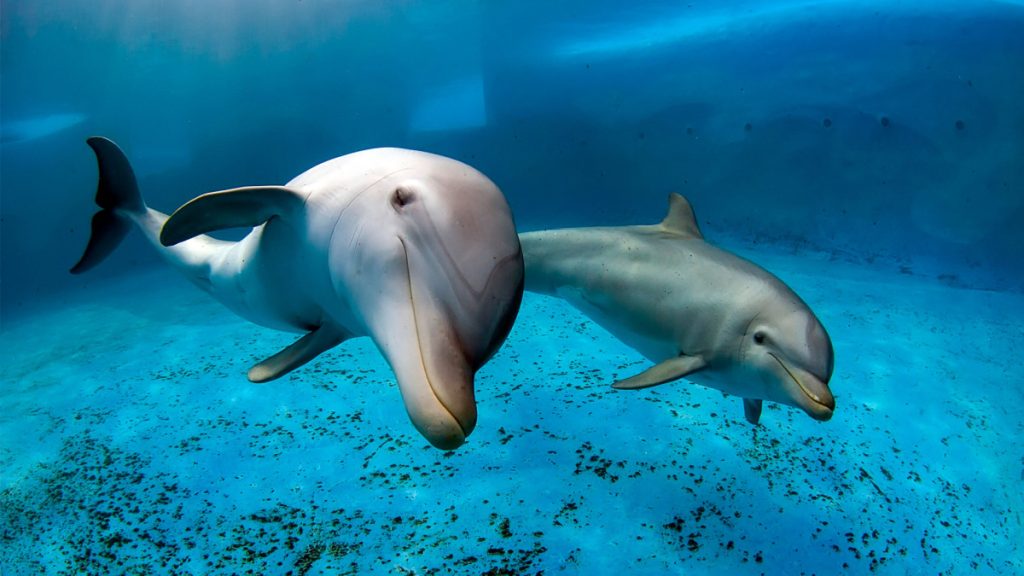
Thanks to an AI developed by Google and marine biologists, scientists are finally able to identify the structures of a language in dolphins. DolphinGemma, an artificial intelligence model trained on their vocalizations, may well mark the beginning of a new era: one of interspecies conversation. Indeed, talking with dolphins is becoming a serious goal.
Dolphingemma Decodes The Structure Of Dolphin Language Using Artificial Intelligence
Dolphins have long been recognized for their social intelligence and complex vocal abilities: clicks, whistles, and pulses… an impressive auditory arsenal used to communicate, cooperate, navigate, and court. However, until now, their “language” remained an unfathomable mystery.
This is where DolphinGemma comes into play, an artificial intelligence designed to analyze and structure the vocalizations of dolphins. Developed by Google, Georgia Tech, and the Wild Dolphin Project, this large-scale language processing model goes beyond just classifying sounds; it seeks to understand how dolphins organize these sounds syntactically, similar to human language.
The AI Learns From Dolphins As It Does From Humans: By Patterns, Sequences, And Context
DolphinGemma operates like the large language models used for analyzing human texts. Utilizing advanced audio technology, the sounds are captured underwater, converted into digital data, and then analyzed to detect recurring patterns and significant sequences.
The model can identify sounds that recur in specific contexts, such as social interactions, play, and movement, and compare them between individuals. This leads to the hypothesis that these sounds have a shared, structured, and coded meaning. This is the first time that such vocal organization has been analyzed by AI in dolphins.
Towards Two-Way Communication With Dolphins? A Future Closer Than We Think
The long-term goal is ambitious: to enable a form of dialogue between humans and dolphins. Does it sound crazy? Yet, the initial results are promising. Researchers believe that some sounds could be translated or even reproduced to initiate a dialogue.
Of course, significant challenges remain: regional dialects, individual variations, and emotional interpretation… However, the idea of a shared basic lexicon is no longer out of reach. One day, perhaps, we will be able to “speak dolphin”, or at least understand what they are trying to convey.
A Breakthrough That Could Transform Our Relationship With Animals And The Living World
Beyond dolphins, this project opens up staggering possibilities for understanding animal communication. If AI can decode a language in cetaceans, why not in elephants, primates, or songbirds?
This is a giant leap in our relationship with living beings. Understanding animals also means recognizing their inner lives, cultures, and intentions. What DolphinGemma is hinting at today could redefine our place among species. And who knows? Maybe one day, a dolphin will tell us a joke. Until then, this adventure is just beginning.