

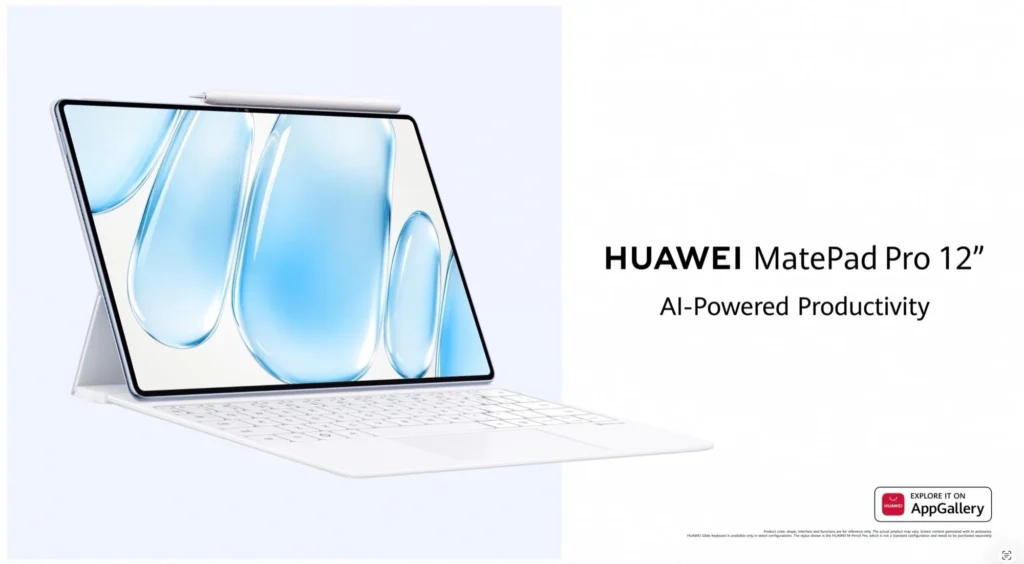
Huawei MatePad Pro 12: A 4.7mm Tablet with PaperMatte OLED Screen Expected in Munich
Huawei is gearing up for a new push in the premium tablet market. Just hours before its European event on September 2 in Munich, the brand has confirmed the launch of a new MatePad Pro 12-inch, slimmer, lighter, and equipped with a PaperMatte OLED screen designed to significantly reduce glare.
With a mere 4.7mm thickness and an anticipated weight of 454 grams, this new generation aims to position itself as a particularly mobile alternative to larger professional tablets. Huawei is focusing less on sheer power and more on a combination of slim design, visual comfort, and productivity.
Huawei Confirms MatePad Pro 12 for September 2 Event
The new teaser released by Huawei leaves little room for doubt. The MatePad Pro 12 is set to be among the products unveiled during the launch event in Munich on September 2. The event will also showcase several new offerings from the brand, particularly in the wearables and smartphone segments.
This tablet will thus complement a particularly busy launch.
For Huawei, the goal is clear: to demonstrate that its ecosystem extends beyond just smartphones and watches, but also highlights a well-structured range of premium tablets.
Slim, light and portable. The all-new #HUAWEI MatePad Pro 12″ combines an ultra-thin design with a flagship display and powerful productivity tools, so work and creativity flow effortlessly, wherever you are. pic.twitter.com/fi7nPaIp7n
— Huawei Mobile (@HuaweiMobile) August 31, 2026
A Thickness of Only 4.7mm
The most impressive figure concerns the design. Huawei announces a thickness of just 4.7mm. This is remarkably slim for a tablet of this size. The brand appears to have worked on a more compact chassis than that of the previous MatePad Pro 12.2. The bezels also seem narrower. The result gives a more modern and minimalist feel.
The tablet is not only aiming to be thin. With 454 grams, it should also remain particularly light. This detail is significant. Larger tablets can quickly become tiring when held for extended periods. Reading, note-taking, drawing, consulting documents—all benefit from reducing a few dozen grams for enhanced comfort.
Huawei seems intent on making this MatePad Pro an easily transportable device that can be handled throughout the day.
A More Portable Positioning Than the MatePad Pro Max
The new MatePad Pro 12 logically positions itself beneath the MatePad Pro Max. The Max retains the advantage of a larger screen and an experience more focused on replacing a laptop. The 12-inch version appears to embrace a different philosophy. It aims to maintain a premium experience while minimizing bulk.
This compromise could attract users who find large-format tablets impressive but less practical for transport.
The Design Also Evolves
The teaser reveals several visual changes. The rear camera module becomes slightly more prominent and adopts a rounder shape. The bezels around the screen appear to be streamlined. Huawei also showcases a new blue finish.
The overall aesthetic retains a fairly subdued identity. The tablet does not aim to radically transform the MatePad Pro formula but rather to make it more elegant and compact.
The PaperMatte OLED Screen Will Be the Main Attraction
However, the most crucial feature remains the screen. Huawei emphasizes a PaperMatte OLED display. This technology combines the contrast qualities of an OLED screen with a surface treatment designed to significantly reduce glare. This is where Huawei seeks to differentiate itself.
A tablet might boast an excellent screen on paper, but it can become challenging to use with direct reflections from windows or sunlight. The PaperMatte technology attempts to tackle this issue.
Huawei claims that the display generates very little glare, even in brightly lit environments. Of course, independent assessments will be necessary to precisely evaluate performance. However, the PaperMatte technology has proven itself over generations in certain tablets with specific anti-glare treatments.
The result generally leads to a more matte surface compared to traditional glossy displays.
A 느낌 Closer to Paper
The treatment not only alters light reflection but also aims to give the surface a texture similar to paper. This sensation can be particularly appealing when using a stylus. On traditional glass, the tip glides effortlessly. Some artists and students prefer a slight resistance, reminiscent of writing on a sheet of paper.
The PaperMatte treatment delivers on this preference.
The reduction of glare is also beneficial for reading. PDFs, articles, e-books, presentations—a less reflective display can minimize fatigue from surrounding light sources. Huawei seems to want to make this MatePad Pro a comfortable device for extended sessions.
While this technology won’t turn an OLED screen into e-ink, it can mitigate one of the primary drawbacks of traditional glossy displays.
The Huawei Glide Keyboard Should Be Compatible
The MatePad Pro 12 is also expected to work with the Huawei Glide Keyboard. This keyboard case incorporates a touchpad, transforming the tablet into a compact workstation. The approach is similar to that of Apple’s Magic Keyboard or certain Samsung keyboard covers.
The key difference will largely revolve around total weight and ergonomics once the accessories are attached. An extremely thin tablet may lose some of its benefits when paired with a heavy keyboard.
Huawei Continues to Push the Tablet-PC Concept
This is a crucial strategic focus for the brand. Huawei has been presenting its MatePad Pro range as devices capable of replacing laptops for certain uses for several years now.
Word processing, presentations, browsing, drawing, multitasking, or note-taking—the new version seems to continue this very direction. The slim design and weight further reinforce this argument, making the device easier to transport than a traditional notebook.
The International Version Should Be Close to the Chinese Model
Huawei has not yet disclosed all the specifications for the global version. However, the model presented in Europe is expected to closely resemble the already available MatePad Pro 12 in China. This gives a good indication of the anticipated technical specifications.
It already utilizes a high-end OLED display featuring a PaperMatte variant. Huawei could adopt most of this configuration for the international market.
A Kirin T93 Processor Is Anticipated
The Chinese version utilizes a chip from the Kirin T93 family. The exact model for the European version has not yet been confirmed. However, it would make sense for Huawei to retain a comparable platform. The brand continues to develop its own SoCs amid significant technological and commercial constraints.
For a productivity tablet, performance must primarily be sufficient to ensure smooth multitasking and proper handling of creative applications.
Up to 12GB of RAM
The Chinese model also offers up to 12GB of RAM. This amount has become fairly standard for high-end Android or HarmonyOS tablets, allowing for more applications to be kept open simultaneously.
On a device intended to occasionally replace a laptop, multitasking is essential. Shifting quickly between a browser, a document, and a note-taking app must remain seamless.
A 50-Megapixel Main Camera
The main rear camera could reach 50 megapixels. This figure is quite unusual for a tablet, where photography is rarely a priority. The interest lies more in practical uses. Scanning a document, photographing a whiteboard, capturing a page, or participating in a video call. The front camera’s quality is likely to be more crucial in daily use than that of the rear module.
Huawei Also Cares About Multimedia Experience
The MatePad Pro is expected to feature a multi-speaker audio system, becoming one of the strengths of large tablets. A broad chassis allows for multiple transducers to be incorporated, producing richer sound compared to a smartphone.
This makes a genuine difference when watching movies or enjoying music without headphones. The MatePad Pro Max has received positive feedback in this regard, and Huawei will likely maintain this focused approach.
OLED Remains a Strong Selling Point
Utilizing an OLED display allows for perfect blacks and extremely high contrast. This is especially appealing for films and HDR content. The combination of OLED + anti-glare treatment is also rare. Matte displays are often associated with professional LCDs.
Huawei is trying to maintain the visual depth of OLED while improving its performance in bright ambient light.
The Real Challenge Will Be Preserving Quality Despite the Matte Treatment
All anti-glare technologies come with compromises. A matte coating may slightly reduce perceived sharpness or alter how colors appear. Huawei will need to succeed in limiting these effects. The first generations of PaperMatte have shown that the manufacturer takes this issue seriously.
The new version will have to go even further if it wants to convince image professionals.
Huawei Aims to Compete with the iPad Pro Differently
The premium tablet market is still largely dominated by Apple. Huawei knows that it will be challenging to compete solely on benchmark performance. Thus, the brand seeks other arguments. PaperMatte treatment, extreme thinness, stylus support, keyboard options, and productivity applications. This strategy aims to provide a distinct experience rather than a mere copy of the iPad Pro.
Samsung has a strong presence in the Android world with its Galaxy Tab S series. The Korean tablets benefit particularly from DeX and excellent stylus support.
Huawei must therefore deliver a productivity experience that is at least as coherent. The design and screen may attract attention, but software remains crucial. A professional tablet is genuinely useful only if the applications fully exploit its format.
Software Remains the Key Question Outside China
This is likely Huawei’s main challenge in international markets. The company has a robust software ecosystem in China. However, the situation is more complex in Europe, especially due to the absence of traditional Google services on Huawei devices.
The brand has developed its own solutions and alternatives, but for some users, this limitation is still significant. An excellent tablet is not enough if necessary professional applications are not easily accessible.
HarmonyOS Continues to Mature
Huawei has been working for several years to build an independent software environment. HarmonyOS is progressively evolving into a platform capable of functioning across smartphones, tablets, and connected devices.
The tablet is likely one of the formats where this strategy can be most convincing. The large screen allows Huawei to develop its own multitasking interfaces and continuity tools. Integration with Huawei smartphones and PCs could also become a significant selling point for users already in the ecosystem.
Price Will Be Determinative
The company must also announce the European price. The slim chassis and PaperMatte OLED naturally place the tablet in the premium segment. However, Huawei needs to remain sufficiently aggressive to attract users away from Apple and Samsung.
The price of the keyboard and stylus will also be crucial. A tablet may seem competitive on its own, only to become much more expensive once equipped with all the necessary accessories.
The Munich Event Should Provide Final Answers
Huawei is expected to detail the complete technical specifications on September 2, 2026. Price, memory configurations, European availability, accessories, processor, battery life, and screen. All this information should be clarified during the event. For now, the teaser emphasizes three key elements: thinness, lightness, and visual comfort.
The MatePad Pro 12 encapsulates the current evolution of the tablet market. Performance is already sufficient for the majority of uses, and differentiation is shifting toward physical experience. Huawei seems to understand that the best professional tablet is not necessarily the one with the most powerful processor.
It’s the one you genuinely want to carry around and use all day. With 4.7mm thickness, 454 grams, and a PaperMatte OLED screen, this MatePad Pro 12 appears to be designed around that idea.



