

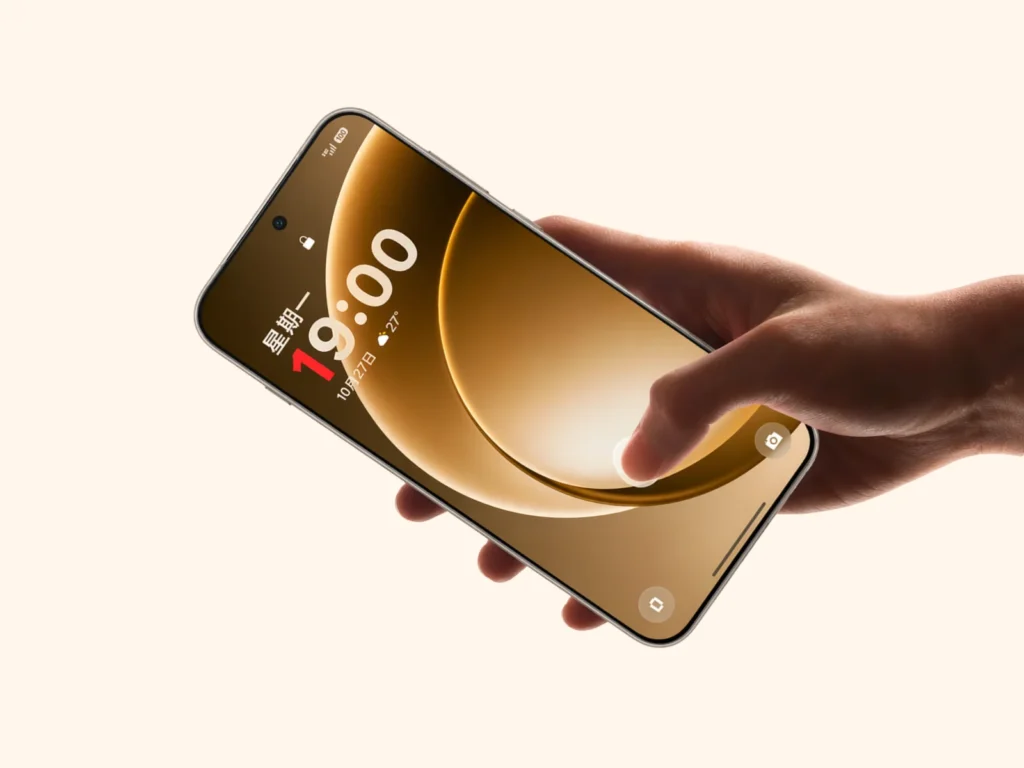
OnePlus 16: Borders Under 1 mm and a 165 Hz Screen for the Upcoming Flagship
OnePlus is reportedly preparing to showcase a remarkable advancement in the display of its next flagship. Following significant border reductions on the OnePlus 15, the brand aims to push the envelope further with the OnePlus 16, which could feature one of the thinnest bezels ever seen on a premium smartphone.
The leak, credited to Digital Chat Station, does not yet provide precise measurements. However, with borders already announced at 1.15 mm on the OnePlus 15, the idea of going below 1 mm becomes a credible possibility. Beyond this aesthetic pursuit lies a broader challenge: making the screen a true differentiator against Samsung, Apple, and other flagships in 2026.
The OnePlus 16 Aims for Even Thinner Bezels
The OnePlus 15 had already made significant leaps in this area. OnePlus announced a 42% reduction in bezel size compared to the OnePlus 13, achieving a screen-to-front ratio of 95.5%. The four sides exhibited contours of merely 1.15 mm.
According to Digital Chat Station, the OnePlus 16 will take this further with a remarkably narrow design around the display. The leaker does not provide exact figures, so we should approach the idea of bezels under 1 mm with caution.
However, should OnePlus successfully cross this threshold, the change would be as much symbolic as it is visual.
The Elimination of Bezels Becomes the New Competitive Frontier
For several years, manufacturers primarily focused on minimizing notches or punch holes. The battle is now shifting toward the bezel itself. As smartphones reach very similar sizes, just a few tenths of a millimeter can drastically alter the perception of the front.
A nearly bezel-less display immediately conveys a more futuristic product, even if the diagonal or resolution remains unchanged.
OnePlus clearly aims to capitalize on this perception.
A Custom Screen Designed for the Brand
Digital Chat Station also mentions a custom display specifically crafted for the forthcoming flagship. This wording could refer to a new generation of “Oriental Screen” panels, a family already employed by OnePlus for its premium models.
The company has been collaborating with display partners for years to finely calibrate brightness, refresh rate, color management, and power consumption.
The OnePlus 16 could continue this strategy with an even more ambitious panel.
The 165 Hz Refresh Rate Could Be Available Across the Board
One of the most intriguing rumors pertains to the refresh rate. The OnePlus 16 is said to be capable of reaching 165 Hz. However, the real change would be elsewhere: this frequency could be more widely available throughout the interface and applications, rather than being limited to a select few games.
This is an important distinction. A very high refresh rate does not offer much value if it’s only utilized occasionally. Making it more consistently accessible could enhance the overall fluidity of the system.
OnePlus is Getting Closer to the Gaming Smartphone
This move towards 165 Hz is significant. OnePlus has always positioned its flagships between pure performance and everyday usability. With the OnePlus 16, the line between it and gaming smartphones could blur even further. A 165 Hz display, an ultra-high-end SoC, fast memory, and a massive battery represent exactly the kind of combination mobile gamers seek.
The key differentiator remains design. OnePlus aims to maintain the appearance of a premium flagship rather than adopting a traditional gaming device aesthetic.
The Snapdragon 8 Elite Gen 6 Pro is Expected
Leaks also suggest the use of the Snapdragon 8 Elite Gen 6 Pro. Qualcomm has not yet officially announced this chip, and its final commercial name remains to be confirmed. However, the OnePlus 16 is expected to use one of the most powerful platforms available at the time of its launch.
Historically, OnePlus has quickly adopted new Snapdragon SoCs. This strategy is expected to continue.
LPDDR6 and UFS 5.0 Could Complete the Platform
The device might also switch to LPDDR6 for RAM and UFS 5.0 for storage. Again, these features are still in the rumor stage. If verified, they would position the OnePlus 16 among the most advanced smartphones of its generation regarding memory bandwidth.
The interest is not limited to app launches. The rise of onboard AI makes memory speed increasingly significant for models running locally.
A 9,000 mAh Battery Would Be Impressive
The most remarkable rumor relates to battery life. The OnePlus 16 may possibly incorporate a 9,000 mAh battery. Such a capacity would be exceptional for a traditional flagship. It would demonstrate the advancements made with silicon-carbon batteries, allowing for significantly higher energy density without substantially increasing thickness.
OnePlus has a history of offering particularly generous capacities. However, moving to 9,000 mAh would mark a new benchmark.
Fast charging remains a priority as well. Leaks suggest 100 W wired and 50 W wireless capabilities, enabling OnePlus to maintain one of its historical advantages over Apple, Google, and Samsung. A gigantic battery loses part of its appeal if it takes hours to recharge.
Thus, the combination of high capacity and fast charging is crucial to maintaining product coherence.
A 200 Megapixel Main Sensor is Anticipated
Photography could see significant advancements as well. The OnePlus 16 is rumored to feature a 200-megapixel main sensor, complemented by two 50-megapixel modules: an ultra-wide-angle and a periscopic telephoto lens. Additionally, a 32-megapixel selfie camera is also mentioned.
While these figures remain unconfirmed, they indicate that OnePlus seeks to bolster an area where the brand has often struggled to distinguish itself compared to performance and battery life.
The Periscopic Telephoto is Essential for a Flagship
While the main sensor certainly garners attention with its 200 megapixels, the telephoto lens could prove more important in everyday use. Top flagships today primarily differentiate themselves through the versatility of their camera systems. A good periscope allows for maintaining high quality over significantly longer focal lengths.
Samsung, Vivo, OPPO, and Xiaomi are heavily investing in this field. Therefore, OnePlus will need to offer more than just an impressive specifications sheet to compete.
The Design is Also Expected to Undergo a Major Revamp
Previous leaks have also hinted at a substantial redesign for the OnePlus 16. The manufacturer may abandon certain visual elements associated with recent generations to give the phone a more modern identity.
The reduction of bezels aligns directly with this strategy. A nearly edge-to-edge display dramatically alters the perception of a smartphone before the user even sees the back.
OnePlus appears to be positioning the front as the primary visual signature of its next flagship.
Apple is Reportedly Working on a Similar Direction
The OnePlus 16 isn’t the only device linked to this pursuit of “zero bezel.” Early rumors about the 20th-anniversary iPhone also suggest a front almost entirely occupied by the screen. This primarily reflects a general trend.
Manufacturers have now reached a level of industrial maturity that allows them to reduce bezels to previously unrealistic levels.
OnePlus could simply be one of the first brands to push this notion to its limits on a commercial device.
TECNO Has Already Demonstrated the Potential of This Concept
Some brands are even experimenting with nearly invisible bezels. TECNO has already showcased prototypes that push this concept to extremes. However, these demonstrations do not guarantee that a commercial product can achieve the same results with sufficient durability.
Mechanical constraints remain significant; the bezel must protect the display in case of falls, and antennas, speakers, and other components must also find their place. Thus, reducing bezels is not just an aesthetic choice.
A Thinner Frame Could Also Make the Phone More Fragile
This is precisely the compromise OnePlus will need to monitor. A bezel under 1 mm leaves very little material surrounding the panel. On a large-format phone, this could increase sensitivity to lateral shocks. Manufacturers compensate with more rigid internal structures and tougher glass.
However, every reduction comes at a cost. The best design without bezels may not necessarily be the one with the lowest measurement. It should maintain acceptable resilience in real-life scenarios.
The Display Could Become OnePlus’s True Premium Argument
Historically, Samsung Display has long dominated the high-end smartphone landscape. However, Chinese display manufacturers are progressing rapidly. BOE, TCL CSOT, and others now offer panels that can compete with the best Korean references.
OnePlus benefits directly from this competition. By collaborating with local partners on custom panels, the brand can offer very aggressive specifications without solely relying on Samsung.
This marks a significant change in the market balance.
The OnePlus 16 is Shaping Up to Be a Technological Showcase
If all leaks are confirmed, the technical specifications would be exceptionally ambitious. A 165 Hz display, ultra-thin bezels, a next-generation Snapdragon processor, LPDDR6, UFS 5.0, a 9,000 mAh battery, and 100 W charging all suggest more of a technological demo than an incremental evolution.
However, it is precisely in integration where the OnePlus 16 will need to prove itself.
The premium Android market has become extremely competitive. Xiaomi, Vivo, OPPO, Honor, and Samsung are all offering devices capable of showcasing impressive components. The difference now lies in the overall experience.
One of the most critical factors is availability. OnePlus has announced the cessation of some business operations in North America and Europe, which will likely limit the official distribution of the OnePlus 16 in these regions. The smartphone will primarily be available in strategic markets like China and India.
For Western users, importing may become the main solution. This raises the usual questions regarding network bands, warranty, software, and local compatibility.



