

Galaxy S27 Ultra : Samsung prévoit un cadre plus arrondi pour améliorer la prise en main
The upcoming Galaxy S27 Ultra continues to be revealed well ahead of its official presentation. After several leaks regarding its highly discussed new camera setup, another design change emerges: Samsung has decided to further soften the corners and edges of its Ultra model.
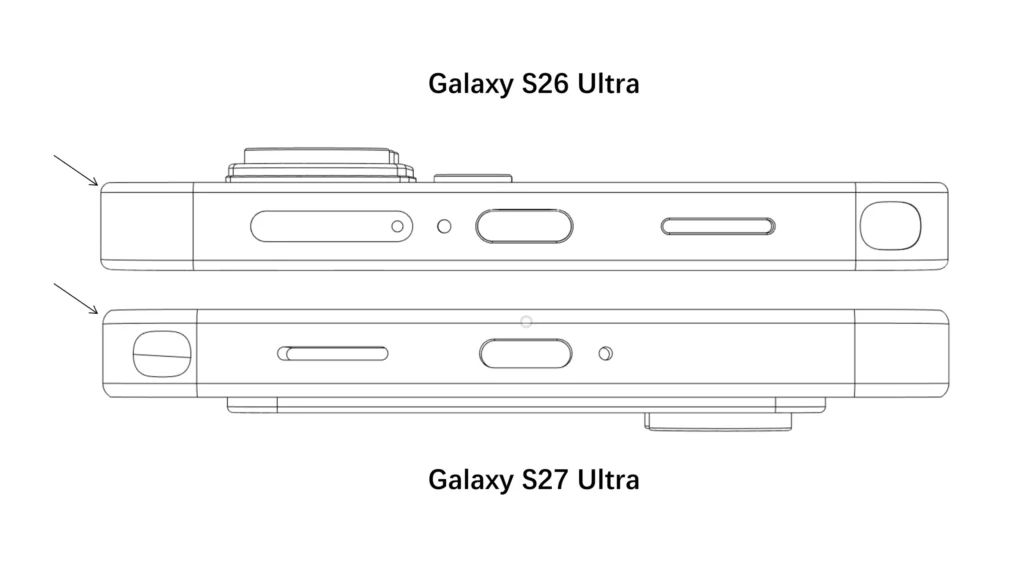
According to Ice Universe, the Galaxy S27 Ultra will adopt a more rounded frame with more pronounced bevels than the Galaxy S26 Ultra. This is a visually subtle evolution, but it could have a much more noticeable impact in hand.
A Softer Frame Than The Galaxy S26 Ultra
The latest leak is based on a graphical comparison between the Galaxy S26 Ultra and its presumed successor. The overall proportions remain similar, but the Galaxy S27 Ultra features rounder angles and a more gradual transition between the front, frame, and back.
Ice Universe himself describes the change as relatively minor. However, it could matter more than a more spectacular aesthetic modification. On a smartphone as wide as an Ultra, even a few millimeters or additional degrees in the rounding of the angles can significantly alleviate pressure on the palm during prolonged use.
This evolution aligns with a trend that has already been evident. The Galaxy S24 Ultra still had a very rectangular silhouette, inherited directly from the Galaxy Note series. With the S25 Ultra, Samsung started to round the corners more. The S26 Ultra continued this movement. The Galaxy S27 Ultra will therefore take this even further while still maintaining the robust and angular identity associated with the series.
Samsung seems to be gradually seeking a balance between the visual identity of the Note and the ergonomic comfort of its other Galaxy S models.
The Ultra Format Needed This Evolution
The problem with previous Ultra models was not just their size. Their particularly straight angles could become uncomfortable when the phone rested in the palm for extended periods. This flaw is less visible on a spec sheet than a battery or camera, yet it directly influences everyday experience.
As screens approach 7 inches, ergonomics becomes almost as crucial as slimness. Hence, making the frame softer can enhance the feel in hand without reducing display area or fundamentally altering the design.
The Galaxy S27 Ultra will feature a more rounded frame, with softer edges than the S26 Ultra. This should make it feel more natural in the hand and improve overall grip comfort.
It’s a small design change that could make a noticeable difference in everyday use. pic.twitter.com/vd3Fuiv4hE
— Ice Universe (@UniverseIce) August 27, 2026
More Pronounced Bevels on The Sides
The leak also mentions deeper chamfers on both sides of the frame. This does not necessarily mean a return to a curved screen like on the old Galaxy Edge models. The display is expected to remain flat. Samsung would instead be modifying the geometry of the chassis around the screen to avoid a too abrupt junction between the display and the edges.
This may create the illusion that the smartphone feels slightly thinner when held, even if its actual thickness changes little. The effectiveness of this approach will, of course, need to be assessed on the final product.
This Change Contrasts With The Highly Controversial Camera Setup
The leak comes at a time when another aspect of the Galaxy S27 Ultra is generating much more reaction. Several CAD renders attributed to generally reliable sources show a large horizontal or significantly expanded camera plate on the back. This layout would break away from the separate circular lenses used by Samsung for several generations.
The change has immediately sparked comparisons with the recent iPhone Pro. Some users are already accusing Samsung of abandoning a recognizable visual identity in favor of an aesthetic that is closer to its competitors.
The Back Could Be The True Breakthrough of This Generation
If the renders are confirmed, the Galaxy S27 Ultra would thus adopt a quite particular combination. The front will subtly evolve with a more comfortable frame, while the back will change much more radically.
Samsung seems keen to consolidate several sensors within a more coherent visual setup, rather than keeping the individual rings directly integrated into the chassis.
This new arrangement could also address technical constraints. Larger sensors, complex periscopic modules, or a bulkier battery may compel the manufacturer to reorganize internal space. The external design is often a consequence of these decisions.
It’s Too Early To Talk About An iPhone Copy
Comparisons with Apple are inevitable but should be nuanced. A wide camera plate is not an invention unique to the iPhone. Google, Xiaomi, Huawei, and many other manufacturers have long utilized large camera zones.
The initial renders of the Galaxy S27 Ultra do indeed remind one of recent design trends from Apple, but the final product is still unknown. With several months until launch, colors, materials, and finish details may significantly influence the design perception.
The Galaxy S27 Ultra Is Expected To Remain A Very Large Smartphone
The first CAD renders also indicate that Samsung is not trying to make its Ultra much more compact. The smartphone is expected to keep dimensions similar to those of the Galaxy S26 Ultra. Therefore, the comfort change will rely more on the shape of the frame than on a significant reduction in width or height.
This is a logical approach. Sharply reducing the format could force Samsung to decrease the size of the display, battery, or camera system.
The brand seems to prefer to retain internal capacity while working on how the phone rests in hand.
The S Pen Is Expected To Remain
Despite the aesthetic changes, the integrated S Pen should still be part of the Galaxy S27 Ultra. This is significant as the presence of the stylus imposes substantial constraints on internal architecture. Samsung must reserve part of the chassis volume for its housing while also integrating the battery, cameras, and cooling components. This constraint partly explains why the Ultra model cannot adopt the same design choices as high-end smartphones without a stylus.
The S Pen also remains one of the most distinctive elements of the model compared to the iPhone and other Android flagships.
A Larger Battery Is Still Being Speculated
Rumors surrounding the battery continue to circulate. Various sources suggest a capacity possibly reaching around 5,700 to 6,000 mAh, potentially thanks to silicon-carbon technology. No figures have been confirmed yet.
Such an increase would, however, represent a major change for the Ultra series, which has long remained relatively conservative on this point. If Samsung genuinely raises the capacity without significantly thickening the phone, the work done on the bevels and angles could also help visually mask some of this extra volume.
The Snapdragon 8 Elite Gen 6 Remains The Logical Candidate
The Galaxy S27 Ultra is also expected to debut the next generation of high-end Qualcomm chips. Leaks mention a derivative of the Snapdragon 8 Elite Gen 6, manufactured on a 2nm process. Some sources speak of a particularly advanced version intended for the Galaxy Ultra, but Qualcomm has yet to officially present this platform.
Thus, one should be cautious about the exact name, frequencies, or performance. What seems much more likely is that Samsung will continue to reserve for the Ultra model one of the most powerful configurations available at its launch time.
Android 17 And One UI 9.x Expected At Launch
On the software front, the Galaxy S27 Ultra should naturally arrive with Android 17 and a new version of One UI. Samsung is expected to continue to place a strong emphasis on Galaxy AI and agentic features. The next generation may thus rely even more on automated actions between applications, better contextual understanding, and increased local processing.
The enhancement of AI capabilities further emphasizes the importance of processor and memory choice. The external design will therefore represent only part of the evolution.
Samsung Is Seeking A New Identity For Its Ultra
The gradual transformation of the corners also tells a broader story. For several years, the Galaxy S Ultra was practically a rebranded Galaxy Note. Rectangular silhouette, integrated S Pen, and very marked angles maintained the immediate DNA of that former family.
Since the Galaxy S25 Ultra, Samsung seems to be gradually detaching its flagship from this heritage. The phone is becoming rounder, more homogeneous with the rest of the Galaxy S range, and likely easier to handle.
The S Pen persists, but the Note design is slowly fading away.
A Small Change May Be More Impactful Than A Huge Aesthetic Shift
The paradox of the Galaxy S27 Ultra may ultimately reside here. Its most discussed change — the camera setup — is essentially visual. Its most useful change may be almost invisible: rounding the edges and deepening the bevels will probably not produce a spectacular marketing campaign. However, in a device used for several hours each day, comfort in hand can have much more impact than a new camera layout.
This is precisely the type of improvement that is less noticeable on renders and more felt after a week of usage.
The Design Remains A Leak
All this information should still be treated with caution. Samsung has not officially revealed any details about the Galaxy S27 Ultra. Even though Ice Universe and various rendering sources have a solid track record, the smartphone is only expected to launch in early 2027, likely around January or February if Samsung maintains its usual schedule.
Details may still evolve. The overall direction, however, seems to be taking shape: a rounder, more comfortable Ultra with a significantly bolder back. The challenge will be to see if Samsung can successfully introduce its new camera plate.
Because for once, users may ultimately prefer the aspect of the redesign that they feel in hand to that which they see on the back of the phone.



