

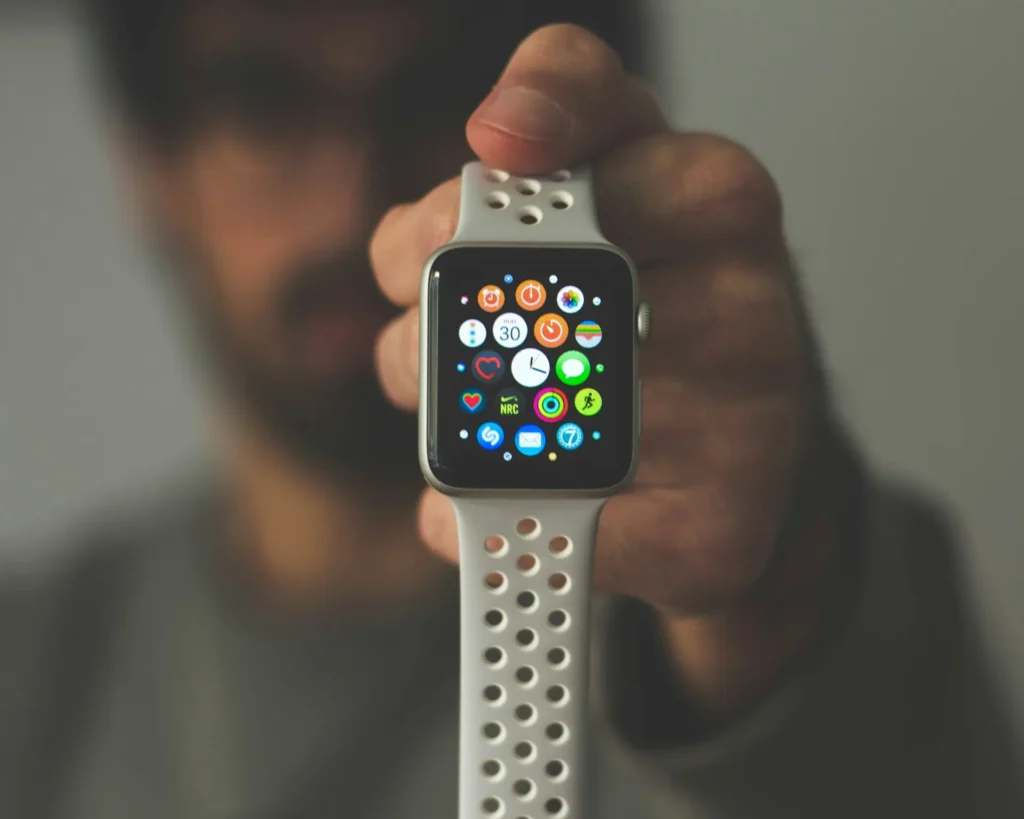
Apple Watch: Apple tests continuous heart rate monitoring to compete with Oura and Whoop
Apple may be preparing one of the most significant advancements in its health tracking capabilities in years. According to Mark Gurman, the company is currently testing a mode that allows the Apple Watch to continuously monitor heart rate throughout the day, instead of primarily relying on periodic readings during workouts.
Additionally, Apple is reportedly revamping its Health and Fitness apps to include well-being indicators similar to those popularized by Oura and Whoop. While there is no assurance that these features will debut with the Apple Watch Series 12 or the Watch Ultra 4, the intent is clear: Apple aims to evolve from a watch that collects a lot of data to a platform capable of better understanding trends over a 24-hour period.
Apple tests an active heart rate sensor throughout the day
Currently, the Apple Watch adjusts the frequency of its measurements based on usage. During workouts, the heart rate sensor operates more intensively to accurately track changes in heart rate.
In daily life, readings are more spaced out. The system being tested by Apple would involve maintaining continuous monitoring outside of exercise sessions. While this change may seem relatively straightforward, it could greatly enhance the volume of data collected daily.
The Apple Watch already accurately measures heart rate. Therefore, the challenge isn’t necessarily to obtain a better sensor, but to use it more frequently. With sporadic readings, some fluctuations can occur between two measurements and go unrecorded. Continuous monitoring, on the other hand, produces a much denser data curve.
This allows for a more accurate determination of an individual’s typical resting heart rate and tracking variations throughout an entire day. This continuity has long been a key selling point for specialized trackers.
A better baseline can make anomalies more significant
The value of a health data point often hinges on the surrounding context. Observing a slightly elevated heart rate at a single moment doesn’t signify much without knowing the person’s habitual rate at that time.
With more measurements, the Apple Watch could establish a more detailed personal baseline. An unusual variation would then be easier to identify. This could be particularly beneficial for tracking recovery, fatigue, stress, or changes in certain physiological indicators.
Of course, this does not aim to transform the watch into an autonomous medical diagnostic tool, but rather to produce more comprehensive trends.
Heart rate variability could also benefit
Heart rate is not the only indicator at stake. Heart rate variability (HRV) becomes more meaningful when analyzed over time. This data measures the time variance between two beats and is used in many systems to estimate recovery, physiological load, or certain stress levels.
Regularly collected measurements could help Apple create a more consistent representation of the user’s overall condition. This is exactly the type of data Oura and Whoop have emphasized for years.
Apple is also preparing a revamp of Health and Fitness
The hardware change alone won’t suffice. Apple is also testing an evolution of its Health and Fitness apps, incorporating more well-being indicators. The goal is to turn raw data into more easily understandable information.
This is an area where Apple paradoxically still has considerable room for improvement. The Apple Watch collects vast amounts of data, but it can sometimes be fragmented across various screens and graphs.
Specialized competitors have often built their reputation not on radically superior sensors, but on their ability to tell a simple, coherent story with all that data.
Oura built its success on trends rather than workouts
The Oura Ring exemplifies this philosophy perfectly. The ring does not aim to replace a comprehensive sports watch; instead, it focuses more on sleep, recovery, stress, and long-term physiological trends. Its appeal largely lies in its ability to be worn almost continuously. The more data the device collects, the more reliable an individual profile can be established.
Apple already has a comprehensive array of sensors. Continuous heart monitoring could align its methodology more closely with Oura’s.
Whoop follows a similar philosophy
Whoop also adopts a continuity-based approach. The strap is designed to collect data both day and night, calculating metrics for recovery, strain, and sleep. Users don’t necessarily check each individual measurement; the software translates them into simpler scores.
This combination of continuous monitoring and interpretation has allowed Whoop to differentiate itself from traditional smartwatches. Apple now seems intent on enhancing this analytical layer.
Apple could combine the best of both worlds
The potential strength of the Apple Watch lies in its existing features that often elude minimalist trackers. Screen, GPS, apps, calls, notifications, advanced sports tracking, and safety functions. If Apple adds continuous physiological monitoring and improved well-being interpretation, it can achieve the benefits of Oura and Whoop without requiring users to wear a second device.
This is likely the true strategic challenge.
It is not uncommon for users to pair an Apple Watch with an Oura Ring. The division of roles is quite logical. The watch is worn during the day and workouts, while the ring takes over during the night and recovery periods. This combination works, but it adds an extra device to purchase, charge, and synchronize.
If the Apple Watch becomes capable enough to cover the entire day and night itself, many of these users may no longer feel the need for a second tracker.
Sleep would benefit particularly from daytime context
Apple already tracks sleep. However, analyzing sleep in isolation reveals only part of the picture. Nocturnal recovery also depends on what happens throughout the day—physical activity, stress, heart rate, rest periods, and accumulated fatigue. A denser heart rate monitoring throughout the day would thus provide much richer context for nighttime data.
This is precisely the type of correlation wellness platforms aim to establish.
The battery immediately becomes the main issue
However, a significant obstacle exists: battery life. Running the optical sensor more frequently consumes more energy. The Apple Watch is still largely designed around frequent recharging. Introducing continuous monitoring without significantly increasing battery life could create a paradox: as the watch becomes more appealing to wear day and night, the user must find time to take it off to charge.
This is precisely where specialized rings and straps maintain an advantage.
The Pixel Watch already demonstrates the benefits of this approach
Google has been implementing continuous heart rate monitoring on its Pixel Watches for several generations. This enables the production of particularly dense graphs and makes it easier to identify variations throughout the day. This philosophy naturally fits into the Fitbit ecosystem, which has historically focused heavily on continuous tracking.
Thus, Apple may also be looking to close a gap with Google, not just with Oura and Whoop. The wearable device battle is increasingly focused on the quality of trends rather than the sheer number of sensors.
The Apple Watch Series 12 and Ultra 4 may not receive the feature
However, caution remains essential. Mark Gurman describes continuous heart rate monitoring and the wellness overhaul as functions currently under testing. There is no official launch window associated with these projects, so Apple may decide to delay or modify them. This means that their inclusion in the Apple Watch Series 12 or the Apple Watch Ultra 4 should not be taken for granted.
The two upcoming watches may receive more modest enhancements.
Even if permanent tracking doesn’t launch immediately, the direction is indicative. Apple already possesses a considerable amount of health data thanks to the Apple Watch. The next step is to convert this data into more actionable recommendations. Instead of merely displaying a heart rate, the system should explain how it fluctuates in relation to user habits. Instead of just showing a single night of sleep, it should contextualize it within several weeks of trends.
This layer of interpretation is becoming the new frontier of wearables.
One crucial condition remains: successfully monitoring heart rate all day without requiring the watch to spend too much time on its charger.



