

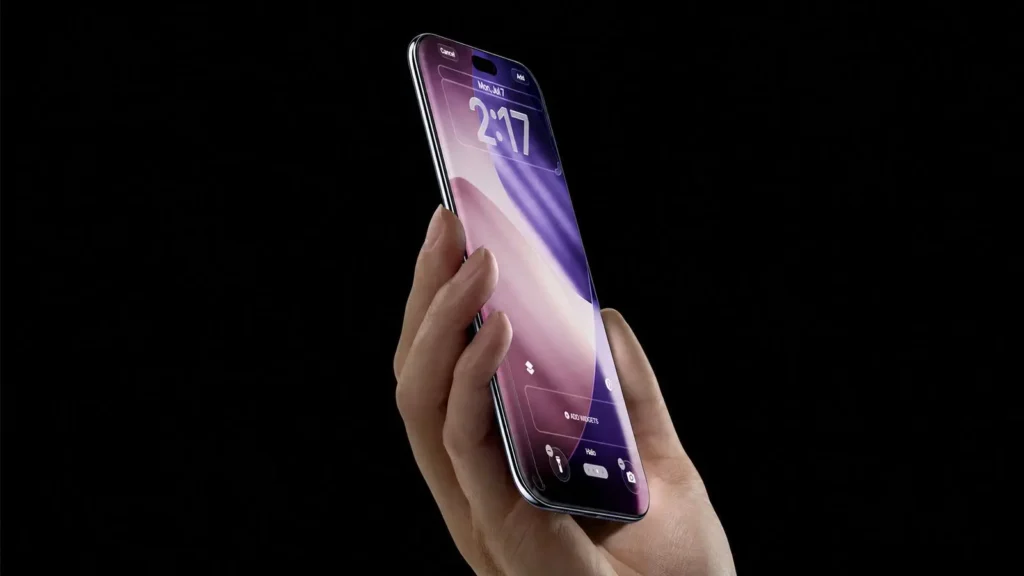
Apple has allegedly canceled the all-screen iPhone 20 Pro planned for the iPhone’s 20th anniversary
The iPhone marking its 20th anniversary was set to represent the most significant aesthetic revolution since the iPhone X. However, a recent rumor suggests that Apple may have abandoned this ambitious project due to production challenges. If this information is confirmed, the company may need to scale back one of the most symbolic launches in its history.
As 2027 approaches, marking twenty years since the iPhone’s introduction, Apple appeared ready to unveil a model aimed at opening a new chapter in mobile design. Now, that vision may never become a reality.
An All-Glass iPhone… That Might Never Happen
According to several leaks over the past few months, the iPhone 20 Pro was expected to debut a stunning design. The smartphone would feature an almost entirely borderless display, with glass smoothly extending to the edges of the chassis to create an unprecedented sense of continuity.
Another significant change was rumored to involve the front components, with Apple planning to place both Face ID and the selfie camera directly under the screen, eliminating any notch or Dynamic Island.
The goal was clear: to deliver the first truly uninterrupted front face in iPhone history.
Production Challenges May Have Led to Project Abandonment
A recent report cited by various specialized sources indicates that Apple may have ultimately abandoned this version of the project. The primary reason cited relates to manufacturing yields.
Mass-producing a smartphone that combines a borderless display, an under-display camera, and an invisible Face ID system remains a considerable technical challenge—especially in a context where the semiconductor industry continues to face constraints on several critical components.
In other words, Apple is confronting the same dilemma it has faced in the past: to prioritize maximum innovation or to ensure sufficient production capacity to meet global demand.
A More Traditional Design for the 20th Anniversary?
If this scenario proves true, the iPhone celebrating its twentieth anniversary will not vanish entirely. However, its design is likely to be significantly less groundbreaking than anticipated.
The latest renders released by several leakers show a device that still closely resembles the initial concept but retains a Dynamic Island, suggesting that Apple was unable to integrate all of its sensors under the screen within the desired timeframe.
The final product would still be sleek, but far less spectacular than the initial leaks implied.
Apple Remains True to Its Philosophy
This potential shift isn’t entirely surprising. For several years, Apple has preferred to delay a technology rather than launch a product deemed insufficiently mature. The company’s history includes many similar examples: reverse wireless charging, which was long delayed, OLED screens adopted years after Android, and foldable smartphones anticipated nearly a decade after the first competing models.
This approach generally prioritizes reliability and user experience over a rush to introduce the newest innovations.
Competition Could Gain a New Edge
The primary concern for Apple lies elsewhere. Android manufacturers are actively advancing their work on hole-punch displays, under-display cameras, and truly immersive facades. Even though these technologies involve certain compromises, several competitors may manage to launch a truly all-screen smartphone before Apple.
This wouldn’t be the first time. In the mobile industry, Apple is no longer necessarily the first to introduce hardware innovations; instead, it aims to democratize them once they reach a sufficient level of maturity.
An Anniversary Less Spectacular Than Expected?
The year 2027 was poised to symbolize a new milestone for the iPhone, akin to what the iPhone X represented in 2017. If Apple indeed abandons its original concept, this twentieth anniversary might ultimately focus on more incremental improvements rather than a major design overhaul.
That said, caution is advised. At this stage, no information has been confirmed by Apple, and industrial plans may still evolve ahead of the launch.
One thing seems clear: the quest for an iPhone completely devoid of notches and borders remains more complex than anticipated. Even for Apple, certain technological ambitions sometimes have to wait until production capabilities align with them.



