

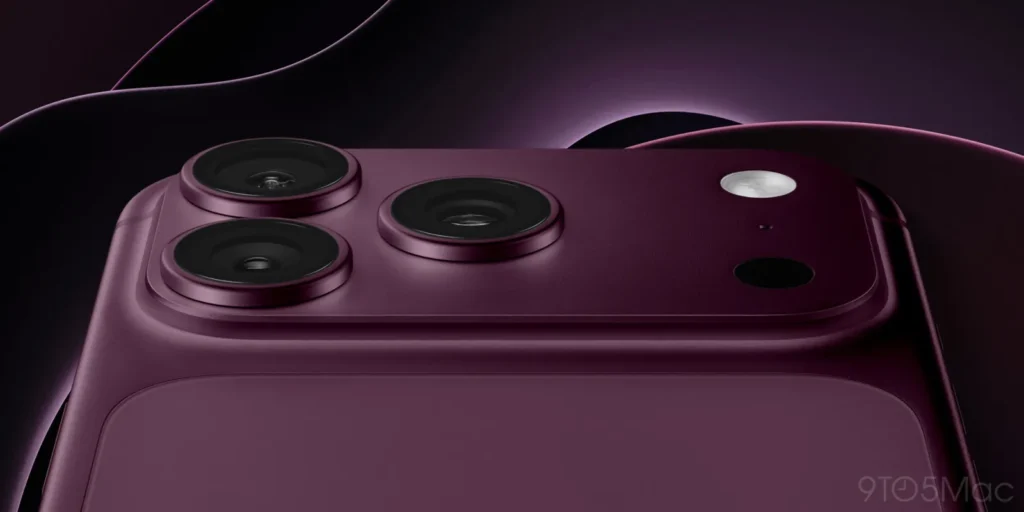
iPhone 18 Pro Max: A leak confirms a significantly larger battery and increased battery life
Apple appears to be making a definitive choice for its next generation of iPhone Pro: prioritizing battery life over slimness. New images of the iPhone 18 Pro Max reveal a noticeably larger battery than the current model, confirming several rumors about an increase in capacity. However, this change may result in a thicker and heavier smartphone.
While several Android manufacturers are focusing on silicon-carbon batteries to enhance battery life without increasing device volume, Apple seems to be taking a different approach.
A Significant Battery Upgrade for the iPhone 18 Pro Max
According to a leak shared by South Korean leaker Lanzuk, the iPhone 18 Pro Max is expected to feature a 5,567 mAh battery for the eSIM-only version in the U.S. By comparison, the iPhone 17 Pro Max had a 5,088 mAh battery, indicating an approximate 9% increase.
The international version, equipped with a physical SIM card slot, will reportedly have a capacity of 5,391 mAh, up from around 4,820 mAh in the previous generation, representing a gain of about 12%.
The iPhone 18 Pro will also see a battery increase, albeit more modest. Its capacity will rise to 4,288 mAh for the U.S. eSIM model, compared to 4,252 mAh previously, while the international variant will reach 4,056 mAh.
Battery Life that Could Reach New Heights
This capacity increase is only part of the equation. Future Pro models are also expected to debut the A20 Pro chip, manufactured using a 2nm process by TSMC. By combining a larger battery with a more efficient platform, Apple could achieve one of the most significant improvements in battery life seen on a Pro iPhone in years.
This evolution responds to an increasing demand from users, who now prioritize daily endurance over slight gains in slimness.
A Thicker Design, but More Ambitious
However, this additional battery life will come at a cost. Various sources indicate that the iPhone 18 Pro might have a thickness ranging between 9.9 and 10.9 mm, compared to 8.8 mm for current models. The weight is also expected to increase.
The iPhone 18 Pro Max could weigh 240 grams, seven grams more than its predecessor, marking a return to the heavier models Apple has released.
However, the battery won’t be the only factor contributing to this weight gain.
Advanced Components Will Also Contribute to This Change
Apple is preparing several hardware innovations that could augment the internal volume of the smartphone. Among them is a variable aperture lens, a technology already utilized in some premium Android smartphones, which allows for mechanical adjustments of the sensor’s aperture based on shooting conditions.
Rumors also suggest a new vapor chamber enhanced with a stainless-steel structure, designed to improve thermal dissipation of the upcoming A20 Pro during demanding tasks related to AI, gaming, or video.
In other words, the future iPhone Pro Max won’t be thicker solely due to its battery but because it will include a more ambitious overall hardware platform.
Apple Goes Against the Silicon-Carbon Trend
While Samsung, Honor, Xiaomi, and OnePlus gradually adopt silicon-carbon batteries to increase energy density without making their smartphones thicker, Apple seems to prefer a more conservative approach.
The company is betting on a higher-capacity lithium-ion battery rather than turning to a newer chemistry that is still relatively rare in its production process.
This strategy minimizes industrial risks but inevitably results in bulkier devices.
An Accepted Compromise for Demanding Users
This leak highlights a shift in philosophy at Apple. After several generations where thinness was a key element of the marketing narrative, the brand now seems to believe that battery life is a more crucial selection criterion than a few millimeters saved on the chassis.
Users who prefer a lightweight smartphone can still look to the iPhone Air, while the Pro Max lineup will continue to focus on performance, photography, and endurance.
If these details are confirmed during the official announcement, the iPhone 18 Pro Max could become one of Apple’s most enduring smartphones ever released. The question remains whether users will be willing to accept a thicker device in exchange for several additional hours of use, especially as competitors demonstrate that it is now possible to achieve both through silicon-carbon batteries.



