

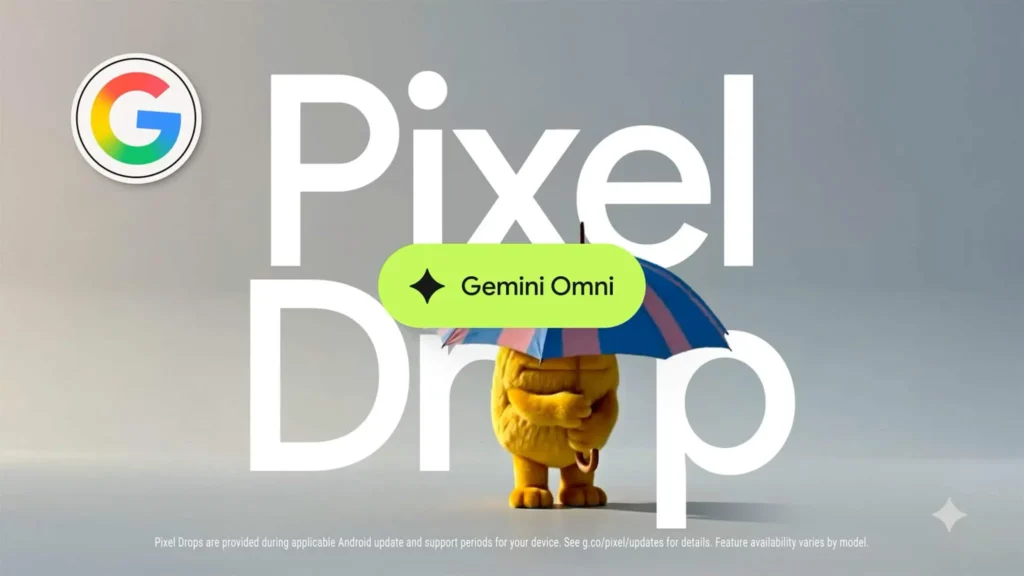
Google Pixel Drop of June: Screen Reactions and AI Music Creation Arrive on Pixels
Users of Pixel smartphones equipped with a Tensor chip are likely to soon receive the upcoming June Pixel Drop. Several Google ads, which briefly appeared on Amazon before being removed, have revealed new features focused on content creation and artificial intelligence.
If the information is confirmed, this rollout will affect a wide range of the Pixel ecosystem, from Pixel 6 models to devices in the Pixel 10 lineup.
Screen Reactions: Google Aims to Simplify Short Content Creation
The most tangible new feature is likely the “Screen Reactions,” a function designed for social media content creators.
Previously mentioned during the Android Show hosted by Google before the Google I/O developer conference, this feature allows users to simultaneously record the smartphone screen and the user’s reaction through the front camera.

This feature enables users to comment on a video, app, game, or news directly from their Pixel, without needing third-party editing software. Once activated through the built-in screen recording tool in Android, the option displays a customizable selfie window that can be moved around and accompanied by various colored backgrounds.
The experience clearly targets the short formats popularized by TikTok, Instagram Reels, and YouTube Shorts. Google aims to transform the smartphone into a true mobile creation studio, capable of quickly producing reaction videos ready for publication.
Gemini Omni Could Generate Music from a Simple Prompt
Another feature glimpsed in the removed ads is potentially even more ambitious. Under the slogan “Turn Your Ideas into Music,” Google appears to be preparing a tool that enables music generation from text descriptions using Gemini Omni. Details are limited, but the concept echoes recent developments in generative AI, where text, image, video, and now audio converge within a single platform.
If this feature is indeed incorporated into the Pixel Drop, users could quickly create original musical tracks directly from their smartphones, without needing any particular composition skills.

This direction exemplifies a broader trend: mobile AI is no longer limited to productivity or personal assistance. It is increasingly becoming a creative tool accessible to the general public.
The Pixel Becomes a Creative AI Platform
Beyond the new features, this Pixel Drop primarily reveals the evolution of Google’s strategy. Since the introduction of Tensor processors, the brand has aimed to leverage artificial intelligence directly on-device rather than relying solely on the cloud. Computational photography, real-time translation, and intelligent editing features have already demonstrated this approach.
With Screen Reactions and music generation powered by Gemini, Google takes a significant step in directly targeting content creators. The smartphone is no longer just a tool for consuming content; it becomes an AI-powered production device.
Faced with competitors like Apple and Samsung, who are also ramping up AI-driven announcements, Google appears to want to capitalize on a key advantage: the native integration of Gemini at the core of Android.
An AI Battle Extending to Smartphones
The June Pixel Drop may seem modest compared to the year’s major hardware announcements. However, it perfectly reflects the direction the mobile industry is heading.
The competition is no longer solely about camera sensor performance or processor power. It is gradually shifting towards creative applications made possible by artificial intelligence. Manufacturers are now looking to offer experiences that can instantly transform an idea into an image, video, or even music.
If the features glimpsed in these ads make it to the final version of the Pixel Drop, Google will further solidify the Pixel’s position as a showcase for Android’s AI capabilities. A strategy that could prove crucial as smartphones evolve into true personal creative assistants.



