

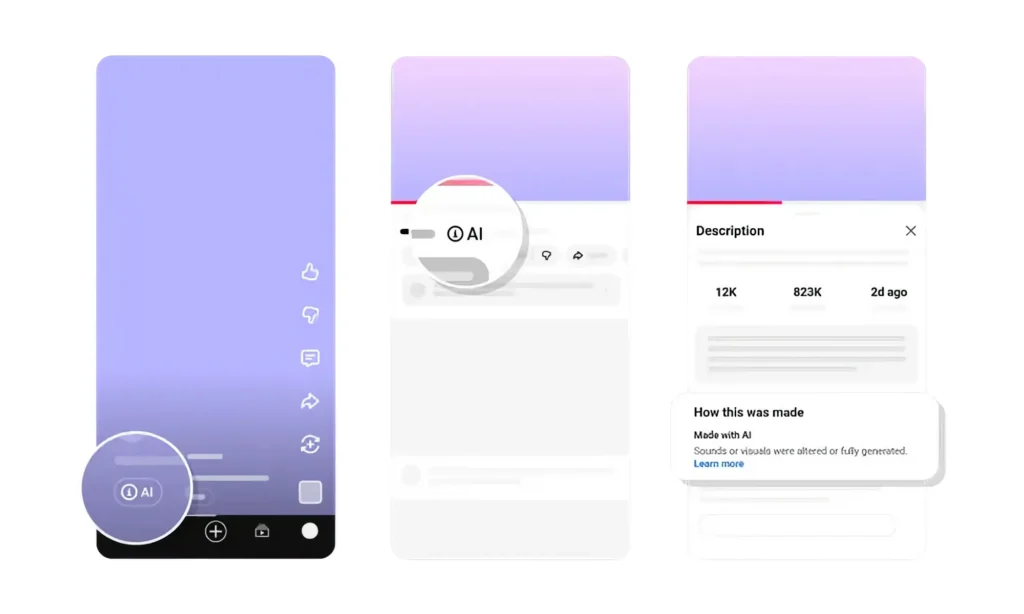
YouTube makes AI labels more visible on videos and Shorts
With Gemini Omni, Google is equipping creators with groundbreaking tools that enable them to generate, edit, and remix content with unprecedented ease. However, this democratization also has a downside: YouTube may become increasingly exposed to realistic AI-generated videos that can be hard to distinguish from authentic images.
To prevent a decline in trust, the platform is enhancing its transparency labels.
YouTube: AI Labels Finally Made Visible
Previously, mentions of synthetic or modified content were often buried in the description. Now, for long videos, the label will appear directly below the player, above the description. For Shorts, it will be displayed overlaying the video.
YouTube primarily targets photorealistic content or significantly altered videos created using AI. Videos that are clearly animated, unrealistic, or only slightly edited will still be noted in the extended description.
Another significant change: YouTube can now automatically apply a label if its systems detect substantial use of undeclared photorealistic AI. The platform will rely on its own signals, SynthID, and C2PA metadata for this purpose.
Creators will have the ability to correct errors through YouTube Studio. However, once a label is applied, it will remain permanent for content generated with YouTube’s AI tools, such as Veo or Dream Screen, or when a file contains metadata confirming its synthetic origin.
A Trust Measure, Not a Punishment
YouTube clarifies that these labels will not affect recommendations or monetization. The focus is on informing the viewer at the right moment, before the illusion takes effect.
With the advent of tools like Gemini Omni, YouTube’s role is no longer just to encourage creativity; it must also ensure clarity regarding what is real.



