MediaTek Dimensity 8550: The Android Chip Preparing for Gemini Intelligence
Mobile artificial intelligence may no longer be reserved for ultra-premium smartphones. With the quiet launch of the Dimensity 8550, MediaTek is paving the way for a new generation of Android devices capable of executing advanced Gemini Nano V3 functions directly on the phone.
However, behind this announcement lies a more nuanced reality: simply having the right chip may not guarantee access to Google’s AI.
A Dimensity 8550 Almost Identical to the 8500
On paper, the new Dimensity 8550 closely resembles its predecessor. Produced using 4 nm technology at TSMC, the SoC maintains an architecture consisting solely of Cortex-A725 cores.
This includes one main core clocked at 3.4 GHz, three cores at 3.2 GHz, and four cores at 2.2 GHz.
The graphics component continues to utilize a Mali-G720 MC8 GPU, capable of handling 1440p displays at up to 144 Hz. MediaTek has also retained features such as 4K video recording at 60 fps, AV1 support, compatibility with camera sensors up to 320 megapixels, LPDDR5X RAM, UFS 4.0 storage, as well as active dual SIM 5G, Wi-Fi 6E, and Bluetooth 5.4.
In other words, the Dimensity 8550 is not a hardware revolution. The real novelty lies elsewhere.
Gemini Nano V3: The True Strategic Advantage
MediaTek adds here a new feature called “LLM Booster,” integrated into the NPU 880. Its purpose: to accelerate AI processing directly on the device, without relying on cloud connectivity.
This component is what allows the Dimensity 8550 to be compatible with Gemini Nano V3, Google’s new local AI model.
And it’s precisely here that the Android market begins to fragment.
During Google I/O, the company extensively promoted Gemini Intelligence—its upcoming suite of advanced AI experiences—without emphasizing the hardware requirements. In practice, very few smartphones currently meet these requirements.
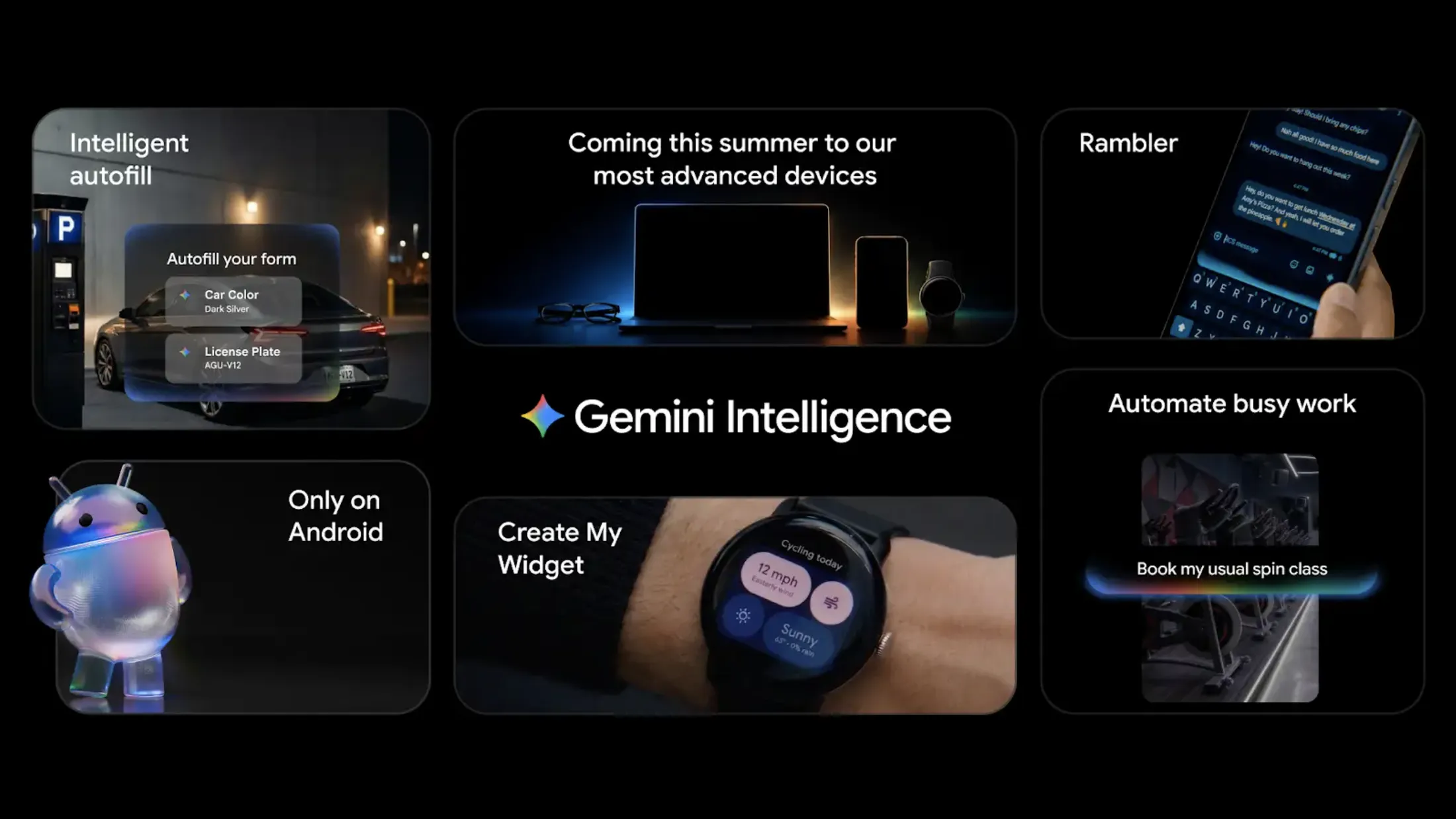
So far, only high-end models like the Pixel 10, Galaxy S26, or OnePlus 15 have met the technical requirements. Even some recent flagships are still limited to Gemini Nano V2.
The Dimensity 8550 could thus open the door to more affordable devices.
RAM Becomes the New Filter for Mobile AI
However, there is one detail that completely changes the equation: Google also imposes a minimum of 12 GB of RAM for Gemini Intelligence. This requirement turns mobile AI into a new premium marker.
A smartphone equipped with the Dimensity 8550 but only 8 GB of RAM—still a common configuration in the mid-range—will likely not be able to take advantage of the most advanced Gemini features.
This situation is reminiscent of the early days of modern smartphones, when certain key features heavily depended on the hardware. However, the boundary is no longer solely determined by raw power but by the capacity to locally run artificial intelligence models.
Apple follows a similar logic with Apple Intelligence, although its memory requirements are less stringent.
Honor and Oppo Lead the Charge
Interestingly, the first smartphones equipped with the Dimensity 8550 are already available. The Honor 600 Pro and the OPPO Reno 16 are among the first devices to integrate this new platform.
It remains to be seen whether manufacturers will accept to standardize 12 GB configurations on more accessible devices. Without this uptick in memory, the promise of a “democratized” AI will largely remain theoretical.
This evolution highlights a notable trend: artificial intelligence is gradually becoming the main driver for smartphone renewal. After years of sometimes marginal innovations, manufacturers seem to have finally discovered a new argument capable of reigniting the hardware race.