

Wear OS 7: Google finally brings the Pixel Watch closer to the Apple experience… with a condition
Google has officially unveiled Wear OS 7 at Google I/O 2026, and this new version might represent one of the most significant updates to the Pixel Watch ecosystem in years.
Among the highlights are improved battery life, a new widget system, Live Updates, and notably, the introduction of Gemini Intelligence to smartwatches. However, as has been the trend with Google lately, the best aspects of the experience appear to be reserved for the newest hardware.
Wear OS 7 aims to make the watch more useful in everyday life
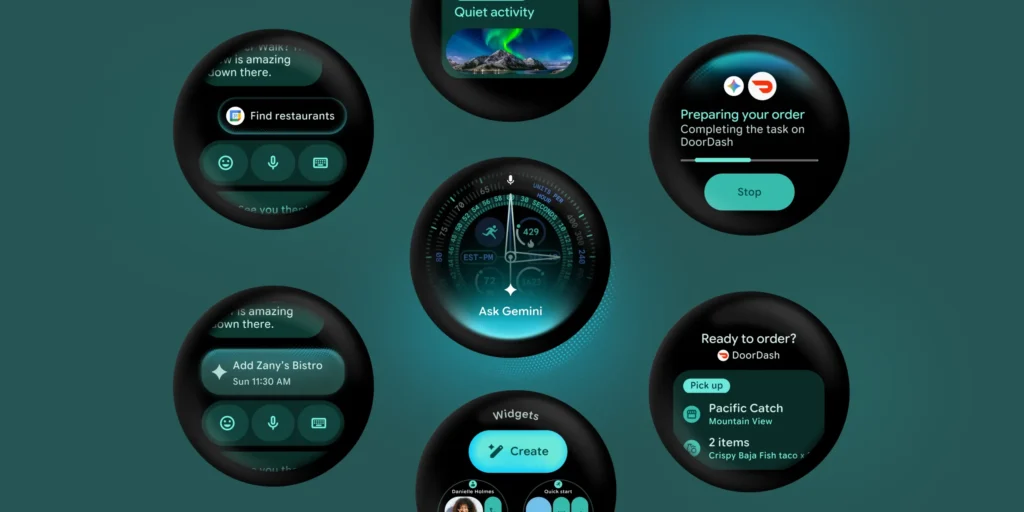
The most noticeable change is the interface. Google has replaced the old full-screen Tiles with a far more flexible widget system, organized into 2×1 and 2×2 blocks. This approach closely resembles the widgets found in Android 16 and the logic of watchOS.

Google has also incorporated Live Updates directly onto the watch face, enhanced sports tracking consistency, introduced a new audio management system, and more intelligent media controls.

The company promises up to 10% more battery life compared to Wear OS 6 — a significant gain for a smartwatch.
Gemini Intelligence is coming… but not for everyone
The real highlight is undoubtedly Gemini Intelligence. Google has confirmed that Gemini AI will be available on select compatible smartwatches later in 2026. However, the wording used is particularly revealing: only certain new models will have access.
In other words, current Pixel Watches might be excluded, and even some future Wear OS smartwatches may not necessarily support all AI features. This follows a familiar pattern in the mobile industry: new AI functionalities gradually become hardware selling points.
Google transforms the watch into an agentic terminal
The integration of Gemini will serve more than just answering questions. With the AppFunctions API, developers can integrate agentic actions directly into their applications.

Google envisions use cases such as ordering a DoorDash meal during a workout, managing tasks, or interacting with apps without needing to pull out a smartphone.
The watch thus becomes a permanent access point to Gemini rather than just a secondary display.
Wear OS finally approaches watchOS
For several years, Apple has dominated the smartwatch experience in terms of fluidity, interface, widgets, and software cohesion. With Wear OS 7, Google appears to be finally offering a more mature and structured response.
However, unlike Apple, Google faces a fragmented ecosystem: different brands, various chipsets, and variable AI capabilities depending on the hardware.
The real message of Wear OS 7 extends beyond the watch
This update reveals a broader strategy. Google no longer wants to merely integrate Gemini into Android or Search. The company now aims to make Gemini an omnipresent layer: smartphone, XR glasses, computers, cars, and now smartwatches.
The issue is that this vision heavily relies on the newest and most powerful hardware.
As AI becomes the primary selling point, the cycles of renewal may also accelerate.



