

Galaxy Z Flip 8: Samsung focuses on slimness rather than revolution
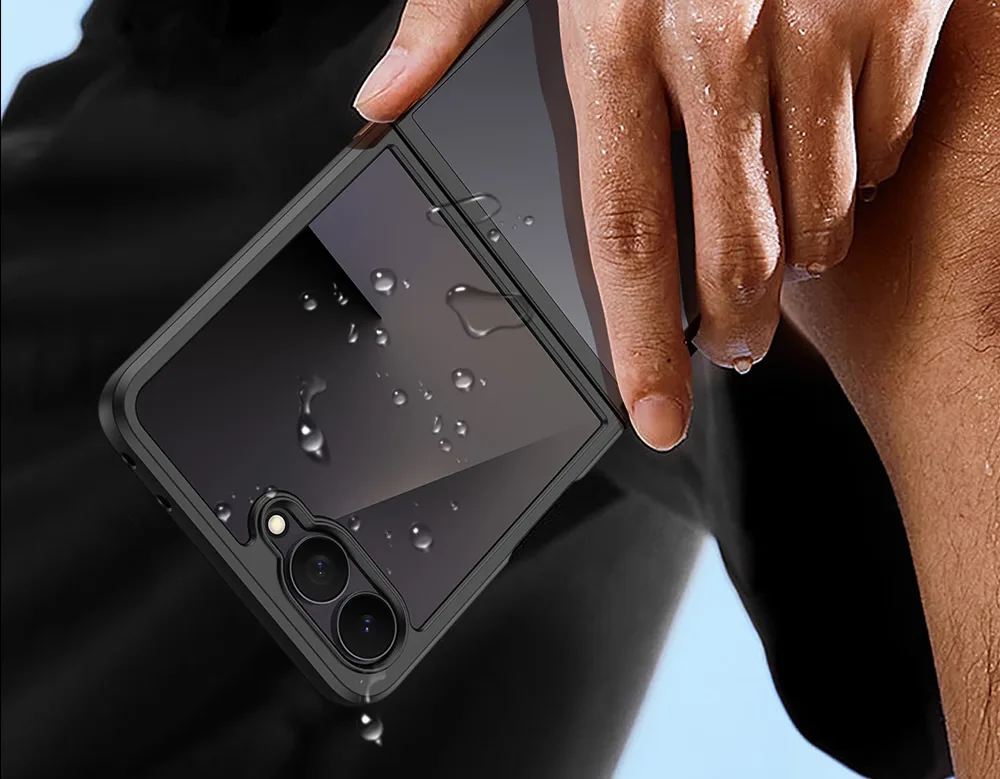
With just a few months until the next Galaxy Unpacked event, leaks surrounding Samsung’s future foldable smartphones are picking up pace. After the initial renders of the Galaxy Z Fold 8 and the Z Fold 8 Wide, it’s now the Galaxy Z Flip 8 that is being revealed in more detail through visuals of cases published by the manufacturer Dux Ducis.
One detail stands out immediately: Samsung seems to favor subtle evolution over radical aesthetic changes.
A design almost unchanged… but slimmer
The new renders confirm what previous leaks suggested: the Galaxy Z Flip 8 will likely maintain nearly the same silhouette as the Z Flip 7. It retains the same external display, dual-camera setup, and the compact format inspired by the now-iconic digital compact design of the series.
The main difference would lie elsewhere: a slight reduction in thickness when the smartphone is folded. Reports indicate that the new model will become approximately half a millimeter slimmer.
This may seem trivial on paper, but in the foldable world, every millimeter counts. Samsung is evidently aiming to enhance the day-to-day experience without disrupting an already established formula.
The mystery of Qi2 and magnets
Interestingly, the most intriguing detail from this leak doesn’t pertain to the design itself but rather to the accompanying accessories. Two nearly identical versions of cases appear in Dux Ducis listings: one featuring magnetic rings, while the other lacks magnets entirely. This contrast reignites questions surrounding Qi2 support.

Samsung might adopt a similar strategy to the Galaxy S25 and S26: offering a “Qi2 Ready” device that is compatible with the magnetic charging ecosystem, but without directly integrating magnets into the phone itself.
This essentially means users would need a specific case to achieve precise magnetic alignment during wireless charging.
Samsung advances cautiously in the magnetic ecosystem
This approach reflects a certain strategic prudence. Unlike Apple, with its central MagSafe ecosystem in iPhones, Samsung appears hesitant to make Qi2 a pivotal hardware feature in its foldables.
This decision likely isn’t merely a marketing tactic. Incorporating magnets into a foldable smartphone is inherently more complicated than in a traditional device, particularly due to reduced thickness, hinge mechanics, and thermal constraints associated with wireless charging.
Thus, Samsung seems to prefer a gradual transition, allowing accessories to play an intermediary role.

Foldables enter a phase of maturity
The Galaxy Z Flip 8 exemplifies a broader trend in the foldable market: the era of dramatic transformations is giving way to a phase of optimization. Manufacturers are no longer just trying to impress with a folding screen. Now, the competition revolves around more subtle details: thinness, battery life, software integration, accessory compatibility, and everyday comfort.
Samsung maintains a lead in this segment, but Chinese competitors are rapidly gaining ground. In this context, each generation must demonstrate tangible improvements in the user experience — even without visible revolutions.
And perhaps that’s precisely what the Galaxy Z Flip 8 is preparing for: a more mature, subdued foldable that is potentially more coherent.



