

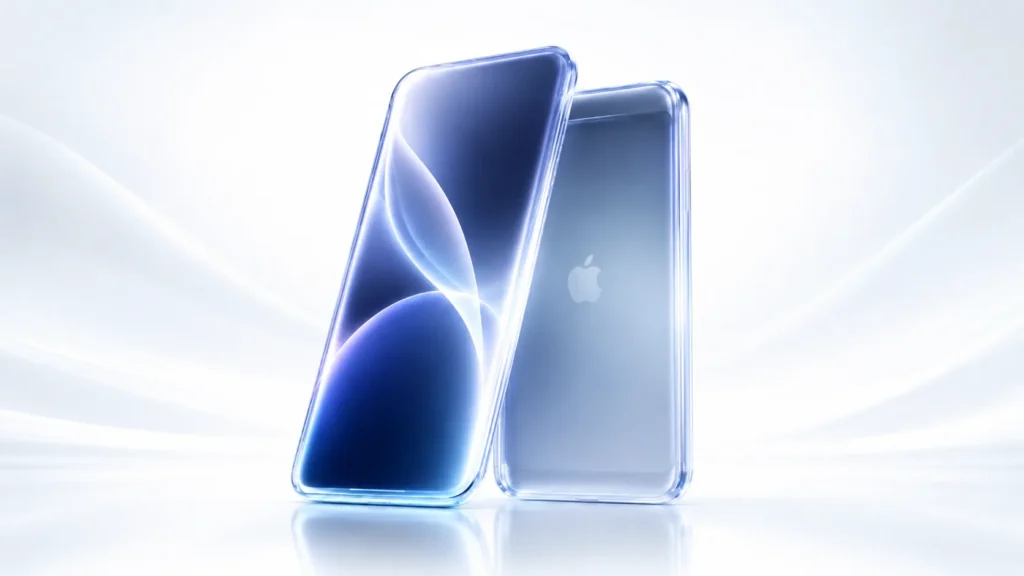
iPhone 20 « Glasswing » : Apple préparerait son iPhone le plus radical depuis 2007
Two decades after eliminating the physical keyboard from smartphones, Apple is reportedly preparing to tackle another stronghold: buttons. According to recent rumors, the 2027 anniversary iPhone, known as the iPhone 20, is set to feature an all-glass design without visible mechanical controls.
iPhone 20: An Anniversary Phone Designed for a Break
According to Mark Gurman, Apple is working on an internally dubbed project called “Glasswing,” inspired by the butterfly with transparent wings. The vision is to create an iPhone where the glass edges seamlessly blend into the screen on all four sides to create the illusion of a continuous surface.
This design will also align with Apple’s software evolution. The Liquid Glass interface is expected to complement this material direction with a more translucent aesthetic that integrates nicely with the chassis.
Toward a Buttonless iPhone
The most stunning rumor pertains to controls. As claimed by leaker Instant Digital, Apple has approved solid-state buttons for the iPhone 20: power, volume, Action button, and Camera Control will no longer move mechanically but will simulate a click using localized haptic feedback.
Apple had previously considered this technology for the iPhone 15 Pro but abandoned it due to technical and industrial challenges. This resurgence in speculation suggests the company may have overcome some of those obstacles.
The iPhone 18 as the First Step
The transition might begin before 2027. The iPhone 18 is expected to simplify the Camera Control button by removing the capacitive layer while primarily maintaining pressure detection.
This would not yet be the buttonless iPhone but rather a technical stepping stone: reducing complexity, enhancing component reliability, and setting the stage for a more ambitious transition.
More than Just a Design, a Strategy
Apple aims not only to create a more futuristic object. A buttonless iPhone could improve waterproofing, durability, and reinforce the company’s obsession with continuous surfaces.
However, the real challenge lies elsewhere: synchronizing hardware and software to make the boundary nearly invisible. Following the iPhone X in 2017, the iPhone 20 could become the next major aesthetic marker for Apple.
One essential caution remains: we are still discussing rumors. If this trajectory is confirmed, the anniversary iPhone would not simply be an evolution. It would be an attempt to redefine yet again what a smartphone should reveal and what it can make disappear.



