

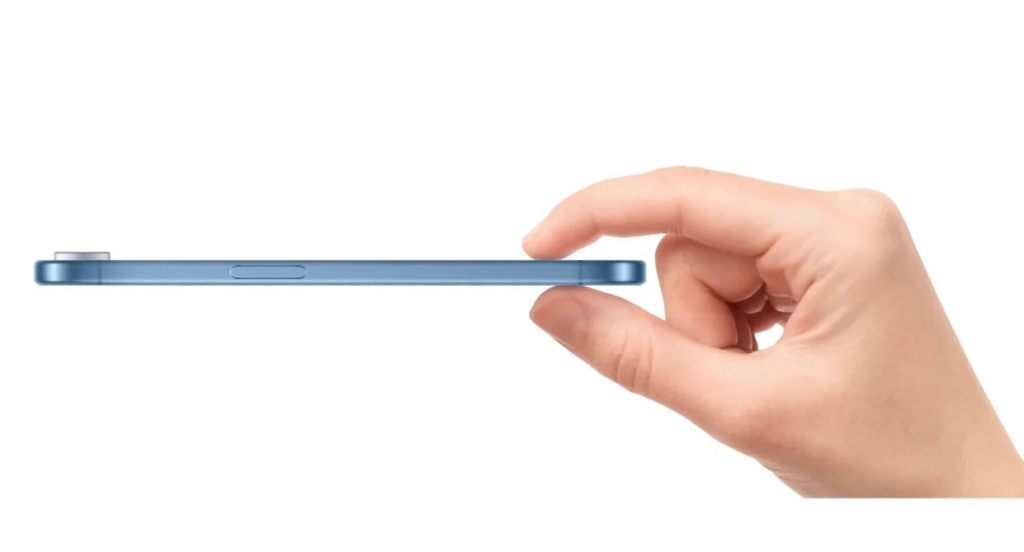
iPhone Air: The Failure That Coolers The Entire Ultra-Thin Smartphone Industry
Marketed as the next design revolution, the trend of ultra-thin smartphones appears to be losing steam. Ironically, it’s Apple—historically the champion of the “thin is premium” mantra—that has exposed its limitations.
A Discreet Launch, Almost Worrying
According to a leak from the informant Digital Chat Station, the iPhone Air achieved only 700,000 activations, despite several price cuts. This figure is alarmingly low for Apple, which typically sells tens of millions of units per generation.
Even more surprising: an unnamed Chinese competitor reportedly fared worse, with just 50,000 activations. The immediate outcome? Several brands are already reassessing their ambitions. Xiaomi has paused its direct rival, vivo has scaled back its focus on thinness, and some projects have been outright canceled.

On its part, Samsung seems to have sensed the shift as well. The Samsung Galaxy S25 Edge has reportedly seen disappointing sales, leading the company to completely abandon the Galaxy S26 Edge project.
This strategic withdrawal positions Samsung unexpectedly as the manufacturer that sidestepped a risky gamble at the right moment.
The Real Issue: An Aesthetic Promise Without Practical Value
The relatively poor performance of the iPhone Air isn’t due to its design. On the contrary, it has been widely praised. The issue lies elsewhere: in the compromises made. A reduced battery, a limited camera module (featuring only one sensor), simplified audio experience, and a high price tag (1,229 euros at launch) result in a visually appealing product that is hard to justify against more comprehensive models like the standard iPhone or flagship Android devices.
This equation highlights a market reality: thinness alone no longer defines what is considered premium.
Apple Perseveres with the iPhone Air 2: A Risky Bet or Long-Term Vision?
Despite these slow beginnings, Apple shows no intention of backing down. According to Mark Gurman from Bloomberg, an iPhone Air 2 is already under development for 2027. The plan includes a dual camera system, a more robust battery, cooling via a vapor chamber, and a more compact Face ID module.
Apple seems determined to rectify the flaws rather than abandon the concept altogether.
This rocky start sends a clear message: design innovation alone is insufficient. Users prioritize overall balance, and the “wow factor” must be accompanied by practical usability.
The iPhone Air may not be a total failure—but it serves as a litmus test for a market that has become more demanding, less swayed by aesthetic promises, and more attentive to product coherence.
The Concept Isn’t Dead, But It Needs to Evolve
Ultra-thin isn’t a poor idea; it simply outpaces what technology can currently offer without compromise. By moving forward with the iPhone Air 2, Apple adopts a classic strategy: launch an imperfect vision, observe, and quickly iterate. If the second generation truly addresses the major flaws, it could reignite interest.
Otherwise, the iPhone Air will remain a harsh reminder: in modern tech, design can no longer be divorced from performance.
And perhaps, that is the true evolution of what it means to be premium.



