

Elon Musk is causing a financial and technological earthquake. By merging X and xAI under the banner of SpaceX, he is shaping the world’s most highly valued private company. This spectacular operation is driven by a bold space ambition in the service of artificial intelligence.
A giant merger that gives birth to the world’s most valued private company and permanently disrupts the tech economy
Elon Musk is orchestrating a significant strategic regrouping. The billionaire has officially placed the social network X and its branch xAI under the direct control of SpaceX. This new financial architecture is creating a conglomerate valued at $1.25 trillion.
The operation resembles a sophisticated Russian nesting doll. xAI had already acquired X earlier this year, before SpaceX now absorbs the entire structure. This marks the birth of a non-public economic superpower, concentrated under a single leadership.
Why this sudden and massive shift? The goal seems clear: to prepare for an IPO that is touted as imminent and historic. This consolidation aims to optimize the overall valuation before going public, with potentially enormous gains for shareholders.
SpaceX serves as a financial shield for xAI to reassure investors amidst growing losses in the AI sector
The economic pressure drives this strategic decision. SpaceX remains a highly profitable and robust pillar, generating nearly $8 billion in annual profits from its launchers and Starlink operations. Its stability instills confidence among anxious financial markets.
In contrast, xAI is recording significant monthly losses. By merging the structures, Musk places his vulnerable AI activities under a much sturdier financial framework. This operation mitigates the risk of a commercial setback that could harm his reputation.
The true goal of the maneuver: to install massive supercomputers in orbit to power the AI of the future
This financial arrangement aligns with a specific technological vision. Elon Musk aims to relocate the computational power essential for AI directly into space. Autonomous orbital data centers could bypass Earth’s energy constraints.
Ground-based infrastructures consume massive amounts of natural resources. Space offers uninterrupted access to solar energy to power these energy-intensive systems. The idea is to create constellations of interconnected servers operating far from the atmosphere.
Major technical obstacles tied to the success of Starship, an essential pillar of this space strategy
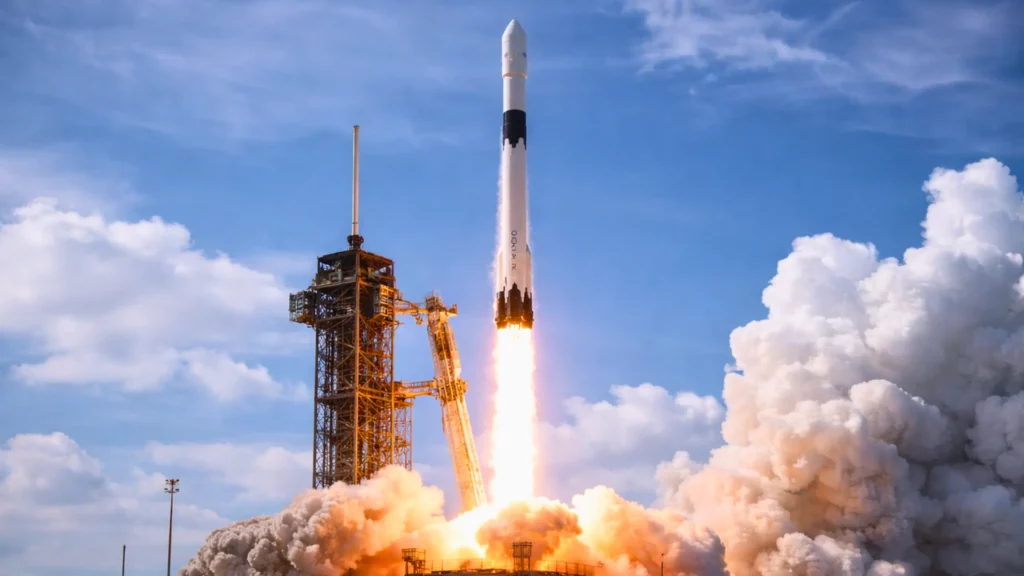
This vision relies on a critical component. The Starship rocket must fulfill its promises to transport this massive equipment. Without this next-generation heavy launcher, orbital supercomputers would remain a theoretical concept.
The technical challenges are numerous and complex. Cooling servers in the vacuum of space and maintaining them in orbit present unknowns. However, Musk is betting on this fusion of space and artificial intelligence to achieve lasting success.
The consolidation of companies thereby strengthens the financial foundation of the project. It allows for the gradual development of the Starship program, a key step towards autonomy in his long-term lunar and Martian ambitions.



