

Google Find Hub: Find Your Lost Items From Any Browser!
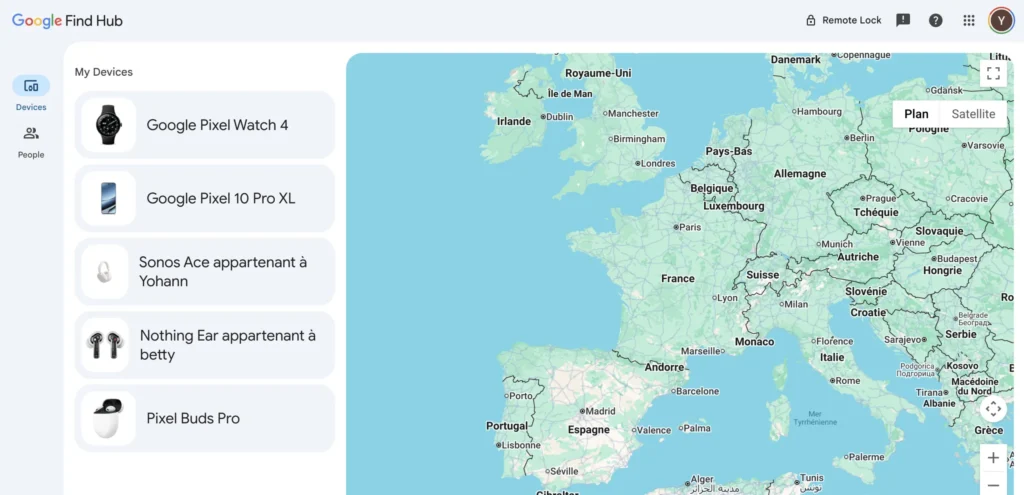
Google continues to gradually enhance Find Hub, but the latest update truly changes the game. Until now, the web interface primarily allowed users to locate smartphones, tablets, and Wear OS watches.
Now, it also supports tags and various compatible accessories, including the Pixel Buds Pro 2. In essence, it is finally possible to locate lost earbuds or trackers without resorting to an Android smartphone, simply using a web browser.
At first glance, this appears to be a straightforward functional improvement. However, it is actually a more strategic shift than it seems. Google is progressively aligning the web experience with the Android app, effectively turning Find Hub into a genuine cross-functional control center for personal ecosystems.
A Much More Useful Find Hub Web Interface for Daily Life
The update extends beyond displaying new devices on a map. The site now allows users to ring a tracker, report an item or accessory as lost, rename a device, or even remove it remotely—features that were already available in the mobile app and are now synchronized with the web interface for a more cohesive experience.
This is the kind of enhancement that makes a service more credible in real life. We don’t always lose our earbuds while having our phones handy. Being able to open a laptop, log into Find Hub, and ring an accessory left behind at the office or in a bag significantly improves the practical value of the service.
Material 3 and “People” Tab: Google Also Unifies the Aesthetics
Google is also seizing the opportunity to modernize the interface. Initial previews of the new version showcase a presentation that aligns more closely with Material 3, offering a more consistent experience between the website and the Android app. Additionally, the official site features a new People tab, designed to centralize location sharing with close contacts.
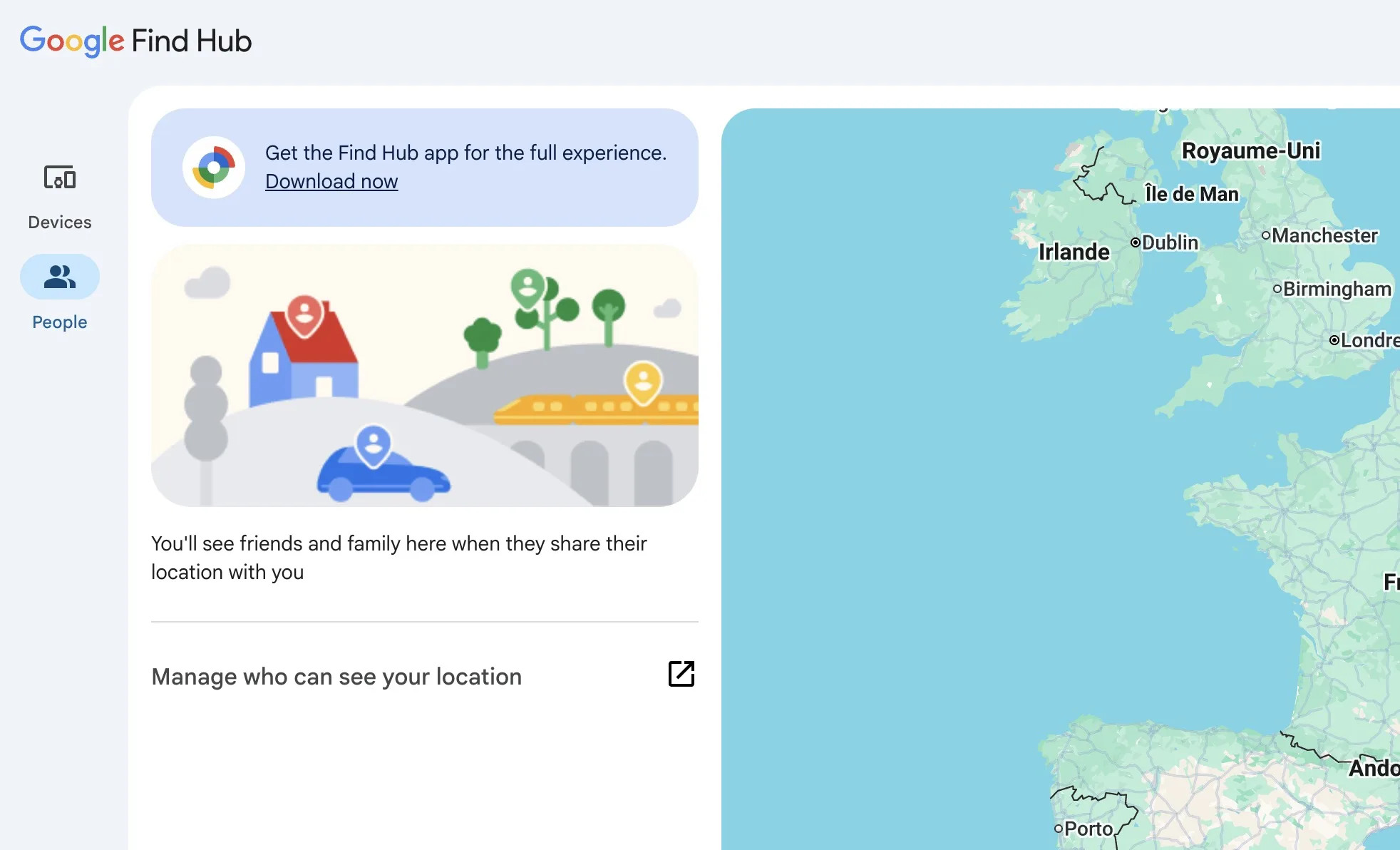
This detail is more significant than it may appear. Find Hub is no longer just a tool for locating a lost phone. Google is gradually transforming it into a broader personal location platform capable of bringing together objects, accessories, and people in a single interface.
Another Building Block in the Rise of Find Hub
This evolution is part of a larger trend. In early March, Google introduced several new features related to Find Hub, including live location sharing in Google Messages and the ability to share the location of a tag with an airline to help locate lost luggage.
In other words, Find Hub is progressively becoming a more central service layer within Android. The web is no longer just a secondary panel for locating a phone; it is now a functional extension of Google’s location network. And in a world where connected objects are proliferating, this continuity between devices, mobile apps, and browsers becomes nearly as crucial as the accuracy of geolocation itself.
The Real Challenge: Making Location Less Dependent on the Smartphone
Ultimately, this is what this update conveys. For a long time, the “Locate” function has been heavily centered around the phone. Google is starting to move away from that approach. By expanding the range of functions available through the web, the company is making Find Hub a service accessible from any connected entry point, not just from the device that one might not have on hand at a critical moment.
This may not be the most spectacular Android update of the year. However, it is precisely the type of discreet addition that enhances an ecosystem’s coherence, reliability, and, above all, utility in real-life situations when it is needed most.



