

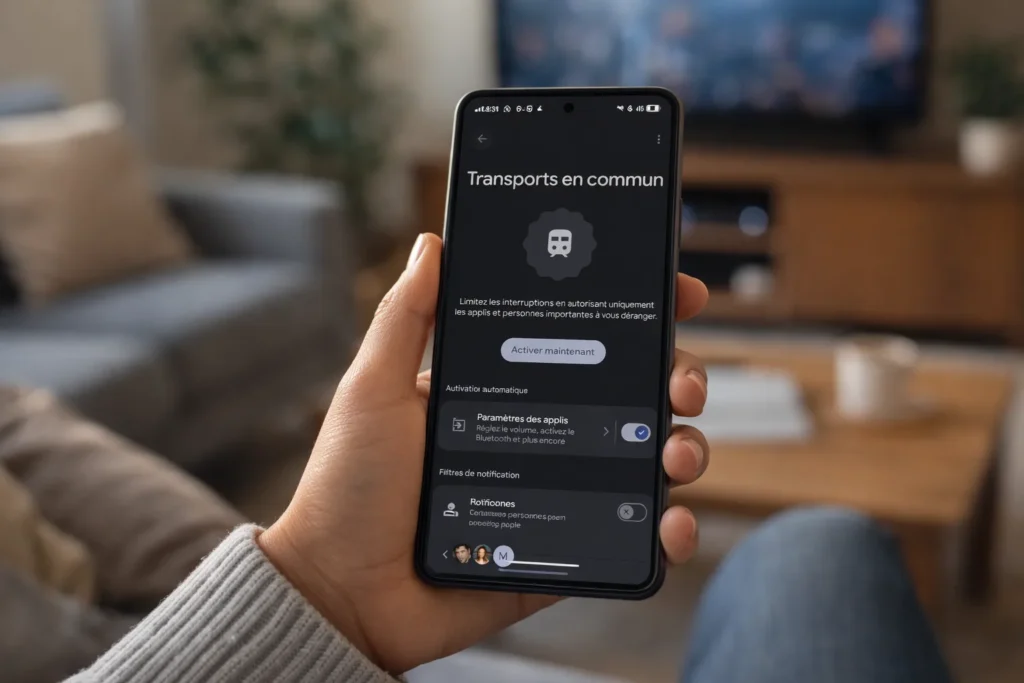
Pixel Drop: The New ‘Public Transport Mode’ Will Change Your Daily Commute
During the March Pixel Drop, Google gave only modest attention to this new feature. However, behind this understated announcement lies a function that reflects the evolution of Pixel smartphones: with the Public Transport Mode, Google aims not just to add one more option, but to make the phone more contextual, more autonomous, and almost less visible in usage.
The concept is simple but incredibly effective. During commutes, the Pixel can now automatically adjust its behavior to minimize distractions, activate the right settings at the right time, and display real-time transport information without manual intervention.
A Mode Designed for the Most Routine Part of the Day
The new Public Transport Mode is part of the growing family of “Modes” offered by Google on Pixel devices. These profiles allow the phone to manage alerts, sounds, and certain functions based on the usage context. With the Public Transport Mode, Google targets a very specific moment: daily travel.
Specifically, users can configure a dedicated profile for their commute. The smartphone then automatically adjusts the volume, activates Bluetooth if needed, limits certain notifications, and silences potentially disruptive alerts, such as alarms that don’t sync well with the context.
The goal isn’t spectacular but deeply practical: to avoid having to tweak settings in the rush of the morning or the chaos of travel. This is precisely the type of feature that may not transform a technical specification but can significantly enhance the daily experience.
A Pixel That Learns Your Routine to Better Fade Into the Background
The logic behind the Public Transport Mode reveals Google’s strategy for Pixel. The smartphone no longer just responds to commands; it tries to understand the user’s rhythms to anticipate what should happen next. To set up this feature, users must provide their home and work addresses, as well as allow background location access and historical data from Google Timeline.
In other words, the phone gradually learns the pattern of the commute. Once this routine is understood, it can trigger the appropriate behaviors at the right times. This is a form of gentle, almost silent automation—one that aims to eliminate the small frictions of daily life.
Here, we see Google’s current vision: to make the smartphone a contextual assistant rather than just a terminal for applications.
Live Transport Alerts Directly in “Overview”
The other aspect of this update concerns the Overview widget, which has become one of the most useful elements of the Pixel experience over the years. Thanks to the March 2026 Pixel Drop, this module can now display real-time transport information, such as travel conditions or delays.
The benefit is clear. Instead of having to open a dedicated app to check if the morning route has changed, users receive essential information directly on their home screen or lock screen. Again, Google doesn’t seek technological showcases but practical shortcuts. Information arrives where it is most pertinent, without interrupting the experience.
However, a bit of patience is required: the phone needs time to learn travel habits before it can reliably provide these alerts.
A Useful Feature that Relies on a Deeper Understanding of the User
As is often the case with this type of service, smooth operation comes at a cost. For the Public Transport Mode to function optimally, users must accept that their phone will know more about their routes, schedules, and travel habits. Google is pushing the idea of a device that not only responds to expressed needs but anticipates them.
This promise can be seen as either a comfort or a compromise. On one hand, it reduces distractions, automates settings, and enhances the user experience. On the other, it requires increased trust in the smartphone’s ability to observe daily routines without being intrusive.
This encapsulates the ambivalence of contextual AI applied to mobile devices: the more useful it becomes, the more it needs to know about us.
A Small Update That Says a Lot About the Future of Pixel
The Public Transport Mode may not be the most spectacular feature of the Pixel Drop, but it belongs to a collection of enhancements that indicate a product direction. Google is no longer just looking to enrich Android with new options; the company aims for the Pixel to adapt itself to the user’s day.
Fundamentally, this is a coherent evolution. Our mobile usages are fragmented between work, travel, focus, relaxation, and communication. In this landscape, the most relevant devices won’t necessarily be those with the most features; instead, they will be those that know how to activate the right ones at the right time.
With the Public Transport Mode, Google refines this promise. If the function lives up to expectations in practice, it could become one of those subtle details that make a smartphone smarter—not because it does more but because it asks us to do less.



