

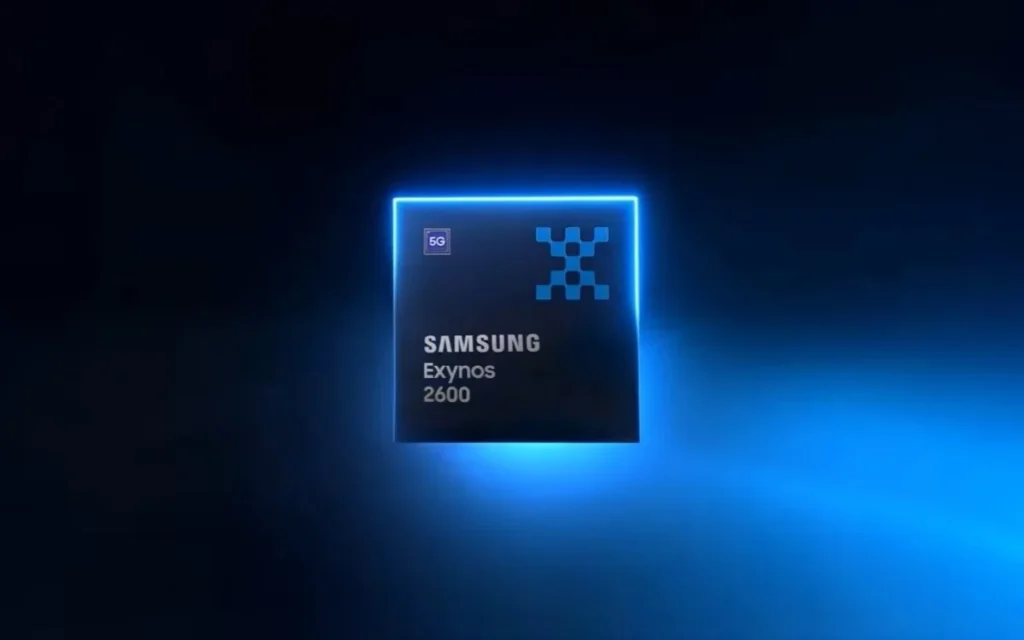
Exynos 2600: The Powerhouse from Samsung Hides an Impressive Power Consumption
With the Exynos 2600, Samsung aimed to make a strong comeback. As the first in-house chip fabricated using a 2nm process, it serves as a technological showcase for the group’s foundry and is crucial for a long-awaited resurgence against Qualcomm. On paper, the narrative seemed promising: better efficiency, advanced lithography, and a genuine generational leap.
However, early tests paint a less flattering picture. In certain scenarios, the Exynos 2600 can peak at 30.22 W under Geekbench 6, while the Snapdragon 8 Elite Gen 5 measures around 21.48 W.
Exynos 2600: A Technological Edge That Doesn’t Yet Mean Energy Efficiency
This presents a paradox at the outset. Yes, the Exynos 2600 utilizes the most advanced process ever employed by Samsung in a smartphone. Yet, the measurements shared today reveal that this industrial sophistication doesn’t automatically translate into better energy efficiency.
On the contrary, the notable difference in energy consumption recorded on Geekbench 6 raises immediate doubts about how the chip performs under prolonged loads.
The figures reported by Wccftech from TechStation365 indicate that the Snapdragon 8 Elite Gen 5 scores 3,641 points in single-core testing and 10,902 in multi-core, peaking at 21.48 W, while the Exynos 2600 reportedly reaches 3,271 in single-core and 10,745 in multi-core, but with a peak of 30.22 W. The Snapdragon 8 Gen 5 from Motorola also stays around 21.89 W in this protocol.

The Real Concern Isn’t the Peak, But What It Implies
It’s essential to be nuanced. A peak of 30 W for a few seconds carries a different weight than sustained consumption over several minutes. However, even viewed as a snapshot, this figure sends a troubling signal. A chip that needs to reach such high levels to remain competitive in a CPU benchmark could complicate thermal management in a slim smartphone, especially when juggling gaming, video capture, heavy multitasking, or AI processing.
This brings to mind past Exynos models. For many years, the principal criticism of Samsung’s chips was not their lack of raw power, but rather their difficulty in maintaining that power over time without overheating or degrading battery life.
Even Decompression Fails to Give the Exynos an Edge
Perhaps the most embarrassing aspect for Samsung is that this weakness doesn’t seem limited to synthetic benchmarks. In a 20 GB ZIP archive decompression test shared by the same sources, the Exynos 2600 reportedly consumed up to 7.8 W, while both Snapdragon chips stayed below 5 W. Moreover, the Snapdragon 8 Elite Gen 5 performed better in processing time.
Again, it’s not just raw performance that’s concerning but the ratio between results achieved and energy consumed.

Yet, Not All Was Negative at Launch
What makes these new figures interesting is that they partially contradict the more optimistic narrative from the initial weeks. At the end of February, early post-launch benchmarks placed the Exynos 2600 at a level generally comparable to the Snapdragon 8 Elite Gen 5, with gaps considered relatively minor.
In other words, two realities must be distinguished. On one hand, the Exynos 2600 appears competitive enough not to be consistently outperformed in standard performance tests. On the other hand, these new measurements suggest that it may be sacrificing energy efficiency in certain targeted scenarios.
Ultimately, these results reignite the oldest question in the premium mobile market: Can Samsung genuinely compete with TSMC on manufacturing efficiency, beyond just the announced node size? TSMC maintains a clear lead in energy efficiency at comparable performance levels. Caution is warranted regarding the strength of this observation, but it’s clear that the Exynos narrative cannot be deemed credible until it demonstrates thermal endurance beyond marketing slides and brief benchmarks.
Samsung Is Progressing, But Still Lags in the Most Critical Area
The most interesting takeaway from the Exynos 2600 is that it no longer seems like an outright failure. Initial CPU results already indicated that Samsung had narrowed the gap against Qualcomm, which is a significant advancement. However, these new tests serve as a reminder of a fundamental truth: in the premium smartphone landscape of 2026, the competition isn’t won solely through a decent score. It’s won with a chip that’s not only fast but also efficient, powerful, and sustainable.
In summary, the Exynos 2600 might just be the chip that proves Samsung is back in the race. But it’s not yet the one that establishes it as the benchmark. That’s likely why attention is already shifting towards the Exynos 2700 and later the Exynos 2800—not for promises of a finer fabrication node, but for a far simpler question: when will Samsung finally deliver a high-end chip that doesn’t require justification with caveats?



