Xiaomi Pad 8 and Pad 8 Pro: Configurations and Colors Revealed Before Global Launch With Xiaomi 17
Xiaomi enjoys ecosystem launches where smartphones and tablets debut together to tell a unified story: mobility, complemented by a keyboard, stylus, and an operating system striving for a more “PC-like” experience than ever.
According to a recent leak, the Xiaomi Pad 8 and Pad 8 Pro are set for a global release alongside the Xiaomi 17 series, with practical details such as configurations and color options already making the rounds.
As per Sudhanshu Ambhore, the Xiaomi Pad 8 will launch internationally with two configurations, while the Pad 8 Pro will offer a premium option of 12/512 GB. Both models will be available in blue, gray, and green.
Specifically, the configurations would be as follows:
- Xiaomi Pad 8: 8 GB + 128 GB and 8 GB + 256 GB
- Xiaomi Pad 8 Pro: 8 GB + 256 GB and 12 GB + 512 GB
The interesting aspect here is not just the RAM but the implication that Xiaomi seems to aim for a simplified global offering, avoiding the multitude of variants seen in China to cater directly to international markets.
Xiaomi Pad 8 series is getting a global launch with the Xiaomi 17 series.
Storage, Colour options & Energy rating of the tablets:
Xiaomi Pad 8
– 8GB+128GB & 8GB+256GB
– Blue, Grey & GreenXiaomi Pad 8 Pro
– 8GB+256GB & 12GB+512GB
– Blue, Grey & GreenBattery capacity & rest… pic.twitter.com/410wNFrRfd
— Sudhanshu Ambhore (@Sudhanshu1414) February 11, 2026
Xiaomi Pad 8 vs Pad 8 Pro: Same Screen, Different Performance Philosophies
Both tablets are likely to feature a core profile typical of Xiaomi: a solid technical specification aimed at productivity and multimedia, with a display that seeks to balance reading comfort and creative use.
- Display: 11.2 inches LCD, 3.2K, 3:2, 144 Hz, 800 nits (peak brightness)
- Battery: 9,200 mAh (announced)
- Audio: Quad-speakers (often associated with Dolby Atmos in this generation)
- OS: HyperOS 3 based on Android 16
- Connectivity: Wi-Fi 7, USB-C (3.x according to listings), NFC, IR blaster… but no 4G/5G according to available information
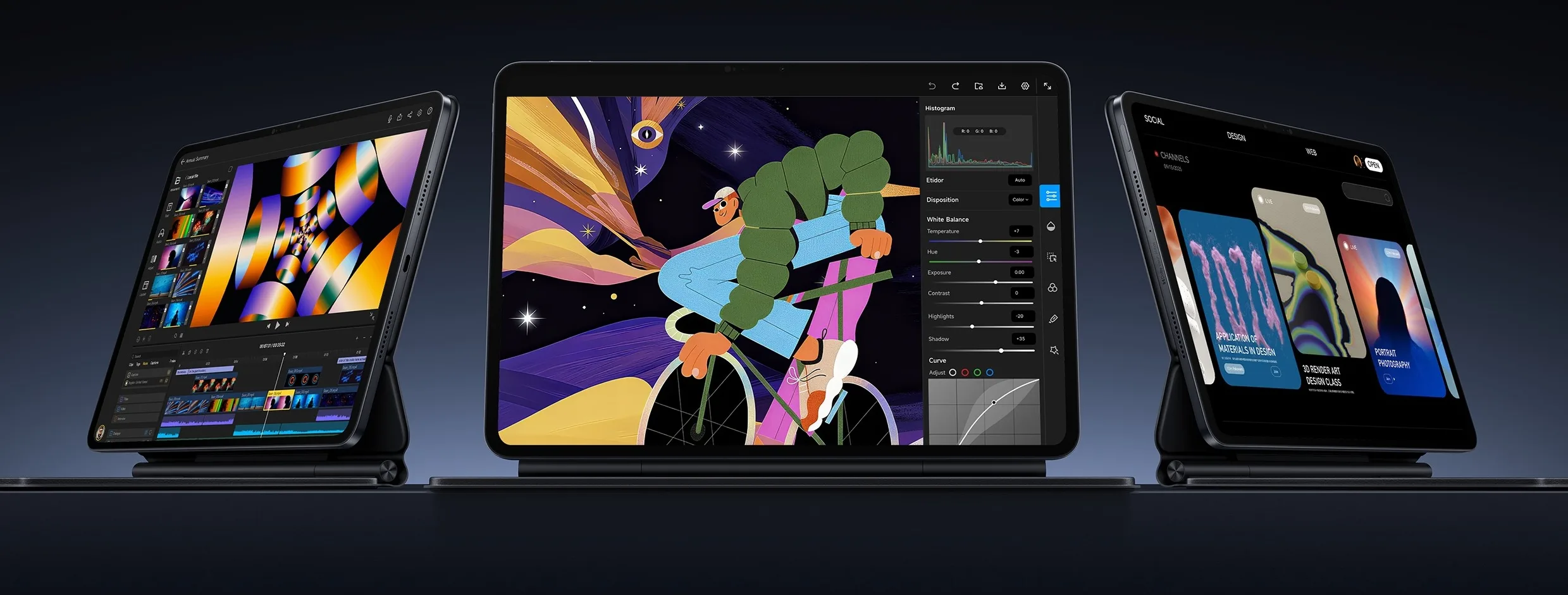
The real differentiation lies in the SoC, charging, and camera capabilities. The Xiaomi Pad 8 is expected to feature the Snapdragon 8s Gen 4 processor, 45W charging, and 13-megapixel rear cameras along with an 8-megapixel front camera (typical for tablets). On the other hand, the Pad 8 Pro will be equipped with the Snapdragon 8 Elite, allowing 67W charging and touting 50-megapixel rear and 32-megapixel front cameras (more ambitious for video calls and creative applications).
Xiaomi Aims at iPad Air and Galaxy Tab, but With a Different Lever
In the tablet market, specifications alone are inadequate; Apple sells an experience, Samsung promotes an ecosystem, and Xiaomi attempts to market “PC-lite” at competitive prices. The frequent mention of tools like WPS/CAD and stylus/keyboard support aligns with this strategy: to position the tablet as a portable workstation “acceptable,” particularly for students and professionals unwilling to spend on an iPad with accessories.
However, there is also a divisive choice: the absence of cellular versions (4G/5G). This is a non-issue for a “home/office” tablet but poses a significant drawback for a “mobile” tablet in the strict sense—especially compared to certain Galaxy Tabs and iPads.
The most intriguing factor remains: if Xiaomi truly synchronizes the global launch of the Xiaomi Pad 8 with an event centered around the Xiaomi 17, it’s not just about timing. It signifies that HyperOS 3 is the backbone—and that the tablet is no longer a secondary product, but a central piece of the narrative.