Preventive medicine is reaching a critical milestone this year with the rise of advanced analytical technologies. Faster and more accurate diagnostics are now at the heart of hospitals, assisting physicians. Here’s how these tangible advancements are profoundly transforming patient care on a daily basis.
Algorithms That Detect Serious Diseases Early Now Integrated Into Hospital Protocols
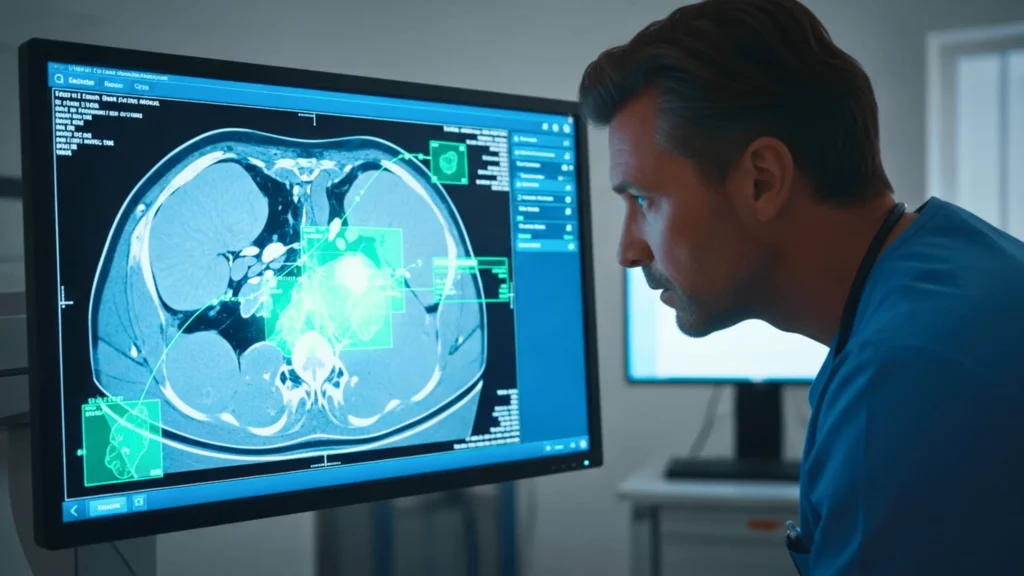
The analysis of medical images has reached an unprecedented level of accuracy thanks to next-generation algorithms. These tools identify subtle signs of serious pathologies well before even the most experienced human eye can. Early detection of cancers is now a tangible reality for many patients undergoing radiological assessments.
These digital assistants significantly reduce diagnostic errors and false positives, which often cause anxiety. Physicians can then devote more time to patient relationships and clinical follow-up. This support for caregivers is permanently reshaping the organization of emergency and radiology services in hospitals.
Artificial Intelligence Anticipates Patient Responses to Treatment Through Precise Biomarker Study
The technology has evolved beyond diagnostics, enabling the anticipation of the body’s reaction to prescribed medications. Identifying key biomarkers indicates in advance whether a treatment will be effective. More personalized medicine is emerging thanks to this fine and rapid predictive analysis.
Recent studies illustrate how contrastive learning compares the biological profiles of thousands of patients, allowing the algorithm to quickly distinguish between those who will respond to treatment and those for whom it will be ineffective. Leveraging big data now opens previously unimaginable targeted therapeutic options.
This method prevents the administration of burdensome and unnecessary therapies to weakened patients, tailoring the care pathway to each individual’s biology. Adapted care protocols increase the chances of recovery while minimizing side effects.
Artificial Intelligence Accelerates Drug Development and Reduces Patient Wait Times
In the past, developing a new therapeutic molecule required many years of research in pharmaceutical laboratories. Now, software can produce thousands of candidate compounds in record time for researchers. The discovery of medications has accelerated significantly to address current health emergencies.
The transition from digital simulation to real clinical trials now occurs in just a few months. This significant time savings allows for much faster treatment of complex diseases. Accelerated clinical trials save lives by making innovations accessible without the lengthy ten-year waits.
Digital Tools Guide Gene Editing to Correct DNA With Unprecedented Precision and Control
Molecular scissors are now guided by intelligent systems to prevent any unintentional DNA cuts. Machine learning leverages past experiences to secure every genetic intervention. More reliable gene editing paves the way for safer gene therapies.
It has become possible to consider direct correction of anomalies responsible for serious and debilitating hereditary diseases. Algorithms predicting sensitive areas limit dangerous collateral modifications. Promising new therapies for cancer and rare diseases are now clinically feasible.
This convergence of biology and computing power marks a major turning point for modern medicine. Researchers now have tools capable of methodically correcting the code of life. Decisive scientific advances give us hope for the future elimination of certain hereditary genetic diseases.