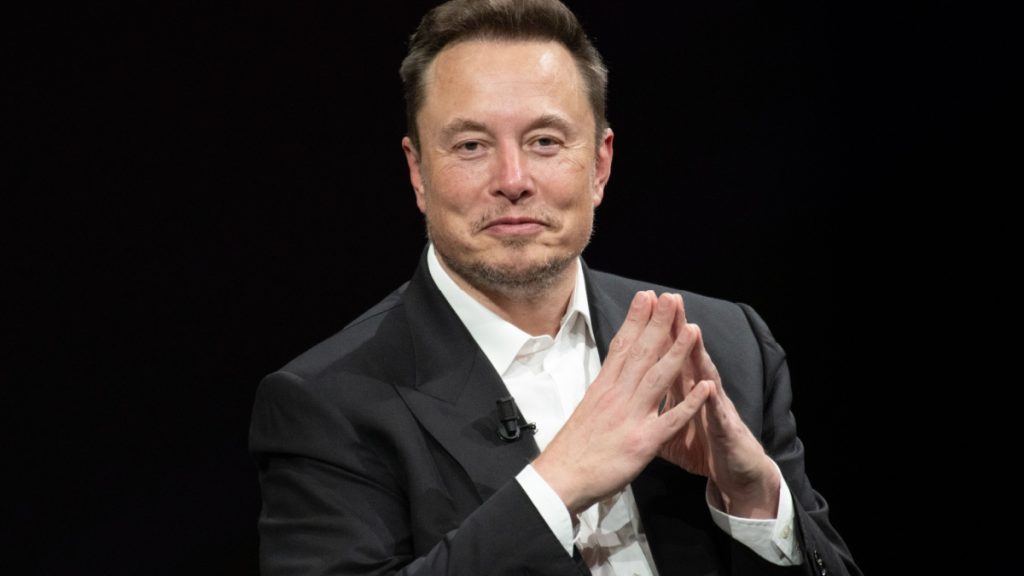
Could artificial intelligence really make work optional and eradicate poverty? Elon Musk firmly believes so. But behind this spectacular promise lies a crucial question: Should we trust someone who continuously promotes technological utopias?
Elon Musk announces a future without mandatory work: A vision that intrigues as much as it fascinates
Elon Musk has once again made headlines. During an economic forum in Saudi Arabia, the CEO of Tesla and SpaceX declared that work will become “optional” within 10 to 20 years. He cites the rapid advancements in artificial intelligence and robotics as the basis for his claim. According to him, individuals could choose to work just as they might choose to garden or engage in sports. It would be a leisure activity rather than a necessity.
This statement is dream-inducing: robots to handle chores, AI to manage complex tasks. We could then be free to create, learn, or simply live. However, this utopian promise raises genuine questions. Is it credible? Who will fund a society without mandatory employment? And most importantly: Will this freedom truly apply to everyone?
Promises already heard: Technology savior has not always delivered
This isn’t the first time Elon Musk has envisioned a tech-driven future. He has previously promised self-driving cars, a human colony on Mars, and even neural implants for thought-based communication. In reality, these innovations are progressing slowly and remain far from the promised timelines.
In the realm of artificial intelligence, real advancements exist – tools like ChatGPT and industrial robots demonstrate this daily. Yet, between technological breakthroughs and a societal revolution, the gap remains wide. Technology does not spread evenly, and inequalities can worsen if we do not manage this transition carefully.
A self-interested statement in a specific economic and strategic context
This announcement also needs to be viewed in context. Musk made it shortly after signing a partnership between his startup xAI and NVIDIA to construct a massive data center in Saudi Arabia. It’s hard not to see this as a PR move, especially as tech giants seek to attract Gulf powers.
Moreover, Musk is refocusing Tesla on artificial intelligence. With stagnating car sales and uncertain autonomous driving prospects, betting on AI and robotics allows him to revive his image, explore new opportunities… and attract investors.
When Musk talks about the “end of poverty” through technology, it’s vital to decipher his message. This is an entrepreneurial vision, not that of a public policy expert. It’s an appealing projection, but not devoid of self-interest.
A world without poverty? Possible on paper, but under very strict conditions
The concept of eradicating poverty through technology is enticing. Some countries (Estonia, Iceland) or cities are already experimenting with universal basic income or advanced digitization of services. However, for this to be successful, we need a strong political will, just redistribution of wealth, and stringent regulation of tech players.
Yet, Musk does not have a reputation for being socially engaged. Tesla has faced criticism over working conditions, waves of layoffs, and an ultra-demanding corporate culture. All of this is far from the ideal of freedom he advocates in his speeches.
There is, therefore, a significant gap between his words and the practices observed within his companies. This disparity warrants scrutiny.
Can we trust Elon Musk? A vision to observe but not blindly follow
Elon Musk’s predictions are primarily inspirational yet strategic narratives. They serve to sketch a desirable future while justifying his current economic choices. AI will undoubtedly transform our lives. However, to believe it will single-handedly eliminate work and poverty is a fictional notion without a massive collective effort.
We must remember: Technology is a tool, not a magical solution.