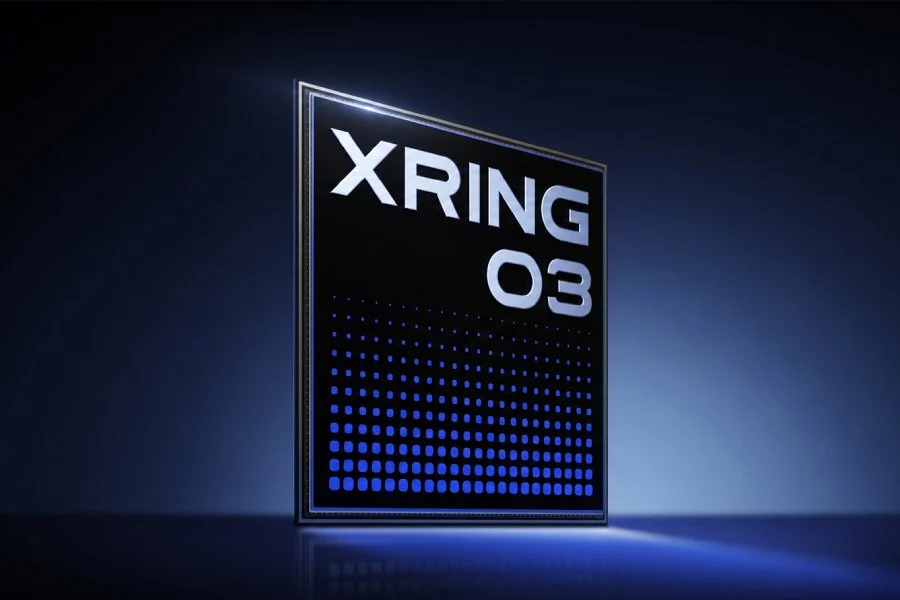
Xiaomi XRING O3: the home chip of the Xiaomi 17 Fold revealed in a leak
Xiaomi is reportedly preparing the next iteration of its XRING chip. According to Ximitime, traces found in the Mi Code suggest a new SoC named XRING O3, developed under the codename “lhasa,” and potentially destined for the upcoming Xiaomi 17 Fold.
Xiaomi XRING O3: a home chip for the next foldable device
The XRING O3 is expected to be paired with the Xiaomi 17 Fold, internally identified as Q18. This information should be taken cautiously as it comes from software hints in the Mi Code and not from an official announcement by Xiaomi.
However, the direction is clear: Xiaomi appears to be aiming to enhance its technological independence by incorporating more in-house silicon into its most strategically important products, particularly foldables.
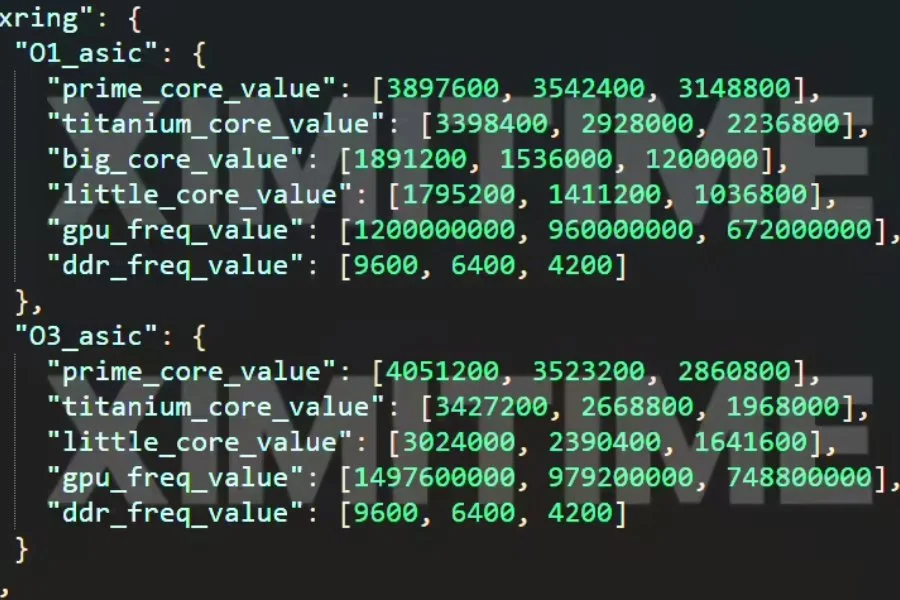
Unlike the XRING O1, which was based on a 10-core architecture divided into four clusters, the XRING O3 is expected to adopt a more conventional octa-core configuration. The chip will combine Prime, Titanium, and Little cores. The Prime core could reach up to 4.05 GHz, while the Titanium cores would go up to 3.42 GHz. The most surprising detail is concerning the Little cores, which are expected to reach up to 3.02 GHz, compared to 1.79 GHz in the previous generation.
On the graphics side, the GPU is expected to reach around 1.5 GHz, while memory will remain at 9,600 MT/s.
A SoC designed for multitasking in foldables
This increase in frequency could be particularly beneficial for a foldable smartphone. With a large screen, multiple apps open, and greater multitasking scenarios, Xiaomi will need a chip capable of managing background load without compromising fluidity.
There remains some uncertainty regarding the exact configuration: leaks hint at several possibilities, such as 1+3+4 or 1+2+5.
Xiaomi accelerates its silicon strategy
If the XRING O3 indeed makes its debut in the Xiaomi 17 Fold, it would send a strong signal. Xiaomi would no longer be merely competing with Samsung or Honor in foldable design but would also seek to control a deeper part of the experience: performance, battery life, local AI, and software optimization.
In a market where Apple, Google, Huawei, and Samsung are all investing heavily in their own chips or co-processors, Xiaomi appears ready to join the same game. The XRING O3 could become much more than just a component: it could signify their drive for independence.