

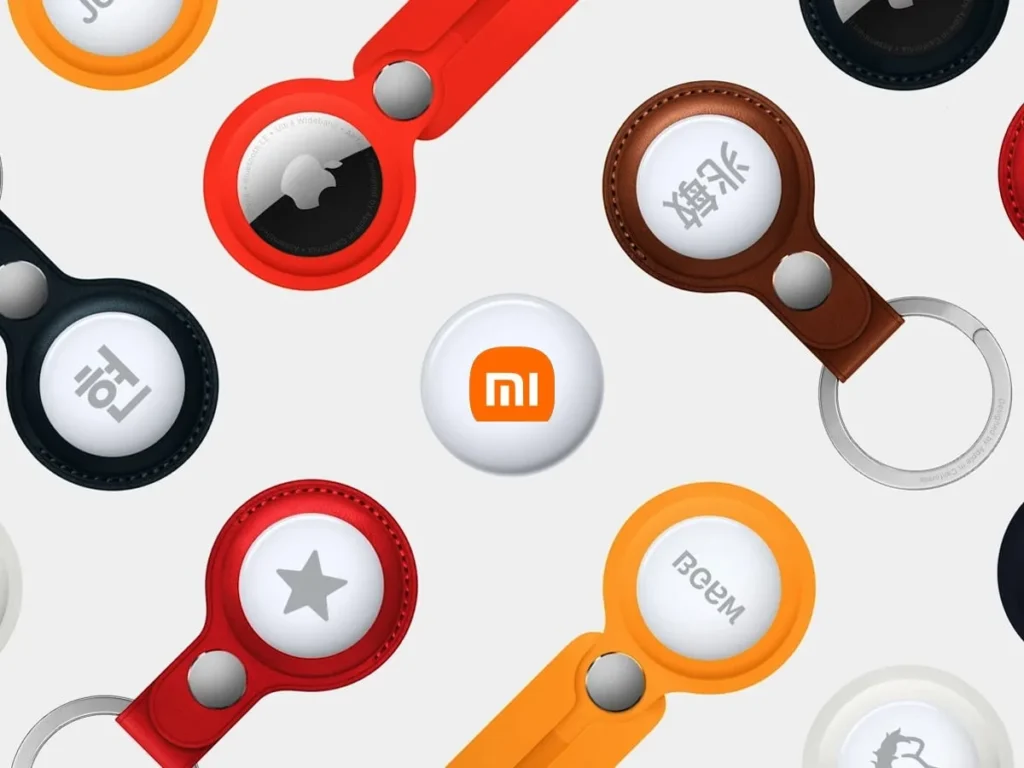
Xiaomi Tag: The Rival of AirTag Finally Arrives on Android with UWB
The object tracking market resembles a closed club: Apple has its AirTag, Samsung has its SmartTag, and Motorola has its Moto Tag—yet Android users are still waiting for their consumer-friendly, simple, and reliable standard. Xiaomi appears ready to enter the arena with Xiaomi Tag, a compact tracker whose early leaks are already outlining a strategy: focusing on precision (UWB) and price, while leveraging Google’s location network.
Since Google bolstered its network by adding Ultra Wideband (UWB) and rebranded “Find My Device” to Find Hub, the Android ecosystem is finally becoming a credible landscape for “AirTag-like” trackers.
However, without mainstream players capable of saturating the market, this promise remains theoretical. Xiaomi, with its distribution and volume strength (especially in Asia and Europe), is precisely the type of brand that can drive adoption.
A “Classic” Tracker in Shape, but Potentially Ambitious in Tech
According to information reported by Android Authority, Xiaomi is preparing a tracker with a round and compact design, without any major visual surprises—which is quite positive, as these devices need to be unobtrusive.
How will #XiaomiTag look? That’s what I found in #HyperOS code!
– Similar to Galaxy SmartTag 2
– 2 models: one with UWB, one without
– CR2032 battery, same as in Samsung
– looks like China only for now? (or CN app has only Chinese entries? We will see…) pic.twitter.com/KT3ayFXhs4— Kacper Skrzypek 🇵🇱 (@kacskrz) January 23, 2026
The key points are twofold:
- Two variants: one with UWB, one without UWB.
- Powered by a CR2032 button battery, suggesting a replaceable battery (convenient and expected for this format).
Simply put, Xiaomi isn’t reinventing the tracker but is working to optimize the right features.
UWB: The Difference Between “Nearby” and “Exactly There”
Bluetooth can indicate that an object is near. UWB, however, can guide you within meters—or even better—by providing both direction and distance on compatible devices. Google has specifically highlighted UWB as the next step allowing Find Hub to match the fine localization experience offered by AirTag/SmartTag.
This is also an immediate competitive issue: Motorola is already promoting UWB trackers on the Android side (Moto Tag and Moto Tag 2 depending on the markets), and the ecosystem is structuring around this “last-minute precision.”
Another feature mentioned in the leaks is the potential for nearby individuals to “trust” the tracker. If confirmed, the idea would be to reduce unwanted tracking alerts when the object is legitimately traveling with someone (family, carpooling, luggage).
This has been a sensitive topic since the rise of trackers: anti-stalking security must coexist with perfectly legitimate daily uses.
The Real Match Isn’t About Hardware, but the Network
A tracker is a paradoxical product: while the chip matters, the network matters even more. Apple dominates mainly because its iPhone network is vast. On Android, Google is accelerating with Find Hub, but perceived quality still hinges on brand and user adoption.
If Xiaomi launches a UWB model at a competitive price, a very affordable “standard” option, and a seamless integration with Find Hub, then the Xiaomi Tag could become the “default” tracker for millions of Android users—at least in China and potentially beyond. Conversely, if it remains confined to the Chinese market, it may remain a coveted item… without a global network effect.



