

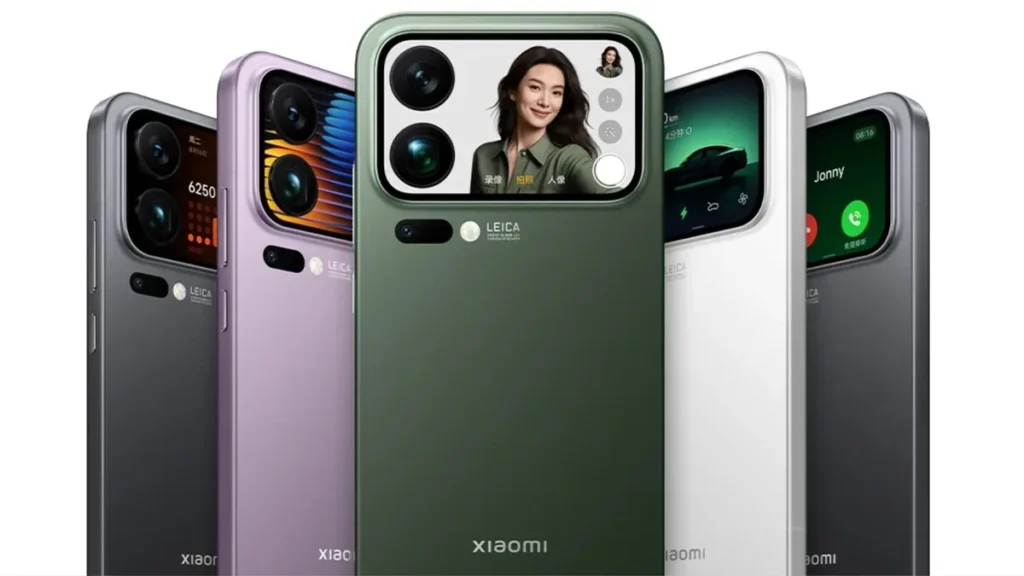
Xiaomi 18 Ultra Cancelled? Rising Memory Prices Threaten Ultra Flagships
The Ultra segment may face a significant slowdown in 2027. According to a leak, Xiaomi is said to have scrapped the Xiaomi 18 Ultra, while OPPO and Vivo are considering limiting their next ambitious models to the Chinese market.
The backdrop: a dramatic surge in memory costs, primarily driven by the demands of artificial intelligence infrastructure.
The Xiaomi 18 Ultra May Have Been Abandoned
Xiaomi could be making substantial changes to its upcoming premium lineup. According to leaker Kartikey Singh, the manufacturer has decided against releasing the Xiaomi 18 Ultra, with the Xiaomi 18 Pro Max taking the top spot in the range.
The lineup would thus be structured around three models: Xiaomi 18, Xiaomi 18 Pro, and Xiaomi 18 Pro Max. However, this information should be taken with caution.
Another leak from Digital Chat Station previously suggested that development had merely been paused, not permanently canceled. Thus, the currently available information remains contradictory. Xiaomi has not officially confirmed either the existence of the Xiaomi 18 Ultra or its cancellation.
The Ultra Suffix Could Fall Victim to Costs
If the cancellation is confirmed, the issue may not be technological but economic. The Ultra models from Chinese manufacturers have become true showcases: large camera sensors, multiple telephoto lenses, high-end displays, significant amounts of RAM and storage, generous batteries, and complex cooling systems.
Each generation accumulates more expensive components. However, 2026 is marked by an exceptionally high increase in memory prices. The massive demand from AI-focused data centers has severely strained the DRAM and NAND markets. Manufacturers are prioritizing contracts linked to high-margin infrastructures, which reduces the supply available for smartphones, PCs, and other consumer devices.
For a manufacturer like Xiaomi, each additional gigabyte becomes increasingly difficult to absorb without raising retail prices.
DRAM and NAND Prices Have Skyrocketed
The industrial context lends real credibility to this part of the rumor. TrendForce has observed extremely significant increases in contractual memory prices throughout 2026, while AI pressures continue to enhance the negotiating power of suppliers.
NAND is also directly affected by the explosion in server demand. This phenomenon is significant enough to extend well beyond the smartphone industry: PCs, consoles, SSDs, and cloud infrastructures are also experiencing the same inflation.
The question is no longer simply about how much an additional camera sensor costs. It’s the entire bill of materials for a flagship that is becoming more expensive.
An Ultra Becomes Particularly Difficult to Profit From
This inflation hits precisely the most ambitious devices. An Ultra phone must generally stand out from the Pro model by having sufficiently spectacular components to justify several hundred euros more.
For the Xiaomi 18 Ultra, initial rumors suggested an exceptionally ambitious camera system, potentially featuring a quadruple configuration with a 200-megapixel sensor. Even if these specifications have never been confirmed, they illustrate the issue.
The more manufacturers aim to differentiate their Ultras, the more expensive materials they integrate into products sold to a relatively small customer base. At some point, the necessary price to maintain margins may simply exceed what the majority of consumers are willing to pay.
The Xiaomi 18 Pro Max Would Become the True Flagship
If the Xiaomi 18 Ultra is indeed discontinued, the Xiaomi 18 Pro Max would take its place at the top of the range. This would represent an interesting shift in nomenclature. The term Pro Max would allow Xiaomi to maintain a highly ambitious premium model without being obligated to include all the technical extravagances traditionally associated with the Ultra lineup.
The distinction may appear purely marketing, but it primarily affords greater flexibility. A Pro Max can offer a large display, a high-end chip, and an excellent camera system while forgoing certain costly technologies that are hard to monetize.
In times of significant component inflation, this nuance can be strategic.
Xiaomi Could Simply Put the Ultra on Hold
The Ultra branding may not necessarily disappear permanently. Leaks already suggest a potential return with a Xiaomi 19 Ultra, around late 2027 or early 2028, if the component market improves. Again, this timeline is highly speculative. However, the logic would be coherent: suspend a generation rather than release a device at a poorly acceptable price point.
Xiaomi has already demonstrated its ability to significantly modify its product lines from year to year. The absence of a Xiaomi 18 Ultra would not necessarily mean the end of the entire Ultra philosophy.
OPPO May Limit the Find X10 Ultra to China
Xiaomi is not alone in re-evaluating its strategy. The same source claims that the OPPO Find X10 Ultra may not receive an international launch in 2027. The phone would still be marketed in China, where manufacturers often have different cost structures, distribution, and competition.
This would mark a notable regression for OPPO after having sought to expand the global availability of its most prestigious models.
However, it would also limit commercial risks.
A flagship sold in China can be positioned very aggressively in its domestic market and serve as a technological image without requiring the entire logistics of a global launch.
At last, Xiaomi scrapped the 18 Ultra, OPPO/Vivo decided not to launch next generation Ultra’s in Global markets. Samsungs Ultra might be the only one available globally. All others will jump to Pro Max.
The shower of Pro Max smartphones is coming soon. However, these Pro Max…
— Kartikey Singh (@That_Kartikey) August 15, 2026
Vivo May Make a Similar Decision
Vivo is considering a similar strategy with its next Ultra. The upcoming model, currently referenced as vivo X500 Ultra, may also remain exclusive to China. Once again, there has been no official announcement confirming this decision. International marketing plans can evolve late in the development of a smartphone.
However, if OPPO and Vivo indeed take this route simultaneously, they would no longer be isolated decisions.
This could signal a broader transformation in the Chinese premium market.
Ultras Have Become Extremely Expensive Showcases
It’s crucial to understand what an Ultra smartphone represents for a Chinese brand today. It is no longer simply the model with more RAM. These devices often concentrate the most complex and expensive components to integrate: large main sensors, long-focal periscopes, complex lenses, state-of-the-art LTPO displays, advanced batteries, and sometimes specific high-end materials.
They are designed to showcase how far the brand can go.
The issue is that the line between “technological showcase” and “impossible-to-profit product” becomes increasingly thin as costs rise across the board.
The memory crisis could thus force manufacturers to become more pragmatic again.
China Remains a More Natural Market for These Devices
This also explains why OPPO and Vivo may continue to offer their Ultras in China. The Chinese market is particularly receptive to highly ambitious Android flagships. Xiaomi, Vivo, OPPO, and Honor enjoy strong brand recognition, vast distribution networks, and an audience accustomed to directly comparing the most advanced models.
Internationally, the situation is more complicated. An Ultra priced over 1,200 or 1,400 euros must compete directly with Samsung and Apple, two companies with brand power and ecosystems that are extremely difficult to overcome.
The same product can thus be highly relevant in China and much more commercially risky in Europe.
Samsung May Find Itself Almost Alone with the Ultra Branding
If these rumors materialize, Samsung would indirectly benefit from this contraction. The Galaxy S27 Ultra could become one of the few major flagships still officially bearing the Ultra suffix to enjoy truly global distribution. This would enhance the uniqueness of that suffix for Samsung. However, it does not mean the competition would vanish.
A Xiaomi 18 Pro Max, a future OPPO Pro, or a high-end vivo Pro could still compete directly with the Galaxy S27 Ultra in photography, display quality, or performance. The change would primarily be semantic and commercial.
The flagship battle would continue, but perhaps with fewer phones explicitly claiming the Ultra title.
AI Begins to Transform Smartphones That Are Not Directly Related to AI
Ultimately, the most fascinating aspect is how the explosion of artificial intelligence is indirectly transforming the smartphone market. Users are not necessarily buying additional RAM because they require giant models on their phones.
However, data centers are purchasing so much that prices are rising for everyone. Memory manufacturers are dedicating more capacity to products for AI infrastructures, leaving smartphones to contend with the remainder at a higher cost. A Xiaomi Ultra could be canceled not because its camera system is impossible to build, but because thousands of AI servers are absorbing a growing share of the world’s memory production.
This serves as an excellent example of how a technological revolution can lead to significant economic effects well beyond its initial market.
Cancellation, However, Is Not Yet Certain
It is essential to avoid jumping to conclusions. The Xiaomi 18 Ultra has never been officially announced. Thus, Xiaomi cannot have publicly canceled a product it hasn’t acknowledged. The various reports from leakers speak either of a project being scrapped or temporarily suspended.
The same caution applies to OPPO and Vivo. Neither of the two companies has confirmed that their upcoming Ultras would be reserved for China. These scenarios are credible, particularly due to the current memory market situation, but they remain speculation based on leaks.
One Thing, However, Is Certain: The Premium Market Is Becoming More Challenging
Regardless of Xiaomi’s final decision, the context faced by manufacturers is real. Memory prices are rising, high-end smartphones are accumulating costly components, and consumers are struggling to accept endless price hikes: manufacturers will have to make choices. Less storage, less RAM, slightly less extravagant camera systems, or simply fewer Ultra models.
The Xiaomi 18 Ultra could become the first visible symbol of this new reality.
After several years of Chinese brands striving to demonstrate that no smartphone is too ambitious, 2027 could be the year when even Ultras must learn to make compromises.



