

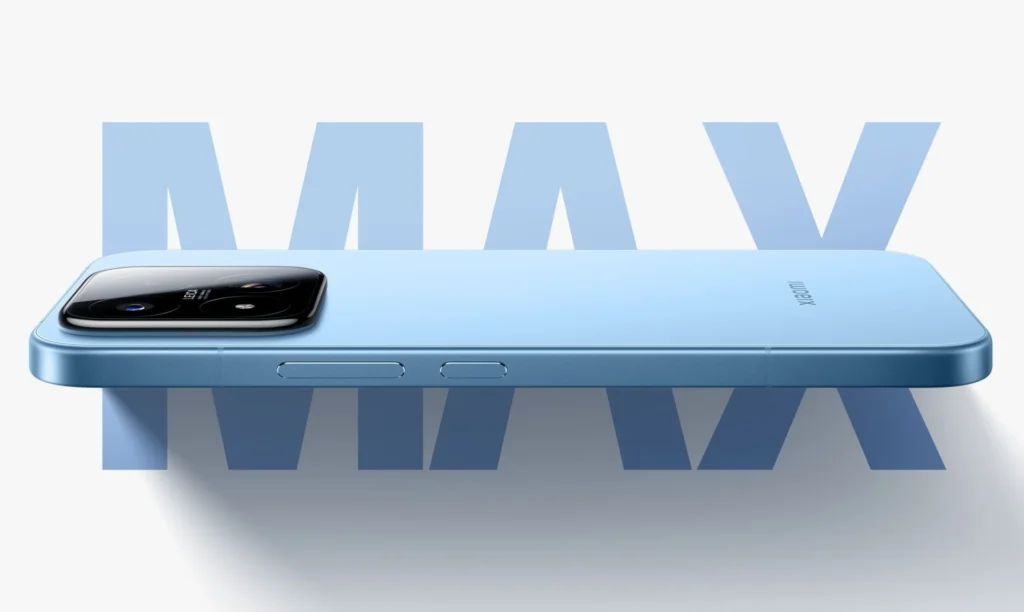
Xiaomi 17 Max: Xiaomi focuses on a massive 8,000 mAh battery to redefine the ultra-durable smartphone
With the Xiaomi 17 Max, the company is no longer just trying to compete on photography or raw power. This time, the Chinese manufacturer is emphasizing another strategic feature: extreme battery life.
Unveiled at a major product event, the Xiaomi 17 Max features the largest battery ever integrated into a mainstream flagship. This ambitious technological bet is complemented by a giant display, a 200-megapixel camera, and the latest high-end Snapdragon chip.
Xiaomi 17 Max: A 8,000 mAh battery at the heart of the project

The standout feature of the Xiaomi 17 Max is its massive 8,000 mAh battery. In a market where premium smartphones typically range between 4,500 and 5,500 mAh, Xiaomi is clearly making a bold move.
The company explains that it uses its “Jinshajiang” battery technology, integrating up to 16% silicon to achieve an announced energy density of 894 Wh/L. Behind these technical figures lies a simple promise: to offer several days of battery life without turning the smartphone into a thick brick.
Indeed, the Xiaomi 17 Max maintains a relatively slim profile, with a thickness ranging between 8.15 mm and 8.2 mm depending on the color.
The charging technology is also decidedly premium:
- Wired charging at 100 W
- Wireless charging at 50 W
- PPS compatibility at 100 W
- Reverse wireless charging
Xiaomi has also included its proprietary Surge P3 and Surge G2 chips to optimize thermal management and battery longevity.
A large screen designed for multimedia and gaming
The smartphone features a large flat 6.9-inch LTPO OLED screen with ultra-thin 1.28 mm bezels. Xiaomi claims the use of “SuperPixel” technology to achieve a 2K resolution while consuming less energy than a standard 1.5K display.
The specs align almost perfectly with high-end standards: adaptive refresh rate from 1 to 120 Hz, maximum brightness of 3,500 nits, third-generation Dragon Crystal Glass protection, and DC-like and PWM 2160 Hz dimming modes.
On paper, Xiaomi aims to cater to both multimedia usage and the expectations of demanding mobile gamers.
Snapdragon 8 Elite Gen 5: Xiaomi aims to attract power users
Under the hood, the Xiaomi 17 Max integrates Qualcomm’s new Snapdragon 8 Elite Gen 5 chip, paired with LPDDR5X memory and UFS 4.1 storage.
The cooling system consists of a 5,500 mm² vapor chamber, designed to maintain stable performance during prolonged gaming sessions. Xiaomi specifically claims that titles like Genshin Impact can run at maximum settings without significant frame rate drops.
This focus confirms a clear trend among Android manufacturers: premium smartphones are gradually evolving into hybrid platforms for portable gaming, photography, and mobile streaming.

Leica, 200 megapixels, and periscope zoom: photography remains essential
Even with its focus on endurance, Xiaomi hasn’t neglected photography. The Xiaomi 17 Max adopts a triple module co-developed with Leica:
- Main sensor HP9 at 200 megapixels in a 1/1.4 inch format
- 50-megapixel ultra-wide angle
- 50-megapixel periscope telephoto
The zoom offers a 3x optical zoom, a 6x “lossless” zoom, and a macro mode at just 15 cm.
On the front, there’s a 32-megapixel selfie camera. Xiaomi also highlights the ability for 4K video streaming directly from the smartphone, indicating that content creators are now a primary target for manufacturers.
Xiaomi pushes the Android flagship towards a new philosophy

The Xiaomi 17 Max illustrates an interesting evolution in the premium Android market. For several years, the race for thinness has often limited battery capacities. Now, battery life is becoming a central argument once again, driven by embedded AI, mobile gaming, and massive video consumption.
With this model, Xiaomi seems to be addressing a universal frustration: owning an ultra-powerful smartphone that doesn’t require constant recharging.
What remains most interesting is the balance achieved between a giant battery and a relatively contained design. If real-world performance confirms the promised capabilities, the Xiaomi 17 Max could become one of the most significant Android smartphones of this generation.
In an industry where innovations have sometimes become incremental, focusing on battery life could ultimately be one of the most strategic decisions of the moment.



