

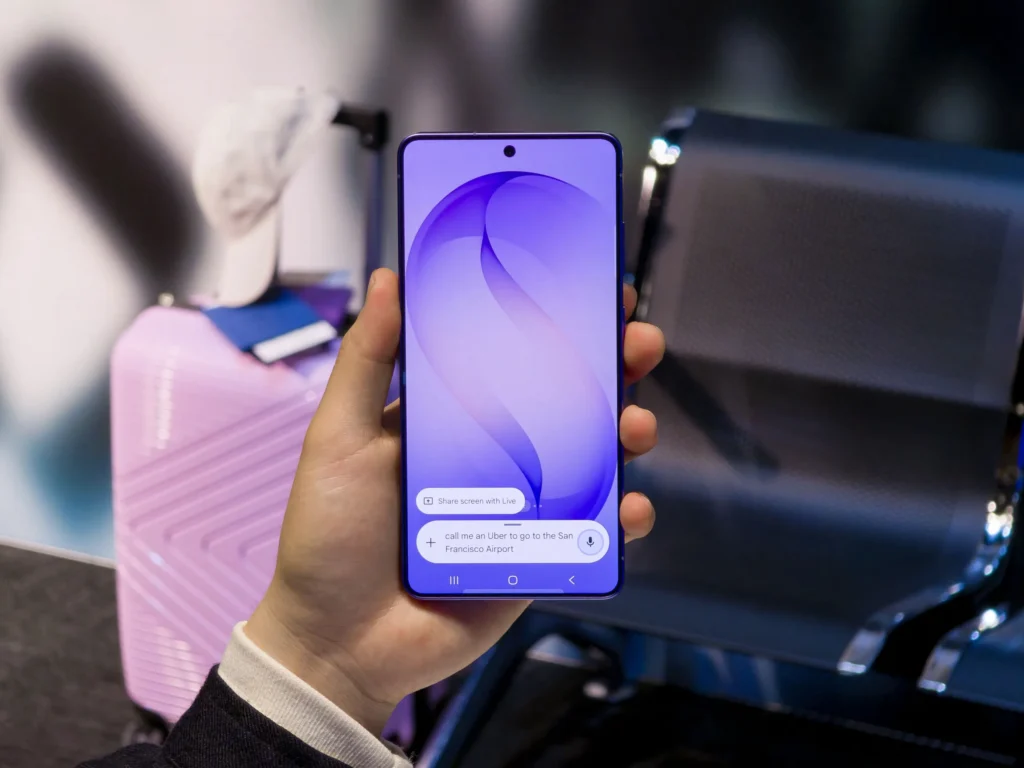
Why The Galaxy S27 Ultra Could Finally Be The King Of Battery Life?
Samsung has long dominated the premium segment with its design and displays. However, in a key area—battery life—the brand has gradually ceded ground to several Chinese competitors. Recently, new leaks suggest that this gap may finally be closed with the Galaxy S27 Ultra, thanks to a shift towards silicon-carbon batteries.
Silicon-Carbon: A Promise Of A True Generational Leap
The silicon-carbon (Si-C) technology is based on a simple principle: replacing part of the traditional graphite anode with silicon, which can store significantly more energy. The expected outcome is higher energy density, larger batteries without increasing smartphone thickness, and better battery life at the same form factor.
This is precisely what high-end manufacturers are seeking today, caught between the need for sleek designs and increasing energy demands (AI, 120 Hz displays, advanced photography).
While some Chinese brands have already incorporated this technology into their recent flagships, Samsung is still using traditional lithium-ion batteries. For instance, the Galaxy S26 Ultra retains a capacity of 5,000 mAh, which has become almost stagnant in the industry.
However, internal documents mentioned in the leak reveal that Samsung SDI is actively working on several Si-C prototypes, with capacities ranging from 12,000 mAh to 20,000 mAh—impressive figures, but still experimental.
A Realistic Approach: Compromise Before Revolution
Among the configurations tested, one model stands out: 6,800 mAh (≈ 4.7 mm) and 5,200 mAh (≈ 3.2 mm) for a dual-cell architecture. This type of setup could enable a battery around 6,500–7,000 mAh in a premium smartphone without significantly increasing thickness.
This is likely where the true strategy lies: not aiming for 20,000 mAh but integrating a realistic and usable higher capacity.
The Real Challenge: Durability
While energy density is improving, a major hurdle remains: longevity. The most extreme prototypes (20,000 mAh) would reach about 960 charge cycles. However, the industry standard for a flagship is typically around 1,200 to 1,500 cycles. This shortfall explains why Samsung has not yet made the leap with the Samsung Galaxy S26 Ultra.
Engineers are currently working on new separator materials, stacking optimizations, and improvements to the battery management system (BMS).
Why The Galaxy S27 Ultra Could Be The Right Moment?
The Galaxy S27 Ultra represents an ideal strategic window: gradual technological maturity, increased competitive pressure, and the need for differentiation in the Ultra segment.
Samsung has acknowledged being behind in this area—a rare admission that suggests an intent to accelerate.
If this transition is confirmed, it could be more impactful than any camera or processor upgrade.
Because the battery remains a key limiting factor: real autonomy, sustained performance, and intensive use (AI, gaming, photography).
A denser battery would change the equation: thinner or more enduring smartphones, fewer compromises on performance, and an overall better experience.
Samsung Has Much At Stake… But Is Cautious
The key will be balance. Samsung cannot afford to misstep on the battery— the history of the Galaxy Note 7 still lingers.
This explains a measured approach: extensive testing, delay if necessary, and launch only when reliability is ensured.
Towards A New Standard For Flagships?
If the Galaxy S27 Ultra truly adopts silicon-carbon, it could herald the beginning of a new generation of batteries, a strategic catch-up against Chinese brands, and a repositioning of Samsung in the realm of battery life.
But as often, everything hinges on an invisible detail for the user… internal chemistry.



