

WhatsApp revolutionizes writing: AI to draft your responses for you
WhatsApp continues to evolve into a more assisted, convenient, and slightly more “intelligent” messaging platform. In a new wave of features announced on March 26, 2026, the Meta application introduces a significant update to its Writing Aid, now capable of suggesting a complete response based on the context of the conversation.
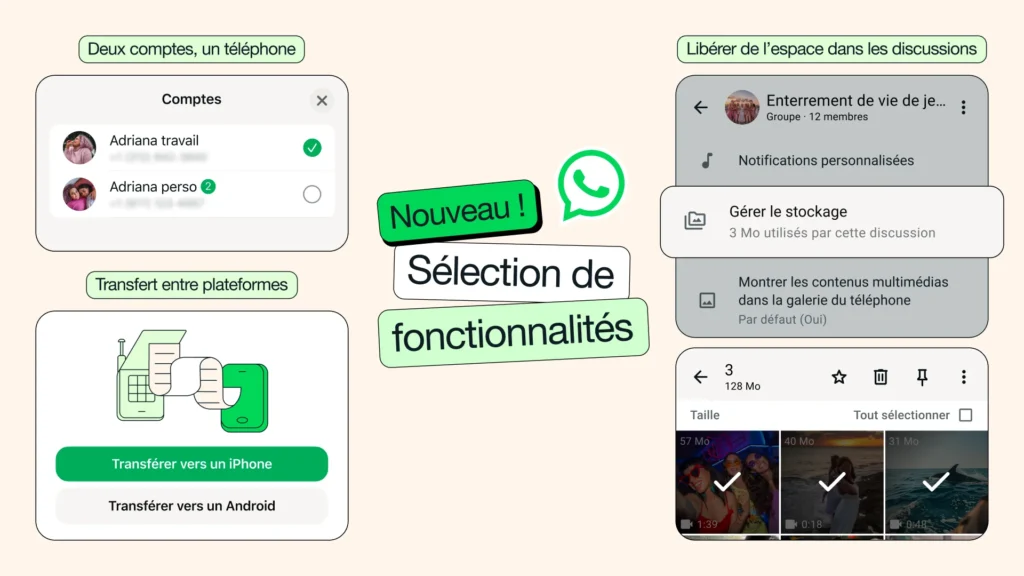
Additionally, improvements include enhanced file management, photo editing with Meta AI, dual account support on iPhone, and a more flexible chat history transfer across platforms.
AI Is No Longer Just Correcting Your Messages; It Wants to Write Them
The most notable change pertains to the Writing Aid feature. Previously, this function primarily served to rephrase text, adjust tone, or polish a message before sending. With this update, WhatsApp allows it to generate suggested replies directly from the ongoing chat.
Meta presents this as a way to find “the right message,” while emphasizing that conversations remain private even when using this assistance.
This shift is strategic. Meta clearly intends to prevent users from leaving WhatsApp to seek answers from ChatGPT or another assistant. Conversational AI is to be integrated seamlessly into the messaging experience. This inference stems from WhatsApp’s product positioning and the nature of the new feature.

A More Functional, Less Cluttered Messaging App
WhatsApp has also introduced a very practical feature for freeing up space. The app can now help users locate and delete large files directly within a chat, without requiring them to remove the entire conversation. For instance, users can delete just the media while preserving the text history.
This subtle detail is crucial for an app that has become, for many, a veritable vault for photos, videos, memos, and documents.
Meta AI Also Joins the Photo Editing Scene
Another addition is that users can now utilize Meta AI to edit a photo directly in the chat before sending it. WhatsApp mentions uses such as removing a distracting element, changing the background, or applying a new visual style.
However, the company notes that these Meta AI features may not be immediately available to all users.
Finally, Dual Accounts on iPhone and a Smoother Transfer
WhatsApp is also addressing an old disparity between iOS and Android. The app now supports dual accounts on iPhone, similar to existing support on Android. Additionally, it offers chat history transfer from iOS to Android and within the same platform.
These updates may not be as flashy as the AI features, but they are likely more immediately useful for many users.
Stickers Become More Contextual
Even the stickers are evolving. WhatsApp has indicated that stickers will now be suggested as the user types emojis, making it easier to replace an emoji with a more fitting sticker that reflects the mood or intent of the message. Once again, the idea is straightforward: make expression more fluid, assisted, and seamlessly integrated into the writing process.
WhatsApp Gradually Transitions from Messaging to an Assistance Interface
What is unfolding through this update is less of a revolution and more of a methodical shift. WhatsApp remains a messaging platform, of course. However, Meta is increasingly equipping it as a conversational workspace, where users write with assistance, clean up files, edit images, manage multiple digital identities, and maintain their history across devices.
In short, WhatsApp is no longer just about sending messages. The app aims to support everything happening around them. The real question then becomes not “should we have AI in messaging?” but rather “how far are we willing to let it participate in our conversations?”



