

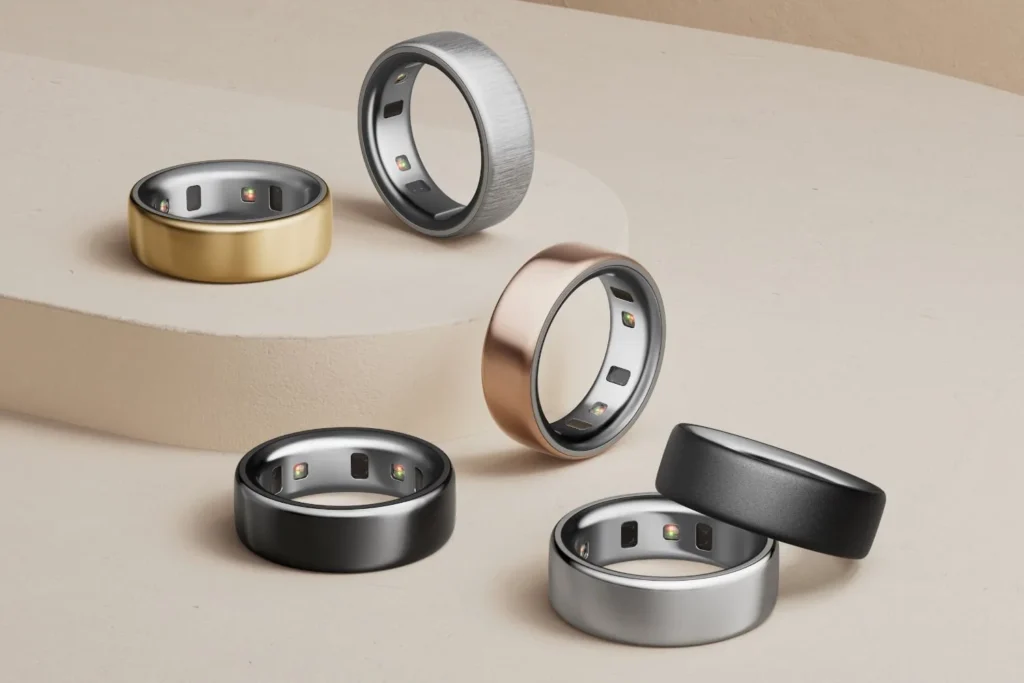
Wearable Market: Will Connected Rings Finally Replace Watches in 2026?
Connected rings have thrived where smartwatches are losing momentum. With fewer screens, less interruption, and more background metrics—such as sleep, recovery, stress, and heart trends.
By 2026, the key question will shift from “does it work?” to whether the connected ring becomes a mass-market product or remains a niche item for wellness enthusiasts.
A Simple Dynamic: Less Notifications, More Health
The connected ring offers a modern promise: continuous tracking without digital “noise.” While smartwatches have turned into mini-app platforms replete with alerts and temptations, rings embrace a deliberately minimalist approach.
This choice comes with a concrete consequence: the ring must be reliable without a rich interface. However, this presents a structural limitation; there’s little room for batteries, sensors, or antennas, and almost none for interaction. While this “silence” is appealing, it also imposes its limits.
2026: A Year of Consolidation Rather Than Revolution
Although confirmed 2026 launches are still somewhat under the radar, market trends are already emerging:
- Oura continues to set the premium standard, enhancing the ecosystem around the Ring 4 (due out in October 2024) — including a portable charging case designed to extend battery life on the go.
- Competitors are focusing on two fronts: eliminating subscriptions and specializing (in areas like sports, metabolism, and recovery).
The outcome is interesting: rings are aiming not to do more, but to do better, and to communicate more clearly about what they measure.
To Watch in 2026: Credible Contenders and Their Contributions
Galaxy Ring 2: The “Ecosystem” Option for Android
If Samsung introduces a second generation, its strongest asset won’t be a magical sensor but integration: Samsung Health, Galaxy Watch, smartphone, local AI, and health summaries.
At this point, the timeline remains unclear: several sources suggest that a launch is not imminent, possibly targeting 2026 (at best), and Samsung has not confirmed anything publicly.
This implies that Samsung is not looking to launch a “Ring 1.5.” A ring must be evaluated based on trust and consistency—not on an annual refresh cycle.
Ultrahuman: The Anti-Subscription and “Performance” Health
Ultrahuman has garnered attention with its more fitness and metabolic health-focused approach. Recent indicators suggest that the brand is moving forward with a next-generation model, at least in certain markets.

This should be taken cautiously (it’s more of a community signal than a product announcement), but the trajectory makes sense: if rings want to go mainstream, they need models that sell without friction—and subscriptions often create the most friction.
Amazfit, RingConn, and Affordable Rings
This could be where 2026 shifts: not because of the most premium models, but through democratization. More aggressive brands can drive prices down, even if it means fewer advanced insights—yet still with solid battery life and a good app.
This is often how “mainstream” emerges: when a product becomes “good enough” and easy to purchase, rather than waiting for it to achieve perfection.
Niche or the Next Big Format?
To become mainstream, the connected ring must meet three criteria:
- Reliability: consistent measurements, particularly regarding sleep and recovery.
- Clarity: easily understandable insights, without a deluge of opaque scores.
- Acceptable Business Model: either the subscription justifies its value or it disappears.
The paradox is that the ring format serves both as an advantage and a critical vulnerability: it is discreet and therefore desirable, but also small, creating technical constraints.
If 2026 marks the year that “mid-range” rings improve significantly, and Samsung/Android ecosystems become more integrated, then yes, the ring can escape its niche. Otherwise, it will likely remain a great gadget… for a minority passionate about quantifying their lives.



