

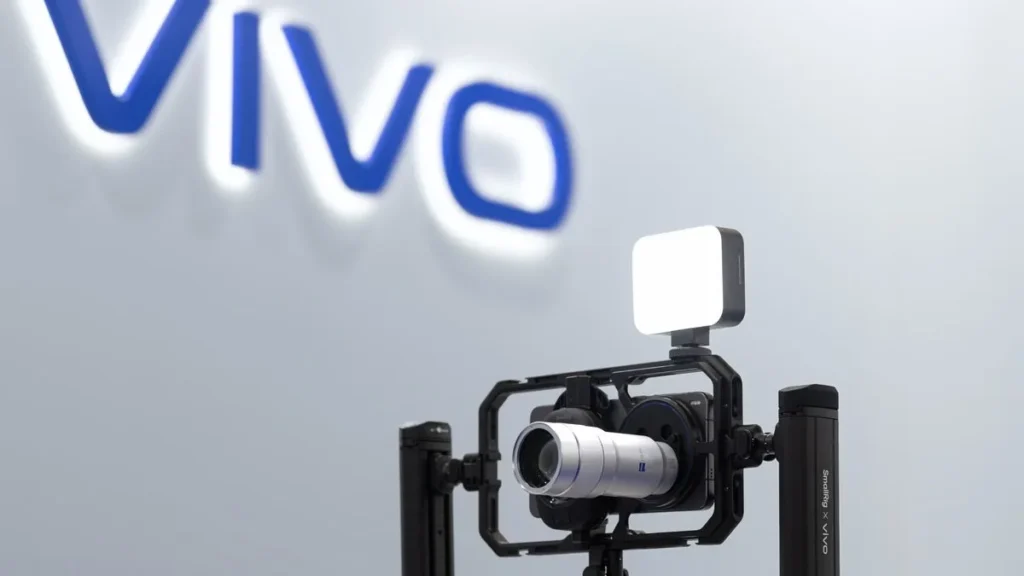
vivo X300 Ultra: The smartphone that aims to replace your cinema camera
vivo continues to tease the vivo X300 Ultra as if releasing a movie trailer: after highlighting its impressive 400mm Zeiss telephoto lens, the brand shifts focus and now claims a broader ambition—to make the phone a cohesive video creation tool, from filming to color grading.
vivo X300 Ultra: From “Good in Photos” to “Serious in Video”
The promise, as articulated in recent communications, is clear: the vivo X300 Ultra is designed for mobile videography, featuring “cinematic” colorimetry, enhanced Log capture, and improved audio.
The standout point on paper is that vivo claims 4K multi-focus capture at 120 fps, including 10-bit Log and Dolby Vision, across all rear cameras.
The goal is not just to create “a beautiful sequence” with the main module but to maintain continuity when switching from ultra-wide to telephoto.
Log, LUT and ACES: The Phone that Speaks the Language of Film Sets
Vivo promotes a very “workflow” oriented approach, with features typically associated with much heavier rigs:
- Log preview with customizable 3D LUTs (monitoring) to see a “graded” image live during recording.
- ACES compatibility, to integrate smartphone footage more easily into a standardized color grading pipeline alongside cinema cameras.
- Vivo also mentions pro encoding (like APV 422) to make the video output closer to “camera” expectations, at least in terms of material and latitude in post-production.
In this context, the “Video Color Palette” mentioned in some materials seems less like a gimmick and more like a way to provide finer control over texture (tones, saturation, contrast) without forcing the user into a maze of obscure options.
Stabilization and Focal Lengths: The Obsession with Consistency
Vivo also emphasizes stabilization, particularly around an 85mm focal length (commonly used for portrait and tight “cinema” shots). The challenge is straightforward: on smartphones, the telephoto lens often becomes the weak link in video (micro-jitters, pumping, loss of detail). By promising “exceptional stabilization,” Vivo is targeting precisely this area.
Another “creator” marker is audio. Vivo highlights a quad-mic system with presets designed to better isolate voices and reduce ambient noise based on different scenarios. While this isn’t revolutionary, it’s an interesting admission: to create “serious” video, one must stop treating sound as an afterthought.
A Smartphone… But Designed as a Platform

The vivo X300 Ultra is not just marketed as a phone but as a platform for accessories: grip, cage (in partnership with SmallRig), cooling fan, and a modular optical extension around the Zeiss Telephoto Extender Gen2 Ultra that extends the focal length up to 400mm (equivalent), embracing a “modular shooting” approach.
This choice is quite telling: vivo aims to attract the generation that shoots with smartphones but is willing to “gear up” when transitioning into production mode.
Mobile Video Enters its “Industry” Phase
This teasing of the vivo X300 Ultra tells a broader evolution: smartphone video is no longer just seeking to be “beautiful”; it aims to be integrable. Clean Log, monitoring LUTs, ACES, accessories, cooling… all of this aims to bridge the gap between “I’m filming a reel” and “I can fit into a professional workflow.”
Furthermore, the other almost political message is this: vivo confirms that the vivo X300 Ultra will have a broader international reach than some previous Ultras. In other words, the brand wants to compete in this “pocket cinema” battle beyond China.
The real question remains: will the promise hold up over time — thermal management, AF consistency, rolling shutter, actual Log quality, Dolby Vision rendering… these are all aspects that aren’t won in a press release, but in footage. Vivo has set the scene; at launch, it will need to deliver the film.



