

They fly for six days straight, cover 15,000 km² each, and connect up to 500,000 users. Stratospheric platforms are on the rise, and they intend to make Starlink satellites look outdated.
Mobile Coverage From The Stratosphere Using Autonomous Airships
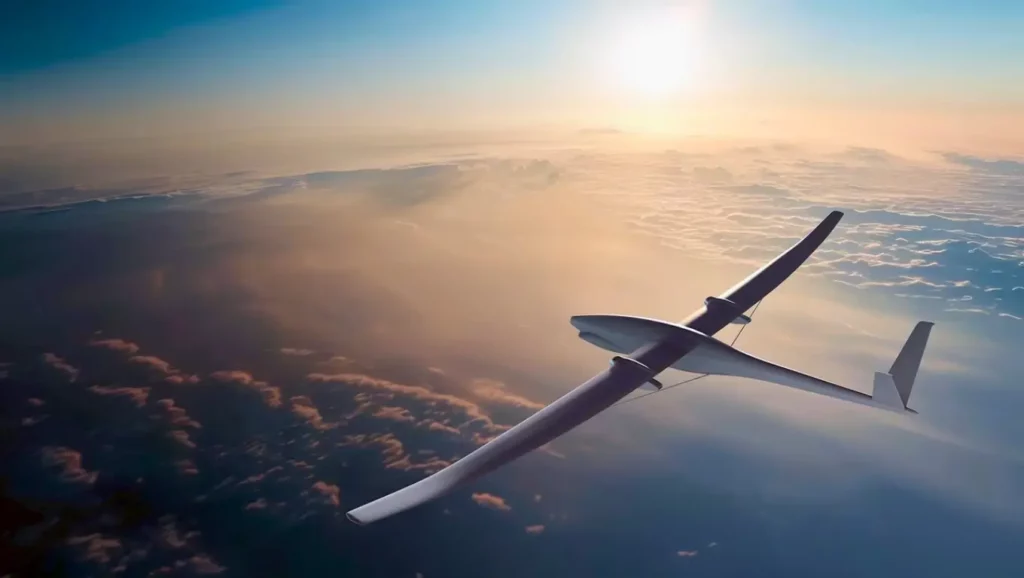
Imagine an airship floating 18 km high, above the turbulence, nearly stationary. It harnesses solar energy or, better yet, utilizes liquid hydrogen to fly continuously for six days. This isn’t science fiction: it’s the promise from Sceye and World Mobile Stratospheric, two companies aiming to deploy a revolutionary way to connect the world.
Each airship covers a gigantic area of 15,000 km²; for comparison, that’s larger than the Île-de-France region. And it’s not just about “relaying Wi-Fi.” These crafts are equipped with three-meter-wide phased array antennas capable of providing a direct connection to smartphones, without any intermediary. The result? Speeds that can reach 200 Mbps. Yes, you read that correctly.
Cheaper, Faster, And No Satellite Dish: The Technological Promise Is Serious
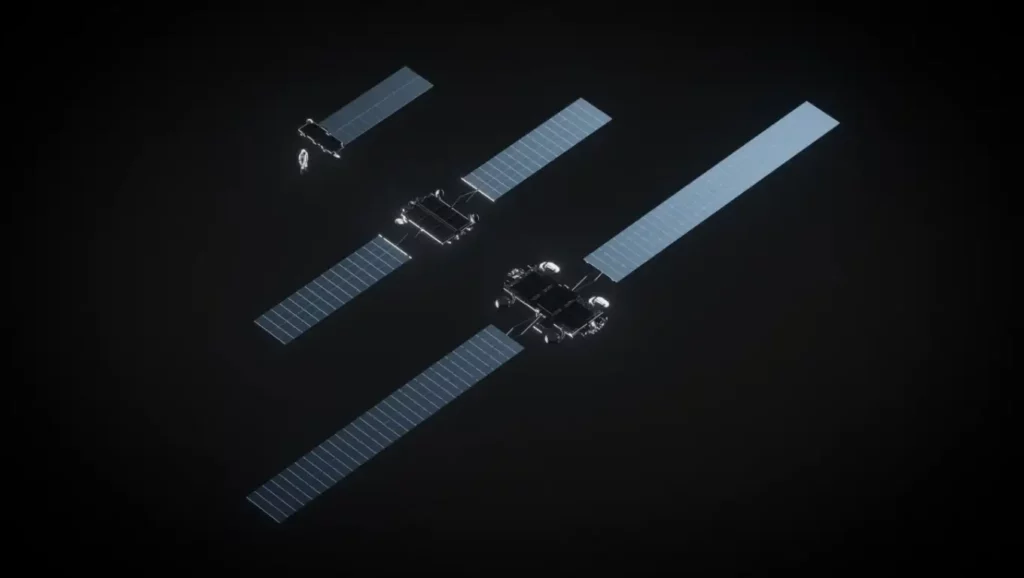
Starlink is impressive: 9,000 satellites in orbit, global coverage, and decent speeds. But it’s also expensive, fragile, and complex. Each satellite has a lifespan of five years, necessitating constant replacements. Additionally, users must install a satellite dish.
In contrast, the model of stratospheric platforms offers an elegant simplicity. There’s no need for rockets or complex ground stations: each airship returns to its base every six days for refueling while another takes over. The operational cost is projected to be under one euro per user. This is a game-changer for mobile networks in developing countries or for underserved areas.
A History Already Attempted (And Failed) By Google Inspires New Entrants
Do you remember the Loon project? Google once tested a similar idea in 2013 using stratospheric balloons aimed at bringing Internet access to isolated areas. However, the project was halted eight years later due to lack of profitability and unresolved technical limits.
This time, the scenario is different. The new airships are autonomous, controllable, and reusable. Furthermore, the technology for antennas and batteries has advanced significantly. Solar energy remains beneficial, but it’s liquid hydrogen that transforms the game. With this, there’s no need to halt transmissions at night or during severe weather.
About Forty Airships Would Be Enough To Connect All Of France
Let’s do some math: 15,000 km² per airship, and around 550,000 km² to cover for national coverage. About forty airships would be required to provide modern mobile connectivity throughout France. And all this without digging trenches, installing ground antennas, or laying fiber cables.
Will this solution be as stable and reliable as terrestrial or satellite infrastructure? Not yet. But for millions of underserved people worldwide, this could be the missing link between isolation and digital inclusion. It represents a hybrid model, flexible and poised between drones and satellites, capable of adapting to demand.



