

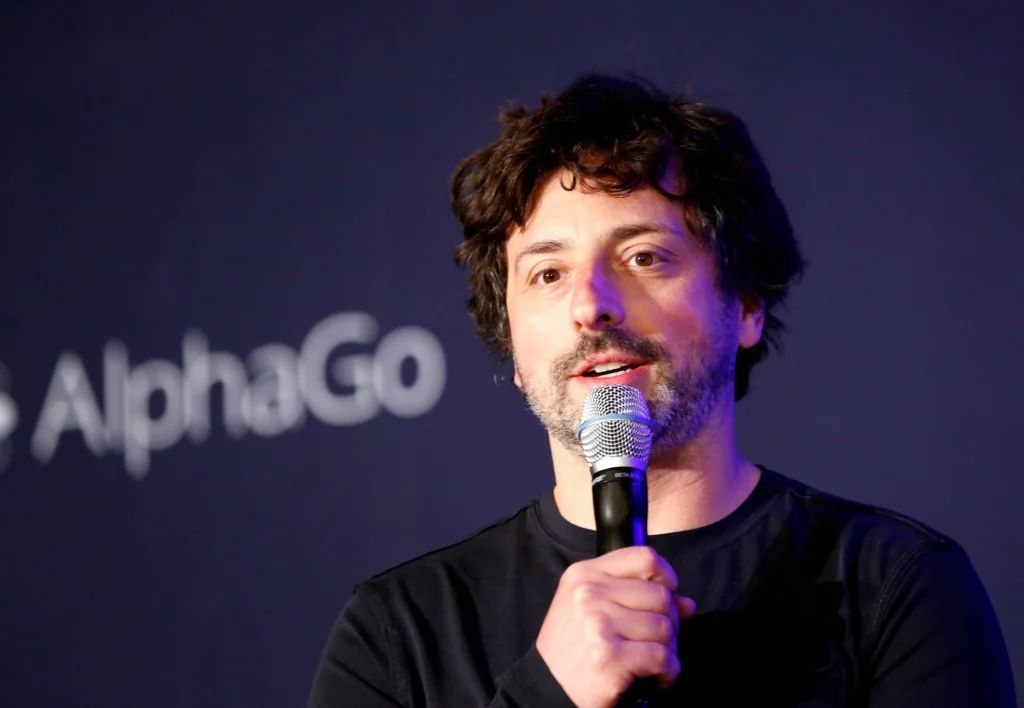
Sergey Brin Revives Google DeepMind to Catch Up with Claude on AI Coding
At Google, the battle for AI is no longer just about search or text generation. It has now shifted to a crucial battleground: coding.
According to several reliable sources, Sergey Brin has personally returned to the forefront to lead an internal push aimed at narrowing the gap between Gemini and Anthropic’s Claude in programming and agentic execution tasks.
A Targeted Return, Far from a Peaceful Retirement
As reported by The Information, Google DeepMind has formed a dedicated team to enhance the coding capabilities of its models, with Sergey Brin overseeing the initiative, Sebastian Borgeaud handling technical aspects, and Koray Kavukcuoglu providing support at the management level. The crux of the issue is clear: some internal researchers believe Claude currently outperforms Gemini in coding and managing multi-step agentic tasks.
This is not a trivial concern. In this new phase of the AI race, simply generating quality code is no longer sufficient. It is also essential to chain actions, comprehend complex objectives, correct errors, test, iterate, and execute with minimal human intervention.
This is precisely where Google aims to accelerate its efforts.
The Real Objective: Making Gemini a Top Developer
Excerpts from a memo attributed to Sergey Brin are particularly revealing. He emphasizes the need to “urgently bridge the gap” in terms of “agentic execution,” and to make the in-house models “primary developers,” meaning tools capable of becoming central players in software development.
Furthermore, Brin has requested that every Gemini engineer systematically utilize internal agents for complex and multi-step tasks.
This enforced “dogfooding” approach speaks volumes about the mindset at Google. The company is no longer content with developing models that perform well on benchmarks. It seeks to test them in the real-world conditions of its own software environment, complete with its constraints, massive codebases, and internal workflows.
Why Is Google Accelerating Now?
The competitive pressure has become too evident to overlook. Google has already acknowledged the growing importance of AI in its software production. In February, CFO Anat Ashkenazi stated that about 50% of Google’s code was generated by AI. Just weeks later, the progress appeared even clearer: Business Insider reported that in April 2026, Google claimed that 75% of new code was AI-generated, with human validation involved.
This impressive figure also reveals a paradox. Google is already heavily industrializing AI-assisted coding while feeling pressure from Anthropic in the most advanced use cases.
In other words, the volume of AI-generated code is substantial, but qualitative dominance in the most ambitious agentic workflows has yet to be achieved.
Jetski, Leaderboards, and Internal Discipline
Information emerging about internal tools supports this sense of overall mobilization. Multiple sources mention Jetski, an internal coding assistant whose use is tracked through dashboards and rankings based on token consumption. Meanwhile, access to Claude within some DeepMind teams has reportedly created internal tensions, indicating that the comparison with Anthropic is now concrete and almost daily.
This detail is crucial. When a company starts measuring, comparing, and almost gamifying the use of its internal AI tools, it becomes more than just a simple R&D project. It’s a cultural pivot.
A Defensive… and Offensive Strategy
Google is pursuing a dual objective here. On one hand, it seeks to catch up with Anthropic in a symbolic arena: the AI that codes better, faster, and further. On the other hand, it aims to build a defensible advantage using a unique asset: Google’s vast proprietary codebase, which could be utilized to train particularly effective internal models that would be difficult to commercialize due to confidentiality concerns.
This encapsulates the ambivalence of this strategy. Google can likely create formidable tools for its own teams. However, Anthropic, OpenAI, and others are advancing in the market, with publicly exposed products tested by developers and enriched by external usage and commercial dynamics.
Code Has Become the Center of Gravity in the AI Race
The most intriguing aspect of this narrative may not be the “strike team” itself but what it signifies about the new order of priorities. For a long time, AI giants have sought to impress with conversation, creativity, or multimodal research. Now, the ability to autonomously code has become a significantly more strategic marker.
Why? Because a capable coding agent does not just accelerate developers. It also enhances tools, pipelines, and internal experiences — and potentially, over time, the models themselves. It creates a feedback loop: the better a model codes, the more it can contribute to developing the infrastructure that will make the next model even more effective.
This is likely what Сергей Брин has in mind. This urgency is treated as nearly existential by Google.
At this point, there are no public indications of the concrete gains achieved by this special team. However, the political message is clear: Google refuses to let Anthropic set the pace for AI applied to software development. Sergey Brin’s active return also echoes a previous incident: his increased involvement in response to the pressure from ChatGPT.
The next step will be to monitor future announcements regarding Gemini. If Google begins to discuss development agents, multi-step execution, or autonomous coding workflows more frequently, there is a strong likelihood that this internal counter-offensive has already begun to yield results.
Ultimately, this story transcends the Google-Anthropic rivalry. It reveals a broader truth about AI in 2026: whoever masters coding may well dominate everything else.



